Trump administration weighs forcing US firms to disclose Chinese AI use
WASHINGTON –
asserted
administration → weigh → use
The Trump administration is considering requiring US companies to publicly disclose their use of Chinese AI models, a bid to discourage reliance on the technology without imposing new restrictions that could anger industry or Beijing, three people told Reuters.
uncertain
people → consider → Reuters
The Treasury Department and the White House Office of Science and Technology Policy (OSTP) have discussed the plan, which would apply to companies such as Airbnb, the people said.
asserted
people → discuss → Airbnb
The company uses Qwen, an AI model made by China’s Alibaba, to power its AI customer service agent.
asserted
company → use → agent
Under the plan, companies like Airbnb would be required to post that information on their websites.
asserted
companies → require → websites
It was not immediately clear if the idea was gaining traction within the administration or if it would be enshrined in a formal rulemaking process if it does move forward.
But its consideration, first reported by Reuters, underscores an emerging push within the administration toward combating the spread of powerful Chinese open-weight models, a source of deep concern within the government.
asserted
consideration → gain → government
Open-weight models make their core components publicly available for anyone to download and adapt.
asserted
anyone → make → ?
The proposal also shows officials are looking at ways to discourage use of Chinese AI through a “name and shame” campaign while sticking to a broader anti-regulation stance on AI.
asserted
officials → show → AI
The White House, the Treasury Department, Alibaba, and the Chinese Embassy in Washington did not immediately respond to requests for comment.
asserted
House → respond → comment
Airbnb declined to comment.
asserted
Airbnb → decline → ?
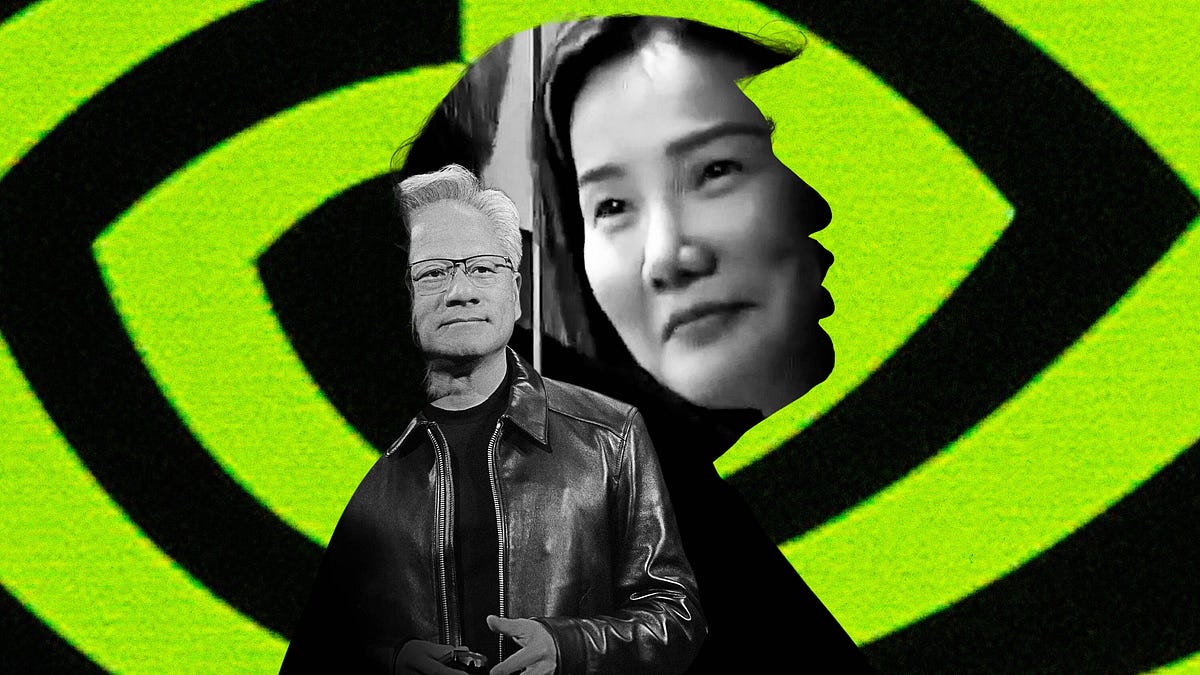
The consideration comes as revelations about Nvidia CEO Jensen Huang’s affair with an alleged Chinese spy have fuelled renewed calls in Washington for a tougher stance on China.
asserted
revelations → come → China
They have turned a spotlight on cases of Nvidia AI chips being smuggled to China that went unpunished, dialling up pressure on the Trump administration to crack down on Chinese tech threats.
asserted
that → turn → threats
Chinese-made open-weight models are gaining ground with US companies because they are cheaper than proprietary AI tools from top US labs OpenAI and Anthropic, and perform well enough.
asserted
they → make → labs
But China hawks fear Beijing is using such models – like Moonshot AI’s Kimi, DeepSeek or Qwen – to hook US companies so they will become dependent on Chinese AI.
asserted
they → fear → AI
US Treasury Secretary Scott Bessent said in July that the Trump administration could sanction Chinese AI companies if they were found to be guilty of intellectual property theft via distillation of American models.
uncertain
they → say → models
Distillation is the process of training smaller AI models using the output of larger ones as part of an effort to lower the costs of training a powerful new AI tool.
asserted
Distillation → train → tool
Bessent’s remarks echoed comments in April by Michael Kratsios, OSTP director, who accused China of stealing US artificial intelligence labs’ intellectual property on an “industrial scale”, spurring a State Department-led push to highlight such behaviour to foreign counterparts.
asserted
who → echo → counterparts
Congressional investigation
But US officials have stopped short of restricting or taking punitive action against Chinese AI companies.
asserted
officials → stop → companies
The issue has attracted the attention of Congress.
asserted
issue → attract → Congress
Republican US Representatives Andrew Garbarino of New York and John Moolenaar of Michigan, who chair the House Homeland Security Committee and the House select committee on China, respectively, launched an investigation into American companies’ use of Chinese AI in 2026.
asserted
who → chair → 2026
They sent letters to Airbnb as well as Anysphere, the maker of the AI coding tool Cursor, whose Composer 2 AI model was built on a version of Kimi.
asserted
model → send → Kimi
A letter was also sent to DoorDash, whose co-founder said the company routes some tasks in an internal system through Kimi.
asserted
company → send → Kimi
Moonshot, DoorDash, and SpaceX, which bought Anysphere, did not immediately respond to requests for comment.
asserted
which → buy → comment
Chinese AI models were the three most popular by token usage in October on OpenRouter, an AI marketplace platform that tracks usage data.
asserted
that → track → data
Tokens are units of data processed by AI models.
asserted
Tokens → process → models
Chinese AI models have even been used by the US government itself.
asserted
models → use → government
Reuters reported in September that a US government website deployed an AI model from China’s Alibaba to allow users to search proposed federal regulations even though the FBI accused the model’s developer of copying Anthropic’s technology.
asserted
FBI → report → technology
American open-weight models include Meta’s Muse Glimmer, Nvidia’s Nemotron and Reflection AI’s Beam.
asserted
models → include → Glimmer
 The Aporia