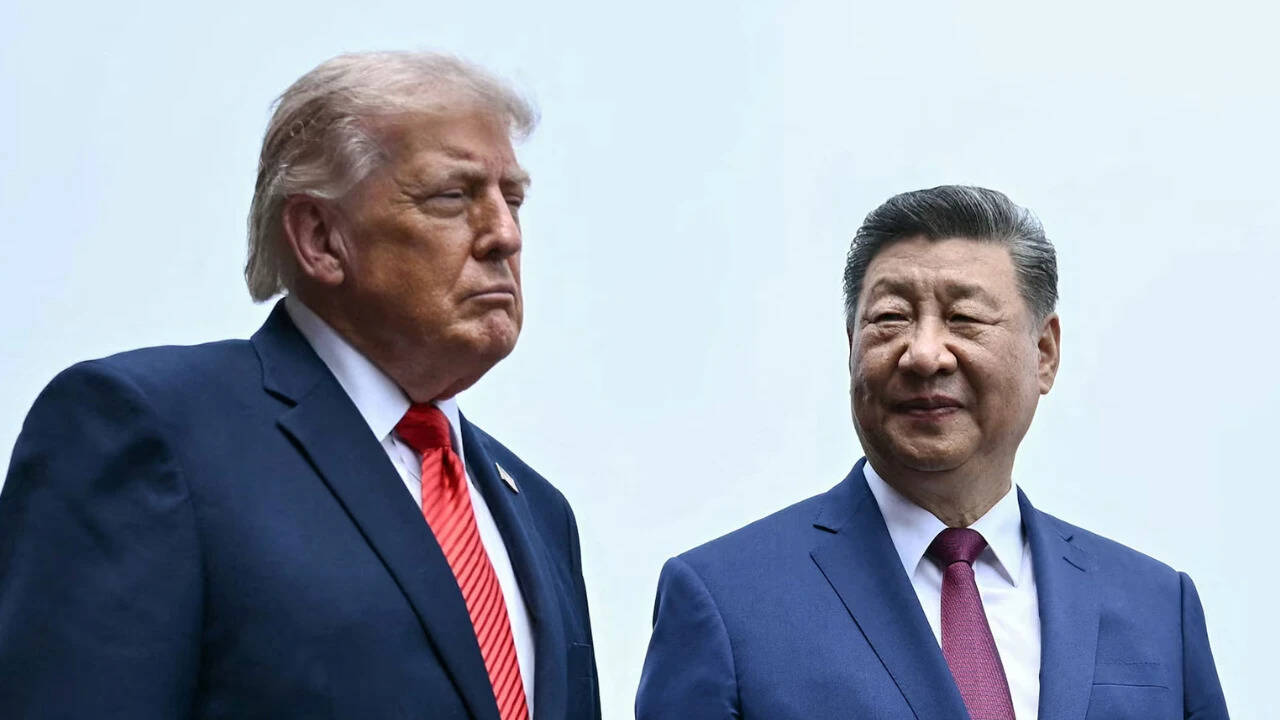
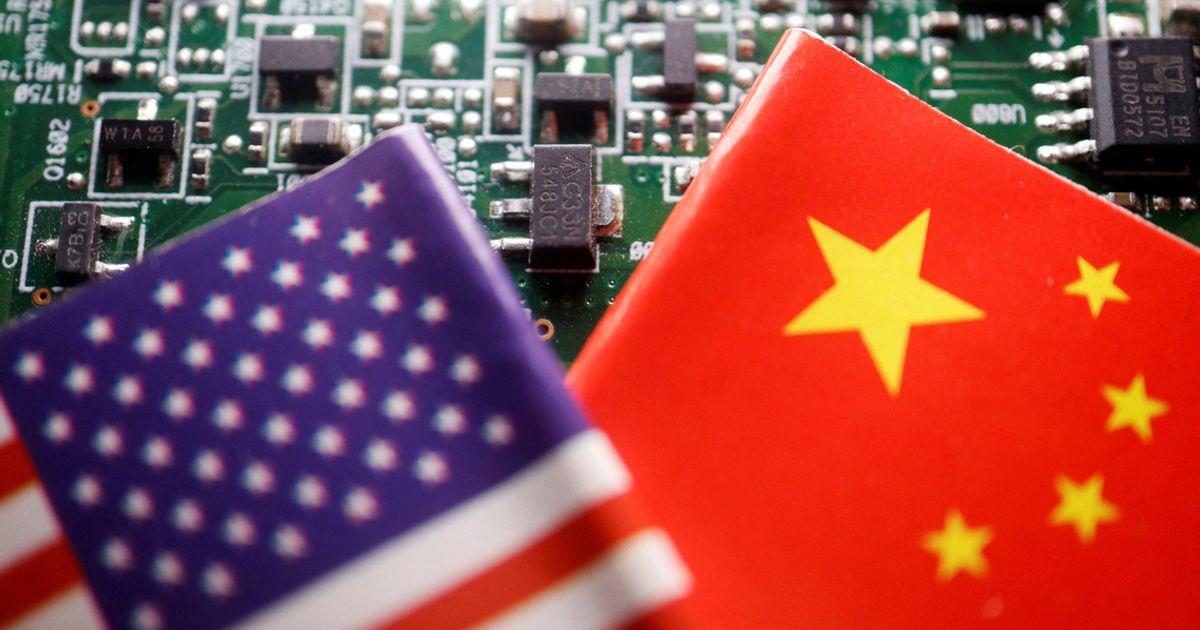
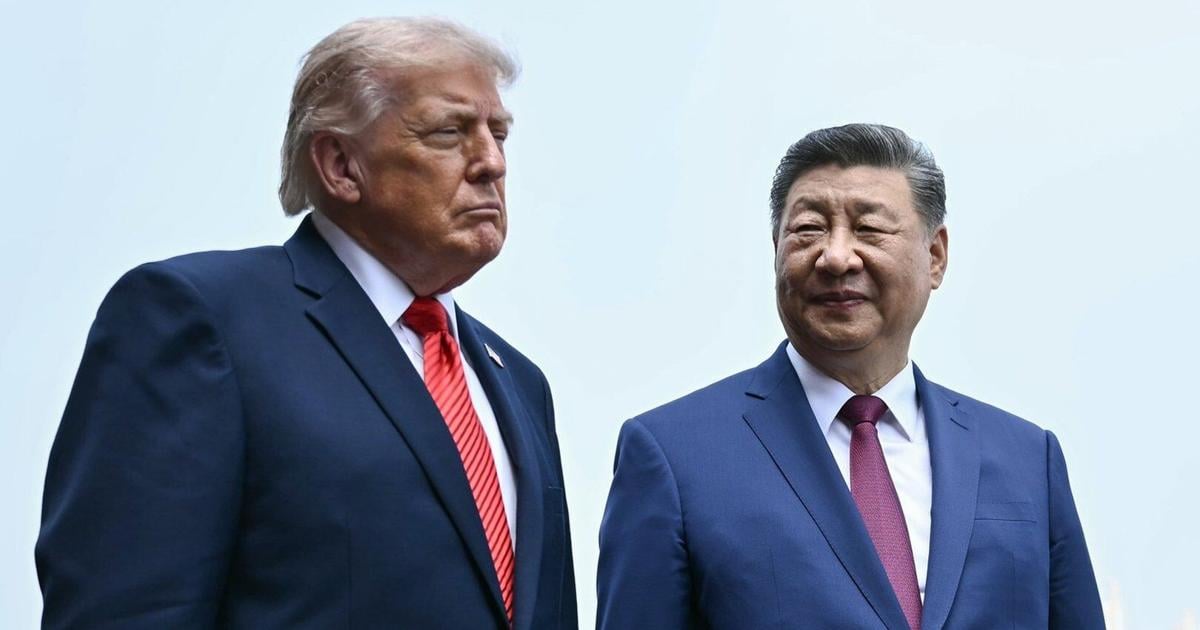
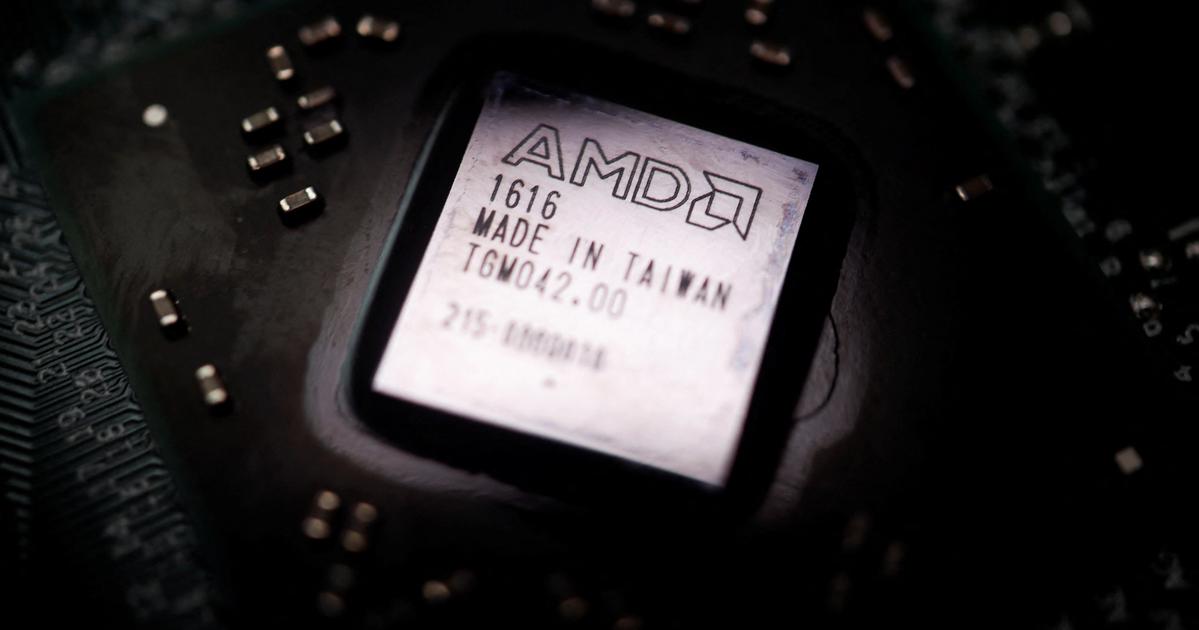
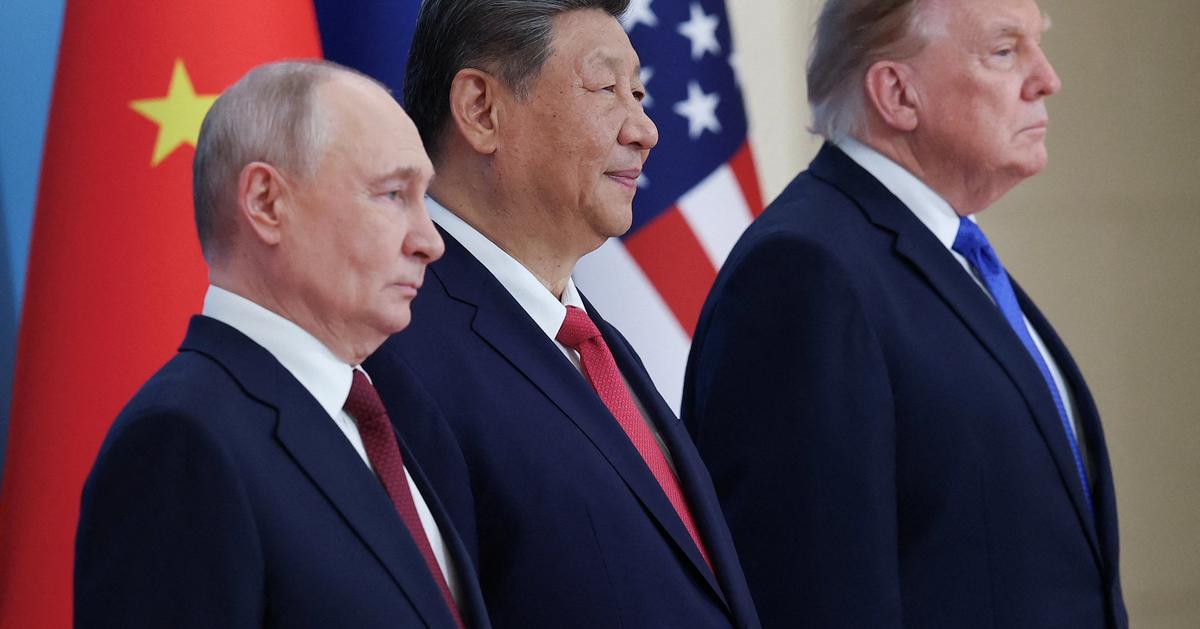
Photo via Semafor

China threatens retaliation against US chip curbs

Read the original at Semafor ↗
Cite

Ruberry, B. (2026, November 17). China threatens retaliation against US chip curbs. Semafor. https://www.semafor.com/article/11/17/2026/china-threatens-retaliation-against-us-chip-curbs

Dated from the outlet's own feed. Check the original for its byline.

Semafor · collected 2026-11-17 · by Brendan Ruberry

Quick Summary

China has warned of potential retaliation against the United States if the US proceeds with plans to restrict remote access to advanced semiconductor technology. This threat comes as the two nations prepare for a summit and amid revelations about Nvidia’s former CEO, Jensen Huang, which have spurred more restrictive US policies toward China’s tech sector. These new restrictions could significantly hinder China’s ability to develop its artificial intelligence industry, as access to crucial computing technology becomes more limited.
Written by AI on 2026-11-18, from this article's own text only (the story summary below draws on all the coverage).
See how they differ ↓

AI analysis

Story summary

The U.S. Department of Commerce issued an interim rule on November 16, 2026, limiting other countries' access to advanced AI chips made in America. The rule aims to close a "remote access" loophole that allowed Chinese companies to circumvent existing export controls by using data centers in countries like Singapore, Indonesia, Malaysia, and Thailand to access American chips. The move comes amid concerns over the Nvidia scandal, where the company's CEO resigned over an affair involving a spy-sex scandal. The rule now requires a license for exporting advanced semiconductors to these Southeast Asian countries and Brazil, where the risk of chips being diverted to China is high. The Trump administration's action is seen as a significant step to curb China's access to critical AI technology, just as President Trump was heading to Asia to meet with Chinese President Xi Jinping.

Written for “US-China Tech Tensions Over Chip Curbs” on 2026-11-20, grounded in this article and the 26 other(s) covering the same event.

How they differ

17 outlets covered “US-China Tech Tensions Over Chip Curbs”.

What each outlet says

One AI summary per outlet of its latest article on this story, written from that article alone and checked against it. Open the article for the outlet's own words.

SemaforThis outlet17 Nov

China has warned of potential retaliation against the United States if the US proceeds with plans to restrict remote access to advanced semiconductor technology. This threat comes as the two nations prepare for a summit and amid revelations about Nvidia’s former CEO, Jensen Huang, which have spurred more restrictive US policies toward China’s tech sector. These new restrictions could significantly hinder China’s…

China threatens retaliation against US chip curbs (this article)3 articles from Semafor on this story
The Straits Times18 Nov

China’s Ministry of Commerce criticized new US restrictions on Chinese access to advanced AI chips, warning of potential retaliation and emphasizing the need for dialogue to resolve tensions. The restrictions, announced on November 16, aim to prevent Chinese companies from accessing high-end semiconductors through remote means and via countries like Singapore. The measures come as President Xi Jinping prepares to…

China warns US of retaliation over new AI chip restrictions →3 articles from The Straits Times on this story
The Hindu19 Nov

The U.S. Commerce Department issued an interim final rule on November 16, 2026, restricting data center operators outside the U.S. from providing cloud services using advanced American AI chips to businesses in five countries, including China, Iran, and Russia. The rule also mandates that American companies obtain explicit government approval before shipping high-end AI chips to five other countries, such as…

How U.S. controls flow of advanced tech, chip, and compute to China | Explained →3 articles from The Hindu on this story
Just the News16 Nov

The Department of Commerce's Bureau of Industry and Security announced a new interim final rule on Monday, tightening restrictions on foreign, particularly Chinese, remote access to advanced AI processors. This rule aims to address concerns raised by an alleged espionage incident involving NVIDIA and follows the Trump administration's emphasis on protecting American technology from unauthorized access.

Trump admin clamps down on foreign remote access to AI processors →2 articles from Just the News on this story
Washington Examiner20 Nov

The Department of Commerce issued new regulations on Monday aimed at preventing American technology companies from exporting advanced chips to foreign countries that cooperate with China, addressing a practice that had been exploiting legal loopholes. These regulations are seen as necessary to uphold America’s technological dominance, which is crucial for national security, as advanced chips are integral to…

Congress must hold Lutnick to the new China chip rule →2 articles from Washington Examiner on this story
Reason17 Nov

The Trump administration is grappling with how to restrict Chinese access to American AI chips while maintaining a positive relationship with China. The Commerce Department announced new rules restricting exports of advanced chips to high-risk countries in Southeast Asia, requiring due diligence from data centers that supply significant computing power to Chinese companies. President Trump acknowledged the divided…

Inside the Administration's Chip Divide →2 articles from Reason on this story
Show 11 more outlets
Times of India18 Nov

The Trump administration is pushing ahead with a ban on Chinese optical transceivers used in AI data centers, despite opposition from major tech companies like Amazon, Google, and Microsoft. Federal regulators at the FCC are moving forward with the restriction due to national security concerns, even though tech giants argue that replacing Chinese-made components could take up to a decade given the dominance of…

Trump pushes ban on Chinese AI data center gear despite tech giants' pushback →2 articles from Times of India on this story
CBS News16 Nov

The U.S. Department of Commerce has issued an interim rule to restrict remote access to advanced AI chips from countries like China by limiting exports to certain Southeast Asian nations. This move follows Nvidia CEO Jensen Huang’s resignation amid concerns about potential espionage, and aims to prevent circumvention of existing export regulations through data centers in third countries. The new rule requires…

Commerce Department moves to curb remote access to AI chips →
New York Post16 Nov

The Commerce Department announced a new rule on Monday to address a loophole that has allowed Chinese firms to bypass export controls on American AI chips by leasing them through data centers in third countries like Indonesia and Malaysia. The rule requires licenses for exporting advanced semiconductors to these countries, following criticism from Treasury Secretary Scott Bessent and concerns raised by Senator Maria…

Commerce Department moves to crack down on Chinese AI chip loophole amid Nvidia scandal →
CBC16 Nov

The Trump administration has tightened restrictions on exporting advanced AI chips to China, targeting countries like Malaysia and Thailand where Chinese companies use data centers to access these chips. This move comes ahead of Trump’s meeting with Chinese President Xi Jinping in Shenzhen during the APEC summit. The new rule requires companies in Singapore, Thailand, Malaysia, Indonesia, and Brazil to obtain U.S…

U.S. further restricts China's access to AI chips in wake of Nvidia scandal →
Time16 Nov

The Trump administration announced new restrictions aimed at preventing Chinese tech firms from bypassing U.S. export controls on advanced AI chips through third countries. The new rule, set to take effect in 90 days, requires buyers from Indonesia, Malaysia, Singapore, Thailand, and Brazil to secure licenses for certain advanced semiconductors. This move comes days before President Trump’s meeting with Chinese…

U.S. to Clamp Down On AI Chip Loophole Ahead Of Trump Meeting With Xi →
Toronto Star16 Nov

The Trump administration has announced new regulations to restrict remote access to advanced U.S. computing chips and servers, aiming to prevent China from using American technology to enhance its artificial intelligence capabilities. This move comes shortly after Nvidia co-founder Jensen Huang stepped down as CEO, following investigations into his ties with a former Megaspeed International executive, who is accused…

Trump administration moves to block China from indirect access to American AI technology →
NPR16 Nov

The U.S. government has implemented new regulations to prevent remote access to advanced AI technology from overseas data centers, closing a loophole that could allow foreign governments to access U.S. AI technology indirectly. This move follows the recent scandal involving Nvidia CEO Jensen Huang and his alleged romantic involvement with a suspected Chinese intelligence operative. The Commerce Department's Bureau…

U.S. tightens controls on remote access to AI technology amid Nvidia fallout →
NBC News16 Nov

The U.S. Commerce Department has introduced a new rule that requires data center customers in Indonesia, Malaysia, Singapore, Thailand, and Brazil to obtain special licenses from the department to purchase advanced AI chips from American companies like Nvidia and AMD. This move aims to address concerns about Chinese companies potentially circumventing export restrictions by remotely accessing these chips in foreign…

U.S. closes loophole that let Chinese companies use top AI chips in foreign data centers →
Al Jazeera17 Nov

The U.S. government has imposed new restrictions to prevent Chinese AI developers from remotely accessing advanced chips located in Southeast Asian countries and Brazil. The Bureau of Industry and Security (BIS) under the Department of Commerce announced these measures, designating Indonesia, Malaysia, Singapore, Thailand, and Brazil as high-risk regions, requiring export licenses for any chip transfers to these…

US moves to block China’s remote access to AI chips amid Nvidia scandal →
BBC17 Nov

The U.S. has announced new interim rules that will increase scrutiny of data center operators in South East Asian countries like Singapore, Malaysia, Thailand, Indonesia, and Brazil, aiming to restrict China's access to advanced semiconductors and computing power used for training AI models. These measures require U.S. government licenses for the purchase of advanced chips from American chipmakers, impacting Chinese…

How new US chip restrictions on South East Asia will hit China →
Global News17 Nov

The Trump administration has issued new rules restricting remote access to advanced U.S. computing chips and servers, aiming to prevent China from using American technology to train its AI models. The regulations require overseas data centers serving companies in China, Russia, Iran, and Cuba to disclose end users and impose additional licensing requirements for chip sales to countries like Indonesia, Malaysia…

Trump administration moves to block Chinese remote access to U.S. AI tech →

Where they agree and split

Agreed

Reported by outlets on both sides of the middle

One loophole allowed Chinese firms to rent AI computing power from data centres in Southeast Asia and elsewhere that run on US hardware not available for export to China.

4 outlets
Show 1 more

Megaspeed is suspected by the Commerce Department of diverting Nvidia chips to China in violation of U.S. export controls, but a month-long investigation by the Commerce Department into Megaspeed was halted last year after a top Nvidia official intervened, according to the New York Times.

4 outlets

Framing

How the first headlines put it

Stated as fact14
The headlines (14)

US moves to close 'remote access' chip loophole Semafor · stated as fact

US to curb China’s access to AI chips as Trump heads to Asia The Straits Times · stated as fact

Commerce Department moves to curb remote access to AI chips CBS News · stated as fact

Commerce Department moves to crack down on Chinese AI chip loophole amid Nvidia scandal New York Post · stated as fact

Commerce Department issues rule limiting other countries' access to America's advanced AI chips Just the News · stated as fact

U.S. further restricts China's access to AI chips in wake of Nvidia scandal CBC · stated as fact

U.S. to Clamp Down On AI Chip Loophole Ahead Of Trump Meeting With Xi Time · stated as fact

Trump administration moves to block China from indirect access to American AI technology Toronto Star · stated as fact

U.S. tightens controls on remote access to AI technology amid Nvidia fallout NPR · stated as fact

U.S. closes loophole that let Chinese companies use top AI chips in foreign data centers NBC News · stated as fact

Trump administration cracks down on China-Nvidia chips loophole Washington Examiner · stated as fact

Trump's New Chip Export Rule Targets China but Exempts TikTok's Parent Company Reason · stated as fact

US moves to block China’s remote access to AI chips amid Nvidia scandal Al Jazeera · stated as fact

Singapore seeks ‘trusted access’ to AI chips after new US curbs The Hindu · stated as fact

Words to watch (4)

US moves to block China’s remote access to AI chips amid Nvidia scandal Al Jazeera

Commerce Department moves to crack down on Chinese AI chip loophole amid Nvidia scandal New York Post

U.S. further restricts China's access to AI chips in wake of Nvidia scandal CBC

U.S. blocks China’s remote access to AI chips after Nvidia scandal; China slams move The Hindu

The full story: what happened, how it changed, and all 27 articles →

Compared with similar articles

This article reads leans left and hedges 33% of its claims. Each row says how that neighbour differs.
The Sydney Morning Herald
Leans right further right than this Hedges 3 of 60 claims Outlet record 61/100
“The articles discuss related topics involving Nvidia and China, but describe different specific events: one is about a spying scandal involving Nvidia's CEO, the other is about China's potential retaliation against US chip restrictions.”
The Hindu
Leans strongly left further left than this Hedges 0 of 8 claims Outlet record 78/100
Times of India
Leans left Hedges 3 of 21 claims Outlet record 59/100
The Straits Times
Leans strongly left further left than this Hedges 1 of 15 claims Outlet record 64/100
CBC News
Leans right further right than this Hedges 0 of 15 claims Outlet record 60/100
“Article A reports on the U.S. imposing new restrictions on AI chip exports to China, while Article B reports on China's threat of retaliation in response to these restrictions.”
Dawn
Hedges 4 of 30 claims Outlet record 67/100
“The articles discuss related events and contexts surrounding Nvidia's CEO scandal and US-China relations in the semiconductor industry, but they describe different specific incidents and timeframes.”
Al Jazeera
Hedges 0 of 3 claims Outlet record 60/100
“While both articles discuss China's response to potential US chip curbs and mention Jensen Huang's scandal, they describe separate phases or reactions to the broader issue rather than a single specific incident.”
Fox News
Leans right further right than this Hedges 15 of 58 claims Outlet record 66/100
“Article A discusses a specific scandal involving Nvidia and Chinese companies obtaining AI chips, while Article B is about China's threat of retaliation against US chip curbs in a broader context.”
Toronto Star
Centre further right than this Hedges 7 of 41 claims Outlet record 64/100
“While both articles discuss the impact of Nvidia's scandal on US-China relations and technology export policies, they describe different points in time and different aspects of the broader situation.”
Toronto Star
Leans right further right than this Hedges 0 of 3 claims Outlet record 64/100
“While both articles discuss similar actions and reactions regarding US restrictions on China's access to AI technology, Article A focuses on the US issuing new rules, while Article B reports on China's threat of retaliation, indicating different specific events or phases of the issue.”

Story

US-China Tech Tensions Over Chip Curbs
Technology · 27 article(s) covering the same event. Compare every outlet's account →
How this article was measured signals, leaning charts, publisher record, byline, topics and claims

Signals How these are calculated →

Claims extracted
3
sentences that state something as happening or true
Uncertain
33%
1 of 3 hedged ("reportedly", "may", "according to")
Leaning
Leans left
of the writing, not the subject · beta estimate
Publisher signals
64/100
Semafor's corrections and hedging, across everything collected from it. Not a measure of accuracy.
Outlets on this story
27
Technology
Same framing elsewhere
1
articles that frame the event the way this one does
Analyzed 2026-11-18 · how these are computed

How this is being covered How these are calculated →

Article leaning vs. publisher reliability
Source leaning vs. consistency

Publisher

Semafor · 1924 article(s) · 7 correction(s) detected
Running correction rate · 7 correction(s)

Who wrote this

Brendan Ruberry
206 article(s) here · 1 carrying a prediction
The trilateral talks at the APEC summit in Shenzhen will offer Putin a symbolic boost as Kyiv’s attacks have nearly halved Russia’s November oil refining, Reuters reported.
The debut could draw about $250 million in net retail buying — potentially twice as much as SpaceX’s record of $118 million in retail buying.
2026-11-19 · mixed framing · Anthropic prices IPO above target range
In addition to increasing stock buybacks, Nvidia’s interim CEO Colette Kress reportedly promised pay raises Wednesday in the chipmaker’s first employee town hall following Huang’s ouster, amid concerns the shake-up could drive a talent exodus; Kress added that the firm’s “passion to innovate” would not change.
2026-11-19 · mixed framing · Nvidia shares fall despite bumper earnings
The looming squeeze could intensify chip self-sufficiency initiatives that are already underway in Beijing, whose AI ecosystem still depends on American hardware: The clampdown “sets everyone back” in China, Tencent’s president acknowledged, but also hastens progress toward a future where “all Chinese players” rely on domestic compute.
The reportedly understated celebrations surrounding Anthropic’s debut appear to befit an internal culture that prides itself on building AI safely, wherein getting rich is accorded less priority than commonly held effective altruist beliefs: Employees’ new wealth is expected to enrich dozens of charitable and research-oriented organizations devoted to animal welfare, global health, and AI safety.
While firms may cope, “we can’t fix government technology, like our air traffic control system, by throwing more money into a broken system,” journalist Derek Thompson argued.
The pledge, which barely moved oil prices, could prove difficult to bring to fruition amid ongoing wars in the Middle East and Ukraine that have choked off crude oil supplies.
Rockstar’s Grand Theft Auto VI is set to top more than $3 billion in sales in its first week, eclipsing the lifetime grosses of some of the biggest films and concert tours and prompting commentators to salute an era-defining entertainment product.
The Hunterbrook report also cited AMD’s financing arrangements with its own customers, which other analysts have warned could create an artificial impression that risks a large correction.
2026-11-19 · mixed framing · AMD shares fall after report flags China exposure
Meeting those commitments could become even more complicated if Nvidia pares down its investments, making capital scarcer and Anthropic’s enterprise customers more thrifty: “As financing and demand tighten in tandem, the whole industry could correct,” journalist Derek Thompson warned.
2026-11-17 · speculative framing · Anthropic momentum builds ahead of IPO
Also by Brendan Ruberry
Nothing else under this byline is closely related to this article, so these are simply their most recent.
All 206 articles by Brendan Ruberry →

Topics

Beijing China Chinese Nvidia Washington

Subjects

China GPE · 2× Washington GPE · 2× Beijing GPE · 1× Chinese NORP · 1× Huang PERSON · 1× Jensen Huang PERSON · 1× Nvidia ORG · 1× Semafor ORG · 1×

Narrative

Huang’s downfall marks the close of a chapter in which dovish capital allocators were uniquely influential in steering Washington’s policy toward Beijing, Semafor’s China columnist argued: “Now, geopolitical gravity takes over.”
framing: mixed · carried by 1 article(s) · first seen 2026-11-18
Spurred by revelations surrounding Nvidia’s ousted CEO Jensen Huang, Washington’s hawkish turn could sharply limit Chinese access to compute at a moment when the country’s AI sector can scarcely afford it: Harsher US export controls and a remote access clampdown means “catching up could get a lot more expensive,” snuffing out startups, a leading analyst wrote.
2026-11-18 · Semafor
China threatens retaliation against US chip curbs · mixed framing

Claims (3 extracted, 1 hedged)

China threatened retaliation if the US carried out plans to restrict remote access to advanced semiconductors, risking the renewal of tit-for-tat curbs ahead of this week’s summit between the superpowers’ leaders. asserted
US → threaten → leaders
Spurred by revelations surrounding Nvidia’s ousted CEO Jensen Huang, Washington’s hawkish turn could sharply limit Chinese access to compute at a moment when the country’s AI sector can scarcely afford it: Harsher US export controls and a remote access clampdown means “catching up could get a lot more expensive,” snuffing out startups, a leading analyst wrote. uncertain
analyst → spur → startups
Huang’s downfall marks the close of a chapter in which dovish capital allocators were uniquely influential in steering Washington’s policy toward Beijing, Semafor’s China columnist argued: “Now, geopolitical gravity takes over.” asserted
gravity → mark → Beijing
Give feedback · no sign-in needed

No sign-in needed for now. Your note is sent without a name, so it cannot be answered.

History Support