Photo via The Straits Times

World’s water cycle becoming more unpredictable, UN warns

Read the original at The Straits Times ↗
Cite

The Straits Times. (2026, September 17). World’s water cycle becoming more unpredictable, UN warns. The Straits Times. https://www.straitstimes.com/world/worlds-water-cycle-becoming-more-unpredictable-un-warns

Dated when The Aporia collected the article, usually within hours of publication. Check the original for its exact date and byline.

The Straits Times · collected 2026-09-17 · by The Straits Times

Quick Summary

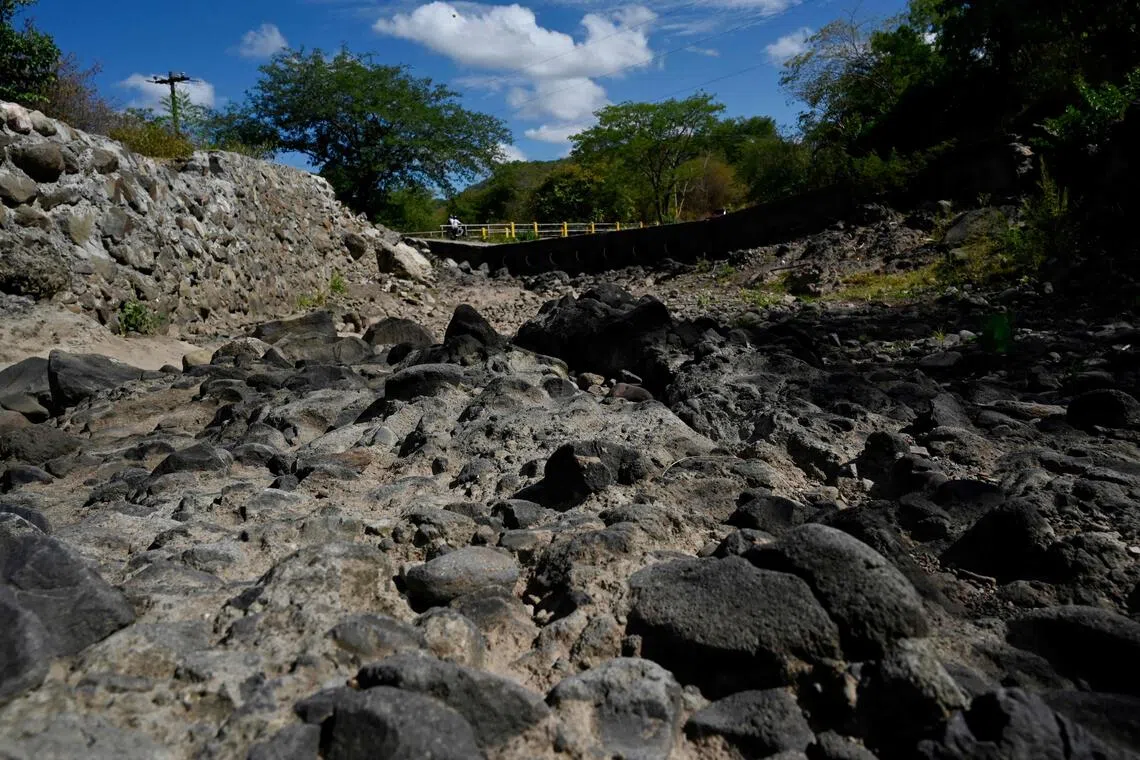
The United Nations’ World Meteorological Organization (WMO) warned on September 17 that the Earth’s water cycle is becoming more unpredictable and erratic, with extreme swings between droughts and floods anticipated to worsen due to an unprecedented El Niño event. The WMO report highlighted severe conditions in 2025, including one of the driest years for rivers since records began three decades ago and significant glacier loss, equivalent to filling 560 million Olympic-sized swimming pools with lost water. Additionally, two-thirds of monitored wells showed abnormal levels outside historical norms, signaling a decline in “slow reserves” like groundwater and glaciers that traditionally buffer against water crises.
Written by AI on 2026-09-17, from this article's own text only (the story summary below draws on all the coverage).

AI analysis

Story summary

The United Nations warned on September 17 that the world's water cycle is becoming increasingly erratic, with an unprecedented El Niño expected to worsen long-term trends. The World Meteorological Organization (WMO) reported in its annual State of Global Water Resources report that 2025 was one of the driest years for rivers globally since at least 1993 and saw significant glacier shrinkage across all regions. Groundwater levels are also in multi-year decline, contributing to a decade-long decrease in Earth’s freshwater storage. WMO Secretary-General Celeste Saulo expressed particular concern about the rapid decline of "slow reserves" such as groundwater and glaciers, which historically have served as buffers against water scarcity during dry periods.

Written for “Water Cycle Unpredictability Warning” on 2026-11-22, grounded in this article and the 0 other(s) covering the same event.

Compared with similar articles

This article reads unscored and hedges 0% of its claims. Each row says how that neighbour differs.
The Independent
Hedges 8 of 40 claims Outlet record 59/100
“The articles discuss related topics but describe different events; Article A covers a UN warning about the unpredictability of the global water cycle, while Article B focuses on the threats posed by an impending severe El Nino event specifically for Asia.”
Toronto Star
Hedges 8 of 40 claims Outlet record 65/100
“The articles discuss different aspects of the water cycle and climate change impacts; one focuses on unpredictability globally, while the other specifically addresses threats from El Nino to Asia.”

Story

Water Cycle Unpredictability Warning
Environment · 1 article(s) covering the same event.
How this article was measured signals, leaning charts, publisher record, byline, topics and claims

Signals How these are calculated →

Claims extracted
23
sentences that state something as happening or true
Uncertain
0%
0 of 23 hedged ("reportedly", "may", "according to")
Leaning
not political
takes no side on a contested political question
Publisher signals
64/100
The Straits Times's corrections and hedging, across everything collected from it. Not a measure of accuracy.
Outlets on this story
1
Environment
Same framing elsewhere
1
articles that frame the event the way this one does
Analyzed 2026-09-17 · how these are computed

How this is being covered How these are calculated →

Article leaning vs. publisher reliability
Source leaning vs. consistency

Publisher

The Straits Times · 5699 article(s) · 7 correction(s) detected
Running correction rate · 7 correction(s)

Who wrote this

The Straits Times
4005 article(s) here · 1 carrying a prediction
Annual inflation hit 11% in October and prices are expected to rise further this year, economists say, leaving many Ukrainians feeling the pinch and less able to spend on eating out.
While no one obtained everything they might have desired, everyone can find a place for themselves within this text—that is the very essence of consensus.
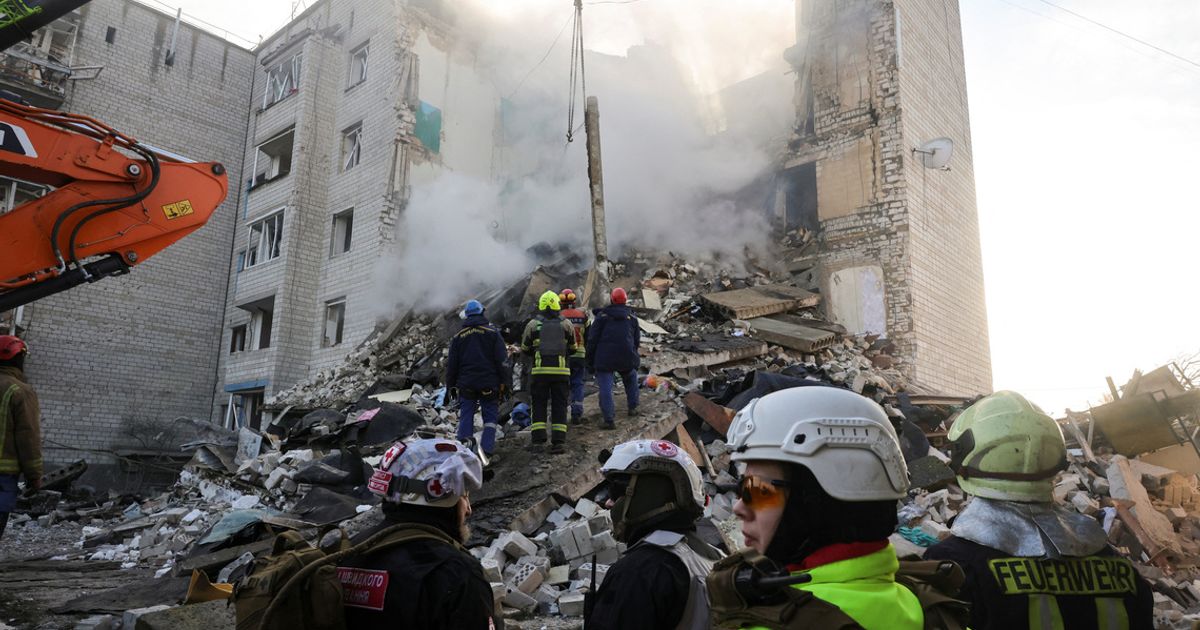
At least 14 people missing after Russian drone hit building in Kyiv region, Zelenskiy says KYIV, Nov 22 - At least 14 people may still be trapped under the rubble of a residential building that was struck by a Russian drone on Sunday morning in Ukraine's Kyiv region, President Volodymyr Zelenskiy said.
Ferguson said at a news conference that the ICE agents may have broken a state law limiting facial coverings for law enforcement, and that he was looking into how they accessed the jet bridge.
Before departing for his overseas trip, Trump told reporters that he might meet Kim in China.
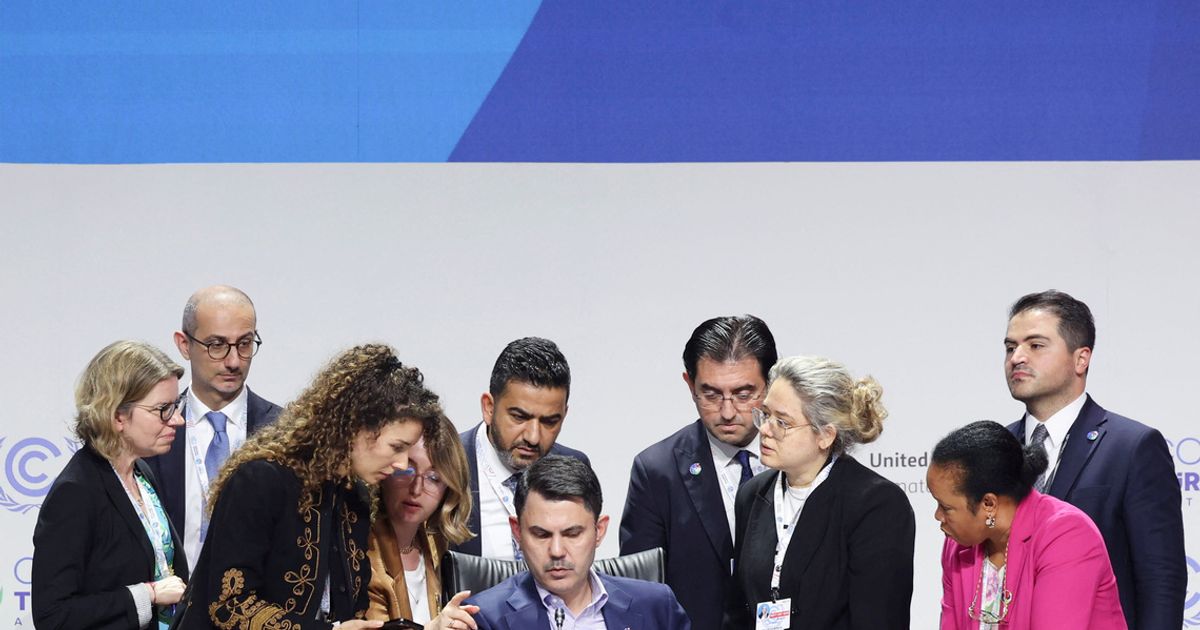
The latest draft expressed “deep concern” that global warming would cross 1.5 deg C above pre-industrial levels in the next few years.
2026-11-22 · assertive framing · Fossil fuels still missing from latest COP31 draft deal
Mejia had also overstayed her visa, ICE said, adding that she would be charged with assaulting a federal officer.
She will be charged with assaulting a federal officer, according to ICE.
TEHRAN - Iran will impose rolling power cuts from Nov 22 as damage to key infrastructure during the Middle East war deepens an already severe energy crunch, state media reported.
2026-11-22 · assertive framing · Iran to ration electricity as war hits energy network
Party strategists anticipate that the field of 2028 aspirants could be far wider than what was expected at the start of the administration, when Trump joked about seeking a constitutionally-barred third term.
Also by The Straits Times
Nothing else under this byline is closely related to this article, so these are simply their most recent.
All 4005 articles by The Straits Times →

Topics

El Nino GENEVA WMO World Meteorological Organization the United Nations

Subjects

WMO ORG · 5× Saulo PERSON · 3× AFP ORG · 1× Celeste Saulo PERSON · 1× China GPE · 1× GENEVA GPE · 1× Nepal NORP · 1× World Meteorological Organization ORG · 1× the United Nations ORG · 1×

Narrative

El Nino is the warm phase of a natural climate cycle that occurs every two to seven years and is characterised by above average ocean temperatures across the Pacific, and brings worldwide changes in winds and rainfall patterns and erratic weather. “The strengthening El Nino will increase the risk of drought in some areas, and flooding in others,” Saulo cautioned.
framing: assertive · carried by 1 article(s) · first seen 2026-09-17
The planet’s water cycle is becoming increasingly erratic, swinging between too little and too much, the United Nations warned on Sept 17, with an unprecedented El Nino expected to exacerbate the long-term trend.
2026-09-17 · The Straits Times
World’s water cycle becoming more unpredictable, UN warns · assertive framing

Claims (23 extracted, 0 hedged)

World’s water cycle becoming more unpredictable, UN warns AI generated asserted
UN → become → ?
The planet’s water cycle is becoming increasingly erratic, swinging between too little and too much, the United Nations warned on Sept 17, with an unprecedented El Nino expected to exacerbate the long-term trend. asserted
Nino → become → trend
The UN’s World Meteorological Organization (WMO) said in a report that 2025 was among the driest for the world’s rivers in over three decades. asserted
2025 → say → decades
In 2025 – one of the warmest years on record – glaciers also shrank across all regions, even as groundwater levels in many parts of the world are in multi-year decline, it found. asserted
it → shrink → decline
Overall, the WMO’s annual State of Global Water Resources report showed that the Earth’s freshwater storage – the total amount of water stored in groundwater, lakes and rivers, soil moisture, vegetation and ice and snow – continued a decade-long decline. asserted
storage → show → decline
Some elements of the water cycle change rapidly – like precipitation, river flow and soil moisture, responding to weather within days or weeks. asserted
elements → change → days
WMO secretary-general Celeste Saulo voiced particular concern about the decline in “slow reserves”, like groundwater and glaciers, which she said had traditionally served as the planet’s “savings account”. asserted
she → voice → account
They have served as “a buffer that absorbs bad years so that a single drought or a single dry season does not translate directly into a water crisis”, she told reporters. asserted
she → serve → reporters
‘Spending our reserves’ Now, “we are depleting that savings account”, she warned. asserted
she → spend → account
“We are spending our reserves.” asserted
We → spend → reserves
Glaciers have also been shrinking at a precipitous rate, with 2025 marking the fourth consecutive year where they shed significant ice mass across all regions. asserted
they → shrink → regions
Between 2023 and 2025, the report estimated that glaciers lost a cumulative global glacier mass of 1,400 gigatonnes of water – roughly equal to the water required to fill 560 million Olympic-sized swimming pools, or about a third of the world’s annual freshwater withdrawals. asserted
glaciers → estimate → withdrawals
“Groundwater tells a similar story: nearly two-thirds of monitored wells worldwide showed conditions outside the historical norm in 2025,” Saulo said. asserted
Saulo → tell → 2025
She highlighted that this was happening in parallel with “more water-related disasters”. asserted
this → highlight → disasters
In particular, she pointed to the current El Nino pattern, which is expected to be the strongest since comparable records began four decades ago. asserted
records → point → pattern
El Nino is the warm phase of a natural climate cycle that occurs every two to seven years and is characterised by above average ocean temperatures across the Pacific, and brings worldwide changes in winds and rainfall patterns and erratic weather. “The strengthening El Nino will increase the risk of drought in some areas, and flooding in others,” Saulo cautioned. asserted
Saulo → occur → others
Already before El Nino hit, rivers worldwide were showing “abnormal” flows, WMO said, with 2025 among the three driest years for rivers in 35 years. asserted
2025 → hit → years
For a seventh year in a row, the number of river basins globally experiencing “normal” conditions were in a clear minority in 2025. asserted
number → experience → 2025
Only around 36 per cent saw normal flows, while an equal percentage saw below-normal discharge conditions and 21 per cent were above normal, the report found. asserted
report → see → conditions
The WMO stressed the importance of good data to map the developments in the water cycle, warning that significants gaps remained in hard-hit areas. asserted
gaps → stress → areas
“Weather respects no borders, and this is especially true for water,” Saulo said, arguing for the importance of “shared data, shared standards and shared early warnings”. asserted
Saulo → respect → data
“A river basin is fed by water upstream, often in another country,” she pointed out. asserted
she → feed → country
And “a glacier disaster in one country can lead to devastation in another as we saw with the recent tragedy of China and Nepal”. asserted
we → lead → China

Give feedback · no sign-in needed

No sign-in needed for now. Your note is sent without a name, so it cannot be answered.

History Support