Photo via Semafor

Chip curbs may have long-term negative impacts on AI

Read the original at Semafor ↗
Cite

Rao, P. (2026, November 13). Chip curbs may have long-term negative impacts on AI. Semafor. https://www.semafor.com/article/11/13/2026/chip-curbs-may-have-long-term-negative-impacts-on-the-ai-sector

Dated from the outlet's own feed. Check the original for its byline.

Semafor · collected 2026-11-13 · by Prashant Rao

Quick Summary

SemiAnalysis warns that tightening US restrictions on China's access to cutting-edge chip technology will have negative, long-term impacts on the AI sector and the United States. The analysis argues that cutting off "remote access" via third-country data centers removes Washington's insight into Chinese AI activities and reduces the leverage used to monitor those firms. The report specifically highlights that these measures may inadvertently harm the open-source AI movement, which Chinese labs largely utilize, while simultaneously dulling Beijing's motivation to develop its own domestic chip sector.
Written by AI on 2026-11-13, from this article's own text only (the story summary below draws on all the coverage).

Compared with similar articles

This article reads unscored and hedges 0% of its claims. Each row says how that neighbour differs.
Semafor
Leans left Hedges 4 of 29 claims Outlet record 64/100
“The articles discuss different aspects of the debate around chip exports to China, rather than the same specific event.”
Semafor
Leans left Hedges 2 of 4 claims Outlet record 64/100
“The articles discuss related issues concerning US-China tech relations and restrictions on chip technology, but they describe different perspectives and timeframes.”
Semafor
Leans left Hedges 0 of 4 claims Outlet record 64/100
“The articles discuss different aspects of challenges facing the semiconductor and AI industries without describing the same specific incident.”
The Sydney Morning Herald
Leans left Hedges 4 of 31 claims Outlet record 61/100
“Article A discusses the scrutiny of Trump's relationship with Nvidia CEO Jensen Huang, while Article B focuses on the potential long-term negative impacts of tightening chip restrictions on China's access to AI technology.”
Al Jazeera
Hedges 7 of 36 claims Outlet record 60/100
“The articles discuss different aspects of the debate over chip exports to China and do not describe the same specific incident.”
The Daily Caller
Leans right Hedges 16 of 34 claims Outlet record 92/100
“Article A reports on a specific incident where a blacklisted Chinese university purchased American AI chips, while Article B discusses the broader impact and concerns over tightening restrictions on China's access to advanced chip technology.”
Semafor
Leans right Hedges 1 of 10 claims Outlet record 64/100
“Article A discusses the potential impact of Nvidia CEO's likely ouster on Gulf AI buildouts due to heightened scrutiny over chip access, while Article B talks about the broader negative long-term impacts of tightening chip curbs on the AI sector. Though related, they describe different specific events and impacts.”
TIME
Hedges 10 of 82 claims Outlet record 60/100
“Article A discusses potential long-term impacts of chip curbs on AI, while Article B covers public sentiment and ballot measures from the midterm elections regarding AI and data centers.”
Semafor
Leans right Hedges 0 of 4 claims Outlet record 64/100
“The articles discuss different aspects of the AI and chip technology industry and do not describe the same specific event or incident.”
Dawn
Hedges 4 of 30 claims Outlet record 67/100
“The articles discuss related issues but describe different specific incidents and outcomes.”

Story

Chip curbs may have long-term negative impacts on AI
Other · 1 article(s) covering the same event.
How this article was measured signals, leaning charts, publisher record, byline, topics and claims

Signals How these are calculated →

Claims extracted
4
sentences that state something as happening or true
Uncertain
0%
0 of 4 hedged ("reportedly", "may", "according to")
Leaning
withheld
no quote in the article backed the model's score
Publisher signals
64/100
Semafor's corrections and hedging, across everything collected from it. Not a measure of accuracy.
Outlets on this story
1
Other
Same framing elsewhere
1
articles that frame the event the way this one does
Analyzed 2026-11-13 · how these are computed

How this is being covered How these are calculated →

Article leaning vs. publisher reliability
Source leaning vs. consistency

Publisher

Semafor · 1931 article(s) · 7 correction(s) detected
Running correction rate · 7 correction(s)

Who wrote this

Prashant Rao
148 article(s) here · 1 carrying a prediction
Further restrictions could also be afoot: Washington should pull contracts with any defense firms with investments in China’s aerospace sector, one Congressional committee argued.
2026-11-20 · speculative framing · Washington takes aim at China after Trump-Xi talks
The limited agreement would allow increased food and drinks trade, a re-linking of their carbon markets, and closer migration cooperation.
2026-11-20 · assertive framing · UK and EU to sign deal aimed at resetting relations
As the COP31 climate summit in Türkiye neared its close, negotiators haggled over a narrow draft deal that activists said was limited even by the standards of recent meetings; the representative for co-host Australia acknowledged that officials were “finding the most ambitious outcome that consensus will allow.”
2026-11-20 · assertive framing · High energy prices reshape global climate debate
Asian stocks tumbled and US markets looked set to follow on worsening tech-sector sentiment, although experts said the selloff was likely overdone.
2026-11-20 · assertive framing · Tech rout drags down global bourses
The trio argued their 80 minute meeting would help undergird global stability, but few tangible steps were taken and the talks were hampered by the leaders’ domestic constraints and geopolitical disputes. On AI, US President Donald Trump voiced opposition to “globalist regulation,” whereas Chinese leader Xi Jinping had previously advocated strong rules; on nuclear nonproliferation, Beijing has opposed controls pushed by Washington; China and Russia have maintained ties with Iran throughout the US war on the Middle East nation; and Moscow has long struggled to get Beijing to agree a gas-purchase deal.
2026-11-19 · assertive framing · Trump, Xi and Putin hold landmark talks in Shenzhen
In particular, it has huge financial commitments to buy chips and build data centers, and must assuage customers who fear it will compete with them in sectors far beyond tech and AI.
2026-11-19 · assertive framing · Anthropic raises record sums in IPO
The forecast-beating figures from Japan came days after official Chinese data pointed to a deepening slowdown, with one notable exception: AI-related production “is not only leading manufacturing output, but is the only part of China’s vast manufacturing machine experiencing [investment] growth,” Trivium analysts noted.
2026-11-18 · assertive framing · AI hardware demand lifts Asian exports to record highs
Beijing wants to build up its nuclear arsenal, while a longrunning treaty between Washington and Moscow limiting their weapons stockpiles expired this year, The Wall Street Journal noted, setting up a “three-body problem” that could result in “an unprecedented era of instability around the world’s most dangerous weapons.”
Nvidia’s chair declared the chip giant would look elsewhere for a new CEO, though some members of its board favor a return of former leader Jensen Huang, throwing into doubt the future of a company at the center of the AI boom.
Former UK Prime Minister Rishi Sunak largely concurred with Paulson, adding that while regulatory efforts thus far — such as the EU’s AI Act — were “not the right approach … that doesn’t mean we do nothing.” “The worst thing would be if we had some type of catastrophic accident … then we will have, as we all know, an overreaction on the other side.”
Also by Prashant Rao
Nothing else under this byline is closely related to this article, so these are simply their most recent.
All 148 articles by Prashant Rao →

Topics

Beijing China Chinese SemiAnalysis Washington

Subjects

Chinese NORP · 3× Washington GPE · 2× Beijing GPE · 1× China GPE · 1× SemiAnalysis ORG · 1×

Narrative

New regulations and legislation aiming in particular to cut off “remote access” — whereby Chinese firms use US-made processors via data centers in third countries — “will have consequences,” SemiAnalysis warned, “and we don’t think politicians are thinking them through.
framing: assertive · carried by 1 article(s) · first seen 2026-11-13
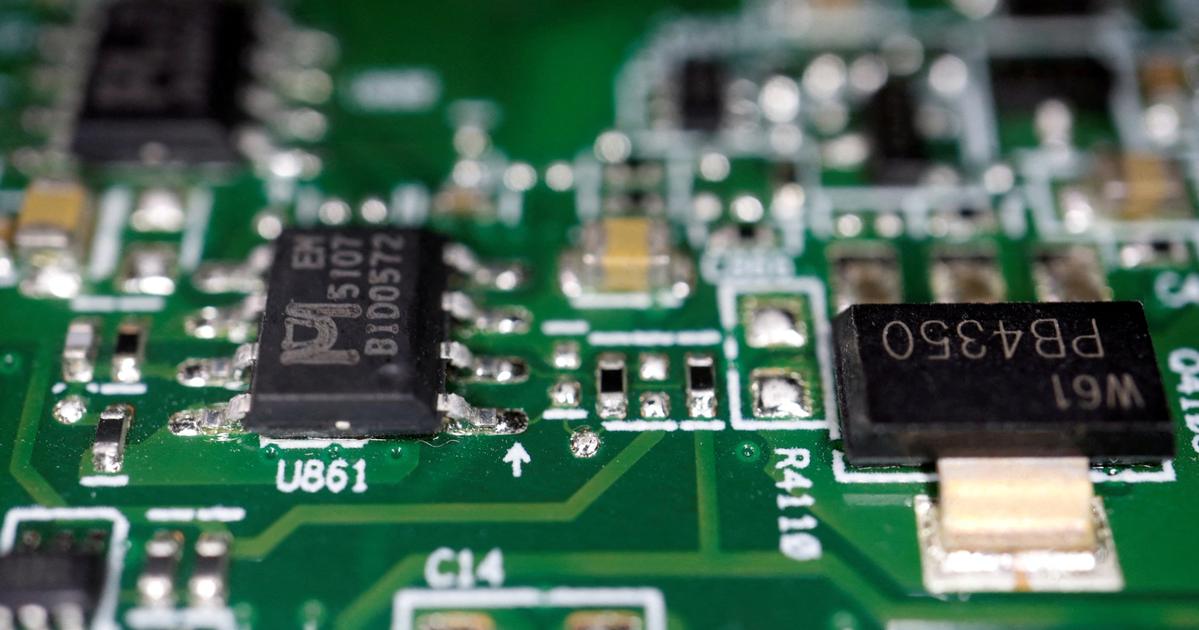
A growing consensus in Washington towards tightening restrictions on China’s access to cutting-edge chip technology will have a negative, long-term impact on the AI sector and the US itself, a leading outlet warned.
2026-11-13 · Semafor
Chip curbs may have long-term negative impacts on AI · assertive framing

Claims (4 extracted, 0 hedged)

A growing consensus in Washington towards tightening restrictions on China’s access to cutting-edge chip technology will have a negative, long-term impact on the AI sector and the US itself, a leading outlet warned. asserted
outlet → grow → sector
New regulations and legislation aiming in particular to cut off “remote access” — whereby Chinese firms use US-made processors via data centers in third countries — “will have consequences,” SemiAnalysis warned, “and we don’t think politicians are thinking them through. asserted
politicians → aim → them
Today’s status quo offers Washington insight into the activities of Chinese AI firms, leverage to cut off remote access, and has dulled Beijing’s motivations to speedily develop its own chip sector. asserted
quo → offer → sector
“Maybe biggest of all,” because Chinese labs largely develop open-source AI, “open source is under attack.” asserted
source → develop → attack
Give feedback · no sign-in needed

No sign-in needed for now. Your note is sent without a name, so it cannot be answered.

History Support