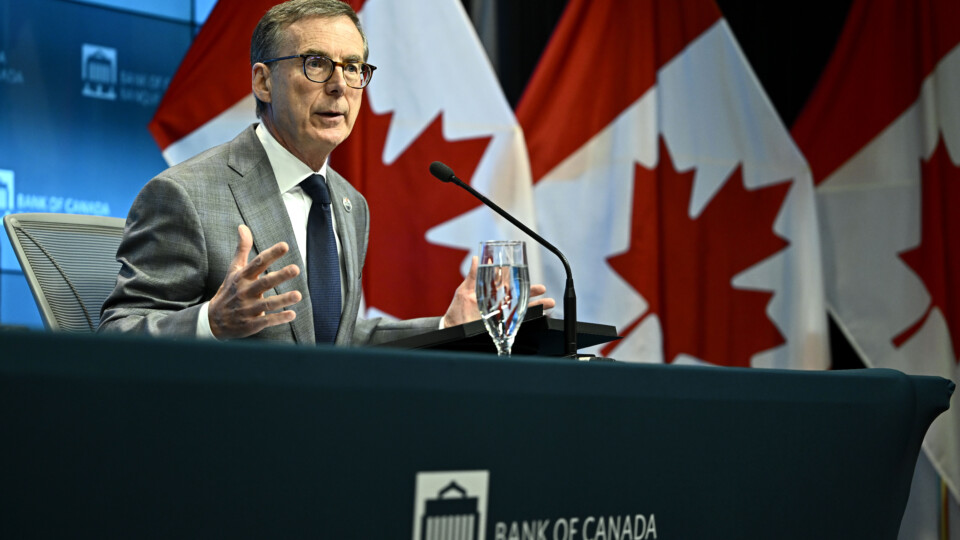
Photo via The Hub

Ottawa to amend Impact Assessment Act instead of appealing Alberta court loss

Read the original at The Hub ↗
Cite

The Hub Staff. (2026, November 13). Ottawa to amend Impact Assessment Act instead of appealing Alberta court loss. The Hub. https://thehub.ca/2026/11/13/ottawa-to-amend-impact-assessment-act-instead-of-appealing-alberta-court-loss/

Dated from the outlet's own feed. Check the original for its byline.

The Hub · collected 2026-11-13 · by The Hub Staff commentary

Quick Summary

The federal government will amend the Impact Assessment Act for a second time instead of appealing an Alberta Court of Appeal ruling that declared much of the law unconstitutional. On October 9, the court ruled in a 4-1 opinion that the act's "designated projects" scheme exceeds federal jurisdiction, particularly regarding the health and social conditions of Indigenous peoples. By choosing not to appeal to the Supreme Court, Ottawa is opting to revise the legislation quickly to provide certainty for investors and industry while project reviews continue on a case-by-case basis.
Written by AI on 2026-11-13, from this article's own text only (the story summary below draws on all the coverage).
See how they differ ↓

AI analysis

Story summary

The federal government has decided not to appeal a recent Alberta Court of Appeal ruling that declared parts of the Impact Assessment Act unconstitutional. The court found that the act still oversteps provincial jurisdiction despite modifications made by Ottawa after the Supreme Court struck down much of the law in 2023. Instead of appealing the decision, the government will amend the act to address the court's concerns. Environment Minister Julie Dabrusin's office stated that the amendments will be made to account for the court ruling but did not specify when or what the changes will be. The act, also known as Bill C-69, has faced strong opposition from the oil and gas industry and conservative politicians, who have dubbed it the "no more pipelines act."

Written for “Ottawa to Amend Impact Assessment Act” on 2026-11-21, grounded in this article and the 1 other(s) covering the same event.

How they differ

2 outlets covered “Ottawa to Amend Impact Assessment Act”.

What each outlet says

One AI summary per outlet of its latest article on this story, written from that article alone and checked against it. Open the article for the outlet's own words.

The HubThis outlet13 Nov

The federal government will amend the Impact Assessment Act for a second time instead of appealing an Alberta Court of Appeal ruling that declared much of the law unconstitutional. On October 9, the court ruled in a 4-1 opinion that the act's "designated projects" scheme exceeds federal jurisdiction, particularly regarding the health and social conditions of Indigenous peoples. By choosing not to appeal to the…

Ottawa to amend Impact Assessment Act instead of appealing Alberta court loss (this article)
Toronto Star12 Nov

The federal government has decided not to appeal an Alberta Court of Appeal ruling that parts of the Impact Assessment Act are unconstitutional, despite previous modifications to the law. Environment Minister Julie Dabrusin’s office indicated that the government will instead amend the act to comply with the court’s decision. The Impact Assessment Act, also known as Bill C-69, has faced significant opposition from…

Feds won't appeal Alberta court ruling that Impact Assessment Act is unconstitutional →

Compared with similar articles

This article reads leans right and hedges 9% of its claims. Each row says how that neighbour differs.
Toronto Star
Leans right Hedges 0 of 7 claims Outlet record 65/100

Story

Ottawa to Amend Impact Assessment Act
Politics · 2 article(s) covering the same event. See how they differ ↑
How this article was measured signals, leaning charts, publisher record, byline, topics and claims

Signals How these are calculated →

Claims extracted
54
sentences that state something as happening or true
Uncertain
9%
5 of 54 hedged ("reportedly", "may", "according to")
Leaning
Leans right
expected in commentary, which argues a position · beta estimate
Publisher signals
not measured
these signals count newsroom corrections; Commentary has none to count
Outlets on this story
2
Politics
Same framing elsewhere
1
articles that frame the event the way this one does
Analyzed 2026-11-13 · how these are computed

How this is being covered How these are calculated →

Article leaning vs. publisher reliability
Source leaning vs. consistency

Publisher

The Hub · 88 article(s) · 0 correction(s) detected
No corrections detected for this publisher. That may mean careful reporting, or simply that nothing has been checked.

Who wrote this

The Hub Staff
31 article(s) here · 1 carrying a prediction
Statistics Canada’s early reading has sales dropping 1.5 percent that month, though the agency cautioned that the unofficial figure will be revised.
Secondly, it would be interesting to know if Mr. Shimooka thinks any of the blame can be assigned to Canada’s military leadership.
- The budget debate in the House of Commons is concluding with a final vote expected to pass.
2026-11-19 · assertive framing · Parliament Today: Budget debate reaches its final day
Slade found it in thinkers whose reputations might put them in different camps.
That is not because the economy is booming: real growth is expected to slow to 1 percent this year.
How could they spend so much to achieve so little?” — Pierre Poilievre, Conservative MP for Battle River—Crowfoot Government defends budget as investment “They can laugh as much as they want, but Canadians know that confident countries invest in themselves.
2026-11-17 · assertive framing · Lines that landed: Question Period for November 17
Called the Alberta Growth Connector, the 48-inch line would run west to east, linking growing Western Canadian gas supply with oilsands operations in the province’s northeast.
The amendment on the table Monday would have added the parliamentary secretary to the minister of finance.
The reading came in a tick below the 3.2 percent economists had expected, and below the 3.4 percent the Bank of Canada projected for the fourth quarter.
The first, No. 13, would amend the Income Tax Act and the Income Tax Regulations.
Wire or desk byline, not an individual reporter.
Also by The Hub Staff
Nothing else under this byline is closely related to this article, so these are simply their most recent.
All 31 articles by The Hub Staff →

Topics

Alberta Ottawa Parliament the Impact Assessment Act the Supreme Court

Subjects

Alberta GPE · 4× Falkner PERSON · 3× Ottawa ORG · 3× Parliament ORG · 3× the Supreme Court ORG · 3× Alberta Court of Appeal ORG · 1× Environment ORG · 1× Julie Dabrusin PERSON · 1× Kevin Feehan PERSON · 1× the Supreme Court of Canada ORG · 1×

Narrative

Ottawa will amend the Impact Assessment Act a second time rather than take an Alberta Court of Appeal opinion that found much of the federal project-review law unconstitutional to the Supreme Court of Canada, Environment Minister Julie Dabrusin’s office has confirmed.
framing: assertive · carried by 1 article(s) · first seen 2026-11-13
Ottawa will amend the Impact Assessment Act a second time rather than take an Alberta Court of Appeal opinion that found much of the federal project-review law unconstitutional to the Supreme Court of Canada, Environment Minister Julie Dabrusin’s office has confirmed.

Claims (54 extracted, 5 hedged)

Ottawa will amend the Impact Assessment Act a second time rather than take an Alberta Court of Appeal opinion that found much of the federal project-review law unconstitutional to the Supreme Court of Canada, Environment Minister Julie Dabrusin’s office has confirmed. asserted
office → amend → Canada
The government says it will move quickly. asserted
it → say → ?
It has not said what the changes will contain or when they will be made public. asserted
they → say → what
That leaves major project proponents working under a law that three appellate opinions have now found oversteps federal jurisdiction. asserted
opinions → leave → jurisdiction
In a 4-1 opinion released Oct. 9, Alberta’s top court concluded that the amendments Parliament passed in 2024 did not cure the defects the Supreme Court identified in 2023. asserted
Court → release → 2023
The majority found the act’s “designated projects” scheme and its regulations remain unconstitutional except insofar as they apply to federal undertakings. asserted
they → find → undertakings
Justice Kevin Feehan dissented and would have upheld the amended act. asserted
Feehan → dissent → act
The majority found that the act’s definition of “adverse effects within federal jurisdiction” reaches beyond federal powers, notably on migratory birds and on the health, social and economic conditions of Indigenous peoples. asserted
definition → find → peoples
Parliament had added a “non-negligible” threshold for those effects, but the court said that bar remains low in practice. asserted
bar → add → practice
Once a project is designated, the act bars activities that could cause such effects. uncertain
that → designate → effects
A negative federal decision can keep that bar in place indefinitely, even for projects primarily under provincial jurisdiction. asserted
decision → keep → jurisdiction
By not appealing, Ottawa gives up the chance to have the Supreme Court narrow or reverse it. asserted
Court → appeal → it
Amy Falkner, Dabrusin’s press secretary, confirmed the plan in a media statement, the National Post reported, as did The Canadian Press. asserted
Press → confirm → statement
“The details of these amendments will be confirmed in due course. asserted
details → confirm → course
Canada will move quickly to provide certainty to investors, industry and Indigenous Peoples, so together we can advance major projects and create shared prosperity for all Canadians,” Falkner said. asserted
Falkner → move → Canadians
No replacement framework yet No new statute has been proposed, and no date has been given for releasing the amendments. asserted
date → propose → amendments
Falkner said they will come on top of changes already proposed in Bill C-39, the Building Canada Strong Act. asserted
they → say → Bill
That bill, tabled Sept. 21, would make the Canada Energy Regulator the sole assessor for pipelines, power lines and certain offshore renewable projects. asserted
Regulator → table → pipelines
It would also set a one-year target for federal reviews. asserted
It → set → reviews
It passed second reading 296-26 on Oct. 8, the day before the Alberta ruling, and is now before a Commons committee. asserted
It → pass → committee
Weeks earlier, on Sept. 3, cabinet had already removed interprovincial and international pipelines and power lines from the act’s project list by regulation. asserted
cabinet → remove → regulation
That shift does not fully escape the ruling. asserted
shift → escape → ruling
Ottawa has said the energy regulator will still be bound by the Impact Assessment Act’s provisions when it carries out its reviews. asserted
it → say → reviews
For now, reviews will proceed case by case. asserted
reviews → proceed → case
“In the interim, the Impact Assessment Agency of Canada will work with proponents to determine the best path forward for their specific project assessments as we finalize amendments to the (act),” Falkner said. asserted
Falkner → work → act
The Alberta majority accepted that Parliament may be able to build an assessment regime that complements existing environmental regulation. uncertain
that → accept → regulation
Its objection was to the act as drafted. asserted
objection → draft → act
The law sets no standards for what a project may or may not do in areas of federal jurisdiction, the majority found, so designated projects could be measured against criteria never spelled out in advance. uncertain
projects → set → advance
That uncertainty, it reasoned, heightens the risk that a narrow federal interest becomes the justification for a sweeping review of matters belonging to the provinces. asserted
interest → reason → provinces
The Supreme Court voiced a similar worry in 2023, warning against federal assessment becoming a “constitutional Trojan horse.” asserted
assessment → voice → 2023
The act, passed in 2019 as Bill C-69, has now lost three times on appeal. asserted
act → pass → appeal
Alberta’s Court of Appeal first found it unconstitutional in 2022. asserted
it → find → 2022
The Supreme Court largely agreed in 2023. asserted
Court → agree → 2023
After Ottawa amended the law through its 2024 budget implementation bill, Alberta sent the revised version back to court. asserted
Alberta → amend → court
Reaction from both sides Premier Danielle Smith and Justice Minister Mickey Amery welcomed the decision. asserted
Smith → welcome → decision
They said it “will necessitate a major overhaul to the legislation that will result in the elimination of all federal interference in intra-provincial infrastructure projects. asserted
that → say → projects
Environmental lawyers were dismayed. asserted
lawyers → dismay → ?
Charlie Hatt, climate director at Ecojustice, which had urged an appeal, called the decision deeply disappointing. asserted
which → urge → decision
“Canadians deserve a federal government that is prepared to defend its jurisdiction to assess the environmental consequences of major projects and ensure decisions are made in the public interest,” Hatt said. asserted
Hatt → deserve → interest
Writing for The Hub in April, before the latest ruling, Charles Lammam argued that court decisions on project approvals have compounded the regulatory burden facing investors. asserted
decisions → write → investors
…and 14 more, not listed.
Give feedback · no sign-in needed

No sign-in needed for now. Your note is sent without a name, so it cannot be answered.

History Support