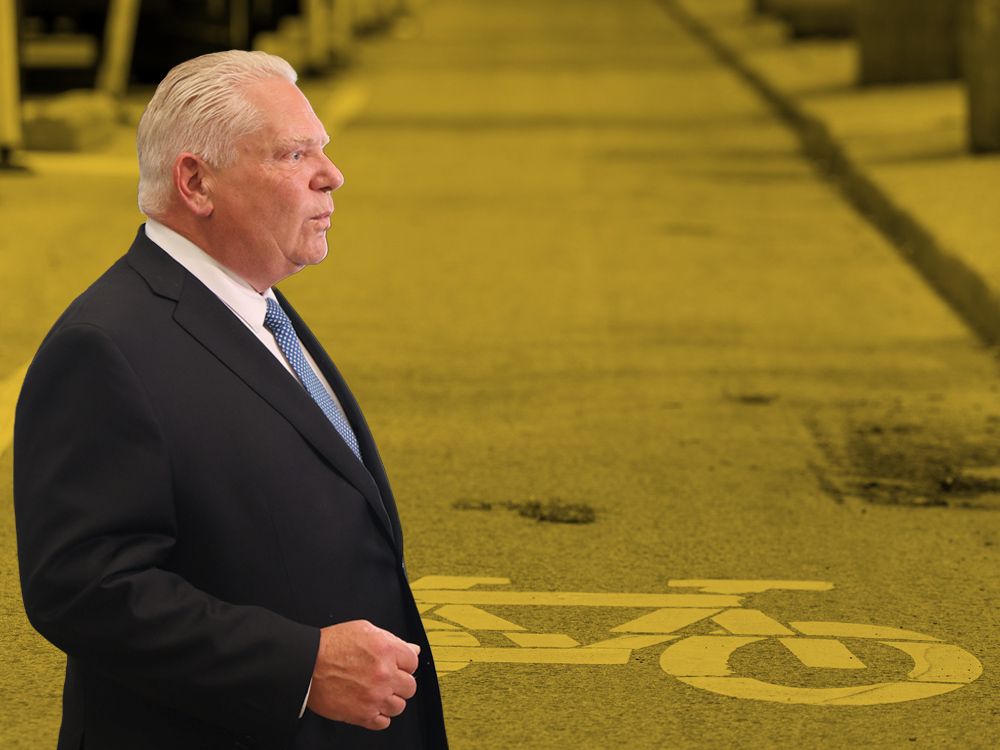
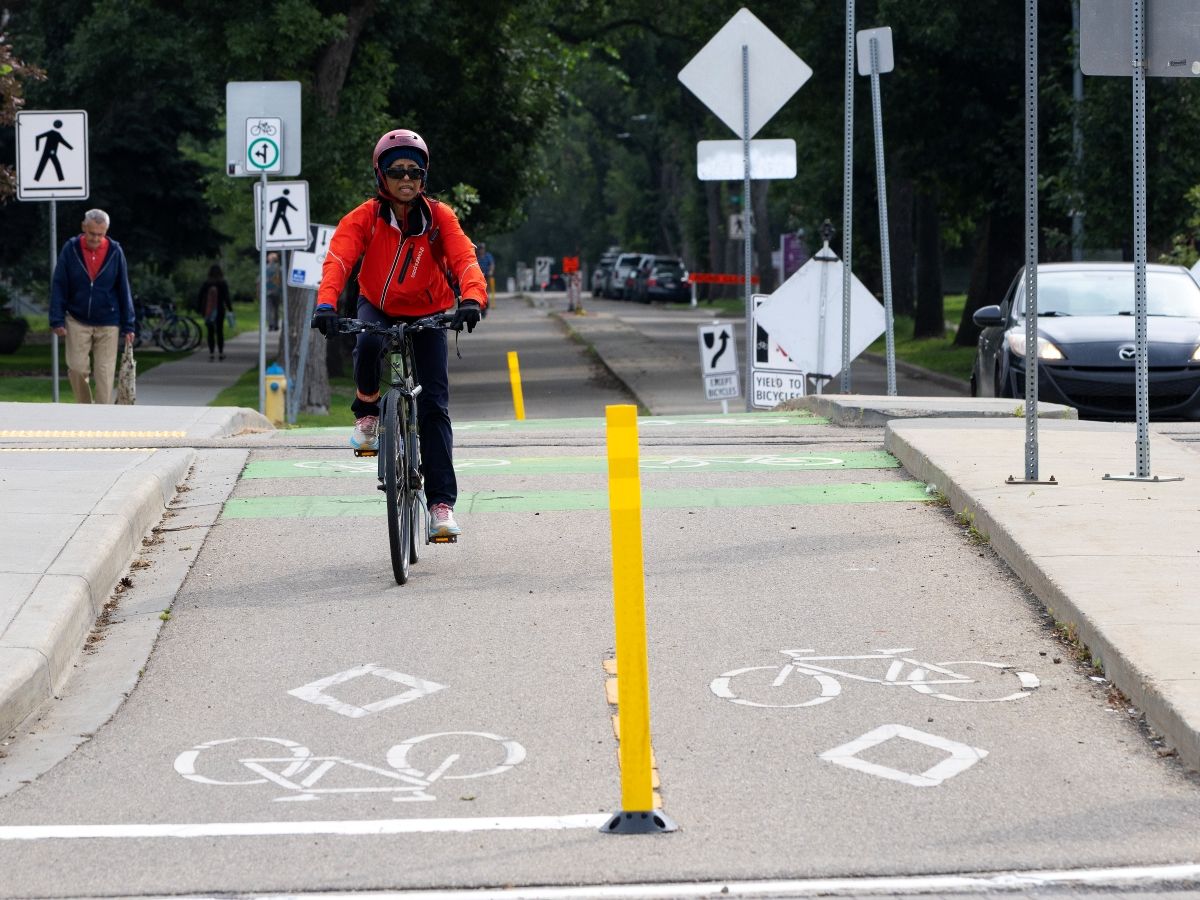
Photo via National Post

Jamie Sarkonak: Ontario’s highest court puts bike lane ‘experts’ in their place

Read the original at National Post ↗
Cite

Sarkonak, J. (2026, August 20). Jamie Sarkonak: Ontario’s highest court puts bike lane ‘experts’ in their place. National Post. https://nationalpost.com/opinion/jamie-sarkonak-bike-lane-experts-cant-bully-ontarios-highest-court

Dated when The Aporia collected the article, usually within hours of publication. Check the original for its exact date and byline.

National Post · collected 2026-08-20 · by Jamie Sarkonak analysis

Quick Summary

The Ontario Court of Appeal overturned an earlier ruling by Justice Paul Schabas, who had said that the removal of a bike lane along a major Toronto thoroughfare required evidence to justify its removal and potentially breached Charter rights. The appeal court rejected this argument, with Justice Grant Huscroft writing that judges should not comment on or critique policy decisions under the Charter. This ruling has implications for bike lanes across Canada, as it sets a precedent against judicial review of traffic planning decisions. The decision was seen as a victory for democracy and a blow to "expert" evidence being used to dictate bike lane policies.
Written by AI on 2026-08-20, from this article's own text only (the story summary below draws on all the coverage).
See how they differ ↓

AI analysis

Story summary

The Ontario Court of Appeal has overturned a lower court's decision that had blocked the removal of bike lanes in Toronto. The original decision, made by Superior Court Justice Paul Schabas, found that the removal of the bike lanes would violate the Charter of Rights and Freedoms, as it would create a "grossly disproportionate" risk of injury or death to cyclists. However, the Ontario Court of Appeal ruled that there is no constitutional right to bike lanes, and that the province's decision to remove them was within its authority. This ruling has been seen as a victory for Ontario Premier Doug Ford and his government, who have long advocated for reducing the number of bike lanes in Toronto. The court's decision has sparked controversy, with some arguing that it undermines the role of judges in protecting individual rights and freedoms. The Ontario Court of Appeal ruled against the cyclists on *Friday*, overturning the lower court's decision and paving the way for the removal of 19km (12 miles) of bike lanes from Toronto's roads. The ruling is significant, as it sets a precedent for the role of judges in reviewing government decisions related to infrastructure development.

Written for “Ontario Bike Lane Ruling” on 2026-11-23, grounded in this article and the 3 other(s) covering the same event.

How they differ

2 outlets covered “Ontario Bike Lane Ruling”.

What each outlet says

One AI summary per outlet of its latest article on this story, written from that article alone and checked against it. Open the article for the outlet's own words.

National PostThis outlet20 Aug

The Ontario Court of Appeal overturned an earlier ruling by Justice Paul Schabas, who had said that the removal of a bike lane along a major Toronto thoroughfare required evidence to justify its removal and potentially breached Charter rights. The appeal court rejected this argument, with Justice Grant Huscroft writing that judges should not comment on or critique policy decisions under the Charter. This ruling has…

Jamie Sarkonak: Ontario’s highest court puts bike lane ‘experts’ in their place (this article)3 articles from National Post on this story
The Guardian18 Aug

The Ontario court of appeal has ruled in favour of the province, allowing it to potentially remove Toronto's bike lanes on its busiest streets. The decision reverses a lower court's ruling that removal would be unconstitutional, citing concerns about safety and the right to life. The bike lanes cover approximately 19km (12 miles) of road and were installed by the city in recent years, despite the Ford government's…

Ontario free to axe Toronto bike lanes, region’s top court rules →

Compared with similar articles

This article reads leans strongly right and hedges 2% of its claims. Each row says how that neighbour differs.
National Post
Leans right further left than this Hedges 0 of 4 claims Outlet record 60/100
National Post
Leans strongly left further left than this Hedges 4 of 20 claims Outlet record 60/100
The Guardian
Leans right further left than this Hedges 2 of 25 claims Outlet record 64/100

Story

Ontario Bike Lane Ruling
Politics · 4 article(s) covering the same event. See how they differ ↑
How this article was measured signals, leaning charts, publisher record, byline, topics and claims

Signals How these are calculated →

Claims extracted
49
sentences that state something as happening or true
Uncertain
2%
1 of 49 hedged ("reportedly", "may", "according to")
Leaning
Leans strongly right
of the writing, not the subject · beta estimate
Publisher signals
60/100
National Post's corrections and hedging, across everything collected from it. Not a measure of accuracy.
Outlets on this story
4
Politics
Same framing elsewhere
1
articles that frame the event the way this one does
Analyzed 2026-08-20 · how these are computed

How this is being covered How these are calculated →

Article leaning vs. publisher reliability
Source leaning vs. consistency

Publisher

National Post · 1242 article(s) · 2 correction(s) detected
Running correction rate · 2 correction(s)

Who wrote this

Jamie Sarkonak
24 article(s) here · 1 carrying a prediction
The human rights complaint would have proceeded in secret were it not for L.Z.’s insistence on securing a publication ban, which was granted on Oct. 13.
Later, BioWare proved it could bring its formula for rich characters, story and combat to its own original worlds.
2026-10-26 · assertive framing · Jamie Sarkonak: BioWare abandoned what made it great
It seems like only yesterday that the Toronto mayoral election appeared to be a foregone conclusion.
Barely two weeks before America’s crucial midterm elections, Black voters could very well emerge as the unanticipated kingmakers in key state races nationwide.
They also show that two weeks prior to the calling of B.C.’s snap election, the government committed to changing the province’s Forest Act to limit how much forestry companies could be compensated for tenure loss.
His lagging poll numbers may as well have been written on his face.
2026-10-15 · assertive framing · Amy Hamm: David Eby’s failure of an election debate
You’d think a municipal ward with the name “Toronto Centre” would be the last electoral district to turn its back on a left-wing incumbent.
He said he couldn’t comprehend a situation where you would choke a woman and ask her if it was that bad.
“I should have understood that supporting people who come forward about sexual violence does not require, and cannot justify, acting in ways that may lead others to conclude that unproven allegations are true or failing to give the person accused a fair opportunity to be heard and considered.”
No one is questioning historical inquiry, but using public money to draw a line from “colonial land policies” to today’s private landowners and business operators amounts to a political campaign that will have consequences.
Also by Jamie Sarkonak
Nothing else under this byline is closely related to this article, so these are simply their most recent.
All 24 articles by Jamie Sarkonak →

Topics

Charter Cycle Toronto Toronto the Ontario Court of Appeal the Ontario Superior Court

Subjects

Schabas PERSON · 8× Saxe PERSON · 3× Toronto GPE · 2× Cycle Toronto ORG · 1× Ontario GPE · 1× Paul Schabas PERSON · 1× Shoshanna Saxe PERSON · 1× the Ontario Court of Appeal ORG · 1× the Ontario Superior Court ORG · 1× the University of Toronto ORG · 1×

Narrative

There are still meritorious academics studying serious topics working as Canada Research Chairs, but there are many others who didn’t have to fully compete for their roles thanks to diversity quotas, and whose work focuses on “Sustainability Governance and Innovation,” “Citizenship, Social Justice and Ethno-Racialization,” “Inclusivity and Active Ageing,” “Reimagining Capitalism,” “Critical Disability Studies,” “History of Health and Social Justice,” “Gender, Race, and Inclusive Politics,” and “Urban Sexualities.”
framing: assertive · carried by 1 article(s) · first seen 2026-08-20
On the other side of the equation was the government, which did not produce its own math on how much harm the bike lane removal would cause and to whom.

Claims (49 extracted, 1 hedged)

On Friday, the Ontario Court of Appeal ruled that there was no Charter right to bike lanes — and delivered an utter spanking to the judge below their rank who said otherwise. asserted
who → rule → rank
Not only was it a victory for those who prefer car to bike, it was a victory for democracy. asserted
it → prefer → democracy
Before the case was overturned, it stood for the principle that elected policymakers had to submit to “expert” evidence on matters of mere traffic planning to avoid breaching the Charter rights of the masses. asserted
policymakers → overturn → masses
Justice Paul Schabas of the Ontario Superior Court arrived at this conclusion last year in hearing out the advocacy group Cycle Toronto, which had complained about the Ontario government’s plan to remove a bike lane along a major thoroughfare downtown. asserted
which → arrive → thoroughfare
While there wasn’t a positive duty on governments to create bike lanes, went the Schabas’ logic, there was a duty to justify the removal of any existing bike lane with evidence satisfactory to the court. asserted
logic → be → court
His scheme entombed all roads and traffic policy in thick constitutional armour. asserted
scheme → entomb → armour
Cycle Toronto’s central expert witness, engineering professor Shoshanna Saxe of the University of Toronto, was key in convincing Schabas that the potential harm caused to cyclists by removing the bike lanes was so severe that it constituted a violation of Canadians’ Charter rights. asserted
it → convince → rights
On the other side of the equation was the government, which did not produce its own math on how much harm the bike lane removal would cause and to whom. asserted
removal → produce → whom
Schabas concluded — erroneously — that he had no choice but to give Toronto’s bike lanes the armour of constitutional protection. asserted
he → conclude → protection
The appeal court above was not so easily fooled. asserted
court → fool → ?
Writing for the three-judge court, Justice Grant Huscroft issued a firm reminder that “Judicial review under the Charter is not an occasion for courts to comment on or critique policy or political decisions.” asserted
courts → write → decisions
He said that Schabas further erred by binding present governments to the policies of past governments. asserted
Schabas → say → governments
It was an example of the system working as intended. asserted
system → work → ?
In examining the cyclists’ pleas with a magnifying glass, Schabas lost sight of his own role in the bigger picture and was corrected for it. asserted
Schabas → examine → it
And there will be knock-on effects elsewhere: Alberta is preparing legislation that will give the provincial government a framework to order the removal of nuisance city bike lanes. asserted
that → knock → lanes
The Schabas ruling was certain to be used as ammunition for cyclist advocates out west; the Schabas takedown, which will be far more persuasive to the courts, is a firm defence to bike lane removal. asserted
which → use → removal
The means by which the Toronto cyclists got their initial victory in court are still cause for concern, however. asserted
cyclists → get → concern
Schabas relied heavily on the cyclists’ expert witness, Saxe, in trying to understand traffic congestion. asserted
Schabas → rely → congestion
Saxe’s view was that “investing in cycling infrastructure is one of the most powerful tools available to reduce congestion,” while removing it would make congestion worse long-term. asserted
congestion → invest → it
She was a proponent of a theory called “induced demand,” which asserts that building more car capacity creates more drivers. asserted
building → call → drivers
Induced demand is the grand unifying theory of urbanists, who usually believe in turn that removing car lanes is a simple way of reducing drivers. asserted
removing → induce → drivers
Commuters, goes the idea, will naturally switch to bikes and buses if car infrastructure is taken away. asserted
infrastructure → go → bikes
These people do not take into account the fact that bikes are particularly vulnerable to theft. asserted
bikes → take → theft
Nor do they think too hard about winter. asserted
they → think → winter
Nor do they dwell much on the fact that few people want to spend two hours on buses full of riff-raff to get to work. asserted
people → dwell → work
And perhaps most critically, they ignore the fact that North America has more space and money than the cycling paradise of Europe, which drives a natural tendency towards car infrastructure. asserted
which → ignore → infrastructure
Saxe’s day job is to promote exactly those kinds of urbanist policy stances. asserted
job → promote → stances
In 2020, she was made a Canada Research Chair in Sustainable Infrastructure. asserted
she → make → Infrastructure
This is a federally funded position that comes with money and prestige. asserted
that → fund → money
The chairs have been around for decades at this point, but within the last 10 years the Liberals have repurposed the program as a vessel for diversity hiring in academia. asserted
Liberals → repurpose → academia
The Liberals have also infused the program with funding to create a multitude of prestigious postings on topics that just so happen to advance the government agenda. asserted
that → infuse → agenda
There are still meritorious academics studying serious topics working as Canada Research Chairs, but there are many others who didn’t have to fully compete for their roles thanks to diversity quotas, and whose work focuses on “Sustainability Governance and Innovation,” “Citizenship, Social Justice and Ethno-Racialization,” “Inclusivity and Active Ageing,” “Reimagining Capitalism,” “Critical Disability Studies,” “History of Health and Social Justice,” “Gender, Race, and Inclusive Politics,” and “Urban Sexualities.” asserted
work → be → Health
It was during the bike lanes court battle that we saw the precise purpose of dumping money into bogus new frontiers in the Canada Research Chairs program. asserted
we → see → program
Progressive policy now has a front line of full-time defenders with the prestige of academia and the punch of a well-funded Liberal think tank. asserted
policy → have → tank
Saxe’s golden aura of an expert could be used to tactically blind the court, and it worked on Schabas. uncertain
it → use → Schabas
They appear as non-partisan experts advancing the objectively correct position on contentious subjects — whether in media, the academic world, or in court. asserted
They → appear → court
Their expert status gives allied decision-makers the cover needed to side with whatever the progressive side wants. asserted
side → give → whatever
It happens all the time. asserted
It → happen → ?
Earlier this year, for example, Federal Court Justice Avvy Yao-Yao Go ruled in favour of a group of RCMP officers who alleged they were victims of systemic racism on thin evidence. asserted
they → rule → evidence
They had lost at the Canadian Human Rights Tribunal, but Go decided that they deserved a redo, in part because the tribunal didn’t give enough weight to the RCMP officers’ expert witness, Kanika Samuels-Wortley. asserted
tribunal → lose → witness
…and 9 more, not listed.
Give feedback · no sign-in needed

No sign-in needed for now. Your note is sent without a name, so it cannot be answered.

History Support