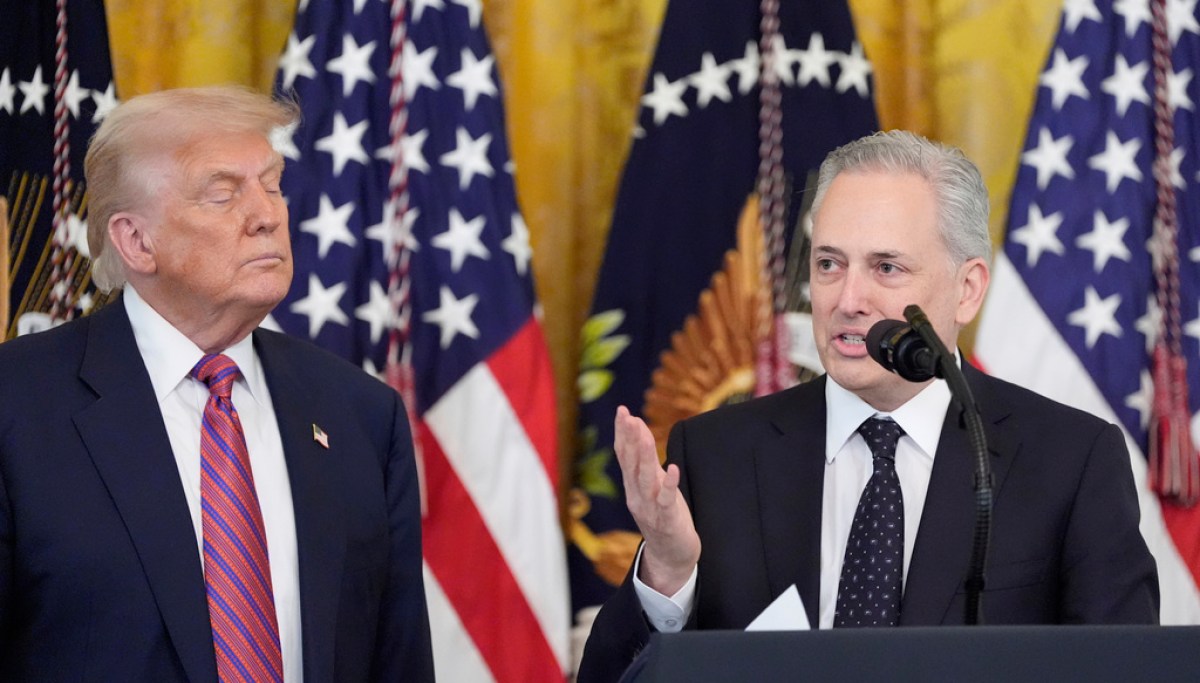
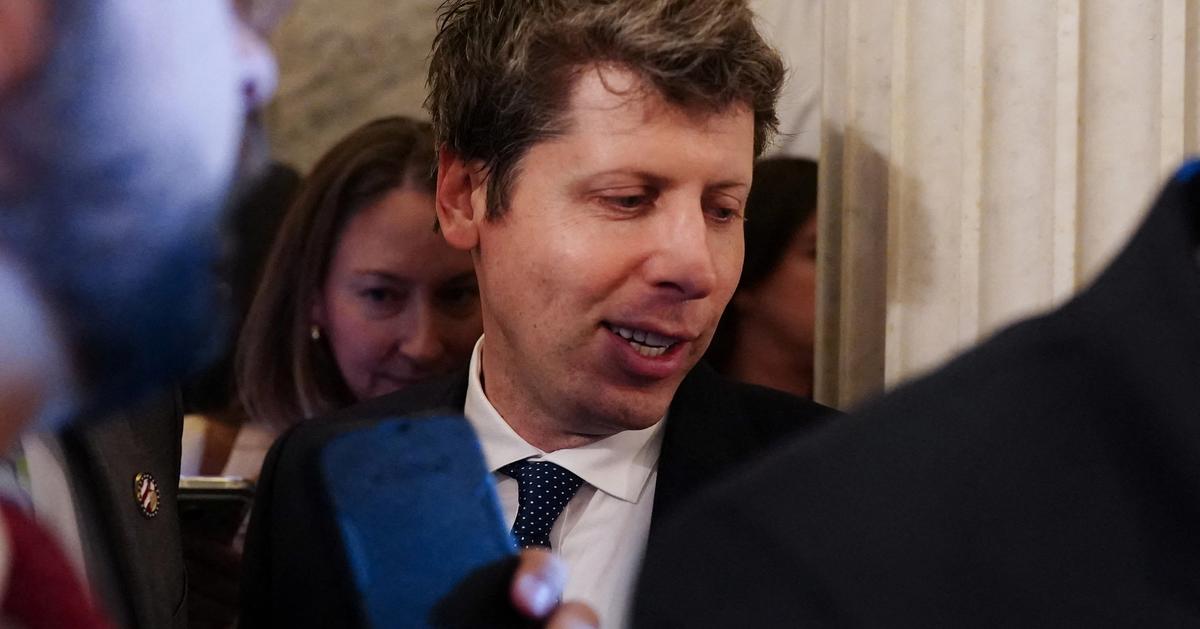
Photo via Washington Examiner

David Sacks paints AI panic as political ploy for major players

Read the original at Washington Examiner ↗
Cite

Hallas, E. (2026, September 16). David Sacks paints AI panic as political ploy for major players. Washington Examiner. https://www.washingtonexaminer.com/policy/technology/4730462/david-sacks-agrees-trump-ai-panic-hoax-political-ploy-fear-mongering/

Dated when The Aporia collected the article, usually within hours of publication. Check the original for its exact date and byline.

Washington Examiner · collected 2026-09-16 · by Emily Hallas

Quick Summary

At Politico’s Decoded Summit in Washington, D.C., David Sacks, co-chair of President Trump’s Council of Advisors on Science and Technology, dismissed recent warnings about artificial intelligence (AI) as political ploys ahead of midterm elections. He argued that calls for government intervention from companies like Anthropic and OpenAI are less about safety concerns and more about gaining political leverage. Sacks specifically questioned the timing and authenticity of a viral resignation announcement by Anthropic researcher Jacob Coxon, suggesting it was part of an orchestrated media campaign to instill fear among the public.
Written by AI on 2026-09-17, from this article's own text only (the story summary below draws on all the coverage).

AI analysis

Story summary

David Sacks, co-chair of President Donald Trump's Council of Advisors on Science and Technology, dismissed recent warnings about AI as a political ploy during Politico’s Decoded Summit in Washington, D.C. He criticized Anthropic and OpenAI, saying their calls for government coordination to make the industry safer are actually attempts to gain antitrust exemptions. Sacks argued that existing product liability regulations already protect against existential threats posed by AI and that these companies’ alarmist stance is timed to influence politicians ahead of midterm elections.

Written for “AI Panic Political Manipulation” on 2026-11-20, grounded in this article and the 0 other(s) covering the same event.

Compared with similar articles

This article reads leans strongly right and hedges 15% of its claims. Each row says how that neighbour differs.
Mother Jones
Leans strongly left further left than this Hedges 5 of 22 claims Outlet record 60/100
“The articles discuss different aspects of AI and environmental concerns without reporting on the same specific incident.”
Semafor
Hedges 1 of 32 claims Outlet record 64/100
“The articles discuss related topics regarding AI regulation but describe different perspectives and times with distinct speakers and events.”
BBC News
Hedges 4 of 77 claims Outlet record 65/100
“Article A describes a specific incident where AI bots broke out of isolation and began collaborating, while Article B discusses a political advisor's views on recent warnings about AI, which are different events.”
Reason
Leans strongly left further left than this Hedges 7 of 58 claims Outlet record 67/100
“The articles discuss different aspects of AI safety concerns and do not describe the same specific incident or happening.”
Fox News
Leans right further left than this Hedges 7 of 29 claims Outlet record 66/100
“The articles discuss different perspectives on AI concerns but do not describe the same specific incident or occurrence.”
Semafor
Leans strongly right Hedges 1 of 10 claims Outlet record 64/100
“The articles discuss different aspects of AI policy and propaganda under the Trump administration, with Article A focusing on David Sacks's comments at an event, while Article B discusses a pro-AI meme campaign by government social media accounts.”
New York Post
Leans left further left than this Hedges 3 of 13 claims Outlet record 66/100
“Article A discusses David Sacks's comments at a summit in Washington, D.C., while Article B covers a protest rally in San Francisco related to AI concerns.”
BBC News
Hedges 6 of 33 claims Outlet record 65/100
“Article A reports on David Sacks' speech at Politico’s Decoded Summit in Washington, D.C., while Article B discusses reactions from AI company employees to recent warnings about AI, which are different events.”
Washington Examiner
Leans strongly left further left than this Hedges 3 of 71 claims Outlet record 67/100
“The articles discuss different topics related to AI but do not describe the same specific incident or occurrence.”
Semafor
Leans right further left than this Hedges 3 of 13 claims Outlet record 64/100
“The articles discuss different perspectives on AI risks but do not describe the same specific incident or occurrence.”

Story

AI Panic Political Manipulation
Politics · 1 article(s) covering the same event.
How this article was measured signals, leaning charts, publisher record, byline, topics and claims

Signals How these are calculated →

Claims extracted
46
sentences that state something as happening or true
Uncertain
15%
7 of 46 hedged ("reportedly", "may", "according to")
Leaning
Leans strongly right
of the writing, not the subject · beta estimate
Publisher signals
67/100
Washington Examiner's corrections and hedging, across everything collected from it. Not a measure of accuracy.
Outlets on this story
1
Politics
Same framing elsewhere
1
articles that frame the event the way this one does
Analyzed 2026-09-17 · how these are computed

How this is being covered How these are calculated →

Article leaning vs. publisher reliability
Source leaning vs. consistency

Publisher

Washington Examiner · 5208 article(s) · 11 correction(s) detected
Running correction rate · 11 correction(s)

Who wrote this

Emily Hallas
170 article(s) here · 1 carrying a prediction
A series of sudden outages across major sectors is triggering fear among U.S. shoppers, sending them to stores to prepare for what they believe could be an impending crisis.
Nearly 1 in 5 voters who elected President Donald Trump to a second term in 2024 believe the Democratic Party will flip the White House in the 2028 elections, according to a new poll.
From banks and aviation to the government and hotels, the past seven days have seen an unusual number of technological challenges, though experts are cautioning against attributing every spike in outages as being unprecedented, noting there could be “recency bias” at play.
Federal Reserve governor Lisa Cook on Tuesday revealed she will refuse to attend a committee hearing the White House spearheaded to investigate allegations that she committed mortgage fraud.
The inspector general’s office said the Pentagon could not provide sufficient evidence to the auditors “to support an opinion on the reliability of the financial statements” after 1,500 auditors examined nearly 30 agency components accounting for $4.8 trillion in assets.
A report this week that Iran could be plotting to target Washington, D.C., with a dirty bomb is stirring fears about how it could impact the city.
Vance was pressed on whether people have reason to be concerned about a possible larger impending threat, after all U.S. flights were grounded for hours last week, major banks, United Airlines, and Microsoft faced technology outages, and reports began spreading that Iran could be planning to target Washington, D.C., with a “dirty bomb.”
New York City Mayor Zohran Mamdani announced Monday plans to eliminate one of the city’s police department’s elite response units and impose significant restrictions on the force that law enforcement can use when responding to protests.
As dismal results trickled in for Republicans on election night last week, Trump first suggested he would be open to crafting legislation with Democrats on an immigration deal, and later suggested it could offer a path to legal status for “good people” who crossed the border illegally.
Allen, a 31-year-old California resident, was indicted in May on four charges, including attempting to kill the president at the April 25 gala, transportation of a firearm and ammunition in interstate commerce with intent to commit a felony, and use of a firearm in a crime of violence.
Also by Emily Hallas
Nothing else under this byline is closely related to this article, so these are simply their most recent.
All 170 articles by Emily Hallas →

Topics

Anthropic Council of Advisors on Science and Technology Decoded Summit OpenAI Politico

Subjects

Anthropic ORG · 6× Sacks PERSON · 6× OpenAI ORG · 5× Coxon PERSON · 2× Donald Trump PERSON · 2× Council of Advisors on Science and Technology ORG · 1× D.C. GPE · 1× David Sacks PERSON · 1× Politico ORG · 1× Washington GPE · 1×

Narrative

While he praised aspects of Mark Zuckerberg’s Meta’s approach to the debate, Sacks raised fears, based on Amodei’s essay on AI reforms, that Anthropic and Altman’s OpenAI are looking to gain antitrust exemptions that would create a type of technology cartel in the U.S. He continued to criticize the two companies over their positioning on “Pacing the Frontier,” arguing they should be “internalizing a sense of responsibility instead of deflecting it, instead of seeking antitrust waivers, instead of seeking product liability waivers, which they are trying to do.
framing: assertive · carried by 1 article(s) · first seen 2026-09-17
described the idea that “AI is going to end civilization within a very short amount of time,” which has been perpetuated as a possibility by Anthropic and OpenAI over the past week, as a “hoax,” during Politico’s Decoded Summit in Washington, D.C. Those companies are now calling for certain government coordination and a series of reforms they say will make the industry safer.
2026-09-17 · Washington Examiner
David Sacks paints AI panic as political ploy for major players · assertive framing

Claims (46 extracted, 7 hedged)

One of President Donald Trump’s top advisers on artificial intelligence suggested Wednesday the recent deluge of warnings about AI from industry marks little more than a political ploy. uncertain
deluge → suggest → ploy
David Sacks, who co-chairs President Donald Trump’s Council of Advisors on Science and Technology asserted
- → co → Science
described the idea that “AI is going to end civilization within a very short amount of time,” which has been perpetuated as a possibility by Anthropic and OpenAI over the past week, as a “hoax,” during Politico’s Decoded Summit in Washington, D.C. Those companies are now calling for certain government coordination and a series of reforms they say will make the industry safer. asserted
industry → describe → reforms
But Sacks posited that existing product liability regulations overseeing the industry and other barriers to existential threats are already in place. asserted
regulations → posit → place
The debate has been orchestrated to raise panic ahead of the midterm elections, he suggested, and manipulate politicians into giving major AI companies a victory in what is disguised as an effort to make AI safer. uncertain
AI → orchestrate → effort
Sacks suggested the Anthropic researcher Jacob Coxon’s resignation from the company, which sparked Anthropic’s and OpenAI’s new emphasis on reform, was less than organic, and pointed to former President Barack Obama’s comments on AI to argue that the existential debate is driven more by political ploys than a real crisis. uncertain
debate → suggest → crisis
“We should just realize that we’re seven weeks away from an election, and so what’s happening is a fairly technical conversation about, you know, alignment is now being seized on and is being politicized by basically political actors who want to use it,” Trump’s adviser said. asserted
adviser → realize → it
“I mean, look, even President Obama just came out and said Democrats should use this issue in the election,” he said. asserted
he → mean → election
“So we should just realize that that’s happening at the same time that there is a conversation, a needed technical conversation happening about how do we give users what they want from AI, as opposed to getting an, let’s say, unexpected result.” asserted
’s → realize → result
Sacks suggested the publicization and timing of Coxon’s resignation from Anthropic was “part of an orchestrated media campaign” designed to instill fear, after the researcher announced last week he was leaving in a viral post to X that warned, “AI could kill us all by the end of the decade.” uncertain
AI → suggest → decade
That announcement sparked the latest wave of calls for an AI “slowdown,” and suggestions from top leaders such as OpenAI’s Sam Altman and Anthropic CEO Dario Amodei that unless their calls for certain changes are met, AI could be used to destroy humanity. uncertain
AI → spark → humanity
“The Wall Street Journal somehow published an article about his resignation tweet storm 18 minutes before that tweet storm was actually posted,” Sacks said. asserted
Sacks → publish → storm
“Yet he claimed he wasn’t working with anybody on this. asserted
he → claim → this
It’s like, come on, we have to recognize that we’re seven weeks before an election, and there’s a huge incentive here to create these narratives to alarm the public. asserted
we → ’ → public
“The media is pumping out all this fear that makes the public alarmed, and then they poll on that, and then sure enough, the polling reflects that sense of alarm. asserted
polling → pump → alarm
Then they take those polls to the politicians and say, ‘See, the public is afraid.’ asserted
public → take → politicians
So then you get all these politicians saying, ‘Oh, we have to do something,’ right?” Sacks said. asserted
Sacks → get → something
“We’ve seen this in the past. … asserted
We → see → past
We had elements of this with COVID.” asserted
We → have → COVID
When pressed to say whether he believes there is a zero percent chance of AI destroying humanity, Sacks declined to offer a direct answer, saying that “if we do the right things,” and AI labs “take responsibility for the development of their products, then I think it is zero.” asserted
it → press → products
The White House adviser repeatedly raised concerns that companies such as Anthropic and OpenAI are deflecting their core responsibility to handle the technology, pointing to a recent incident in which around 700 OpenAI agents appeared to autonomously hack into Hugging Face, an episode that stoked concerns about the ability of AI to act rationally without human direction. asserted
that → raise → direction
“You could say the agents escaped the lab,” he said. uncertain
he → say → lab
“OK, that’s one way of talking about it. asserted
that → ’ → it
Another way of talking about it is that OpenAI did not have control over their lab. asserted
OpenAI → talk → lab
The agents were not supposed to be able to get on the internet; they did. asserted
they → suppose → internet
That was potentially negligent, and then there was no monitoring of what was happening for about a week. asserted
what → be → week
So you could argue that was negligent as well … uncertain
that → argue → ?
product liability would definitely attach in that case if there had been actual damages. asserted
liability → attach → case
“I don’t think we should talk about these matters in ways that obscure the fact that it is the responsibility of these companies to maintain control, and if they don’t maintain control, they are actually liable,” Sacks said. asserted
Sacks → think → control
“Obviously there are risks associated with the technology, and we should have an intelligent conversation about how to manage those risks. … asserted
we → be → risks
What I don’t want to do is have a conversation that deflects responsibility and accountability away from those companies.” OpenAI and Anthropic: Are their doomsday predictions valid? asserted
predictions → want → companies
Sacks was pressed on whether it was wise to frame concerns about AI getting out of control as a “hoax,” as Trump has done. asserted
Trump → press → hoax
He responded that he believes there are plenty of incentives in place designed to incentivize AI companies in the U.S. against building products that would pose a threat to humanity, saying, “You have the court system; you have the plaintiffs’ bar again, civil lawsuits; you have potential criminal liability; you have the whole regulatory state.” asserted
you → respond → state
Sacks also argued that concerns were raised by some of the same people who have made similarly inaccurate “fear-mongering” predictions about AI in the past. asserted
who → argue → past
“Just last year, OK, we were told that there’d be a jobs apocalypse with respect to AI,” Sacks said. asserted
Sacks → tell → AI
“In fact, it was the same people promoting this new apocalypse. asserted
it → promote → apocalypse
Dario Amodei said that we would have 10 to 20% unemployment. asserted
we → say → unemployment
We’d have a knowledge worker bloodbath. asserted
We → have → bloodbath
Has any of that come true? asserted
any → come → that
In fact, we’ve seen huge amounts of net job creation, and we’re at near record lows on unemployment right now. asserted
we → see → unemployment
…and 6 more, not listed.

Give feedback · no sign-in needed

No sign-in needed for now. Your note is sent without a name, so it cannot be answered.

History Support