Photo via The Daily Caller

Microsoft Reportedly Urges Trump Admin Not To Ban Chinese Data Center Parts

Read the original at The Daily Caller ↗
Cite

August, S. (2026, November 10). Microsoft Reportedly Urges Trump Admin Not To Ban Chinese Data Center Parts. The Daily Caller. https://dailycaller.com/2026/11/10/microsoft-trump-chinese-optical-transceivers-fcc-ban-ai-data-centers-dave-mccormick-ruben-gallego

Dated from the outlet's own feed. Check the original for its byline.

The Daily Caller · collected 2026-11-10 · by Simon August

Quick Summary

Microsoft has urged the Trump administration not to ban Chinese-made parts used in AI data centers, arguing that such a move could impede technological progress and potentially harm America’s lead in artificial intelligence. The Federal Communications Commission is reportedly working on publishing a ban covering new models of optical transceivers made by Chinese companies, which are critical for sending data over fiber-optic cables within data centers. According to Reuters, these parts account for two-thirds of worldwide sales, with American firms unable to produce at the same scale currently.
Written by AI on 2026-11-11, from this article's own text only (the story summary below draws on all the coverage).

AI analysis

Story summary

As of November 10, 2026, Microsoft has reportedly urged the Trump administration not to ban Chinese-made parts used in artificial intelligence (AI) data centers, citing concerns that such a ban could slow down the expansion of these facilities and harm America’s competitive edge over China in AI technology. The Federal Communications Commission (FCC), which publishes the Covered List naming equipment deemed risky for national security, is considering adding new models of Chinese optical transceivers to this list due to fears they might be used by Beijing to steal data or disrupt services within government systems handling sensitive information. Microsoft, alongside other firms and trade groups, argues that a ban could impede the growth of critical infrastructure necessary for maintaining technological leadership in AI. The Trump administration has not commented officially on specific plans regarding this potential ban but stated any discussion about additions to the Covered List should be considered speculative until an official announcement is made.

Written for “Microsoft Opposes Chinese Ban” on 2026-11-21, grounded in this article and the 0 other(s) covering the same event.

Compared with similar articles

This article reads leans left and hedges 34% of its claims. Each row says how that neighbour differs.
Semafor
Leans right further right than this Hedges 0 of 4 claims Outlet record 64/100
“The articles discuss different companies and distinct geopolitical maneuvers regarding tech imports and exports between China and other countries, not the same specific incident.”
Semafor
Leans left Hedges 2 of 4 claims Outlet record 64/100
“The articles discuss different companies' stances on US restrictions related to Chinese-made parts for AI data centers, with Nvidia's rivals and Microsoft taking distinct positions.”
Al Jazeera
Leans right further right than this Hedges 1 of 23 claims Outlet record 60/100
“The articles describe different events: one is about Microsoft urging against banning Chinese parts for AI data centers, while the other reports on a Chinese university purchasing Nvidia chips despite being blacklisted.”
New York Post
Leans right further right than this Hedges 2 of 41 claims Outlet record 66/100
“The articles describe different events: one about Microsoft urging against a ban on Chinese parts for US data centers and another about a PLA-linked university buying US chips despite a blacklist.”
Semafor
Leans right further right than this Hedges 1 of 4 claims Outlet record 64/100
“The articles discuss different aspects of US policy towards Chinese technology, with Article A focusing on Microsoft's stance against banning Chinese parts and Article B focusing on potential export curbs due to Nvidia's scandal.”
Dawn
Hedges 4 of 30 claims Outlet record 67/100
“The articles discuss different aspects of AI and data center regulations, involving different companies and issues.”
Al Jazeera
Hedges 0 of 3 claims Outlet record 60/100
“The articles describe different events: one about Microsoft urging the Trump administration not to ban Chinese-made parts for AI data centers, and the other about China warning against new US export controls on AI chips following a scandal involving Nvidia's CEO.”
Just The News
Leans left Hedges 1 of 8 claims Outlet record 59/100
“The articles describe different events related to U.S.-China technology interactions, with Article A focusing on Microsoft urging against a ban on Chinese parts and Article B reporting on a PLA-linked university circumventing an export blacklist for AI chips.”
Just The News
Leans left Hedges 1 of 8 claims Outlet record 59/100
“The articles discuss different aspects of U.S.-China technology relations and export control, not the same specific incident.”
CBS News
Hedges 0 of 2 claims Outlet record 66/100
“The articles describe different aspects of the relationship between U.S. policy and Chinese technology imports, not the same specific event.”

Story

Microsoft Opposes Chinese Ban
Technology · 1 article(s) covering the same event.
How this article was measured signals, leaning charts, publisher record, byline, topics and claims

Signals How these are calculated →

Claims extracted
29
sentences that state something as happening or true
Uncertain
34%
10 of 29 hedged ("reportedly", "may", "according to")
Leaning
Leans left
of the writing, not the subject · beta estimate
Publisher signals
92/100
The Daily Caller's corrections and hedging, across everything collected from it. Not a measure of accuracy.
Outlets on this story
1
Technology
Same framing elsewhere
1
articles that frame the event the way this one does
Analyzed 2026-11-11 · how these are computed

How this is being covered How these are calculated →

Article leaning vs. publisher reliability
Source leaning vs. consistency

Publisher

The Daily Caller · 381 article(s) · 0 correction(s) detected
No corrections detected for this publisher. That may mean careful reporting, or simply that nothing has been checked.

Who wrote this

Simon August
17 article(s) here · 1 carrying a prediction
A grid operator covering much of the eastern U.S. proposed a plan that could help states make data centers pay for power line upgrades.
2026-11-18 · assertive framing · Data Centers Could Get Stuck Paying For Grid Upgrades
The State Corporation Commission opens its evidentiary hearing Tuesday on NextEra’s purchase of Dominion Energy, which the companies say would create “the world’s largest regulated electric utility business by market capitalization.”
Over the years spanning 2026 to 2047, the repeal would save the power sector $160 billion in compliance costs, the agency estimated in the final rule, which used a three percent discount rate.
The company’s website says that a 14 percent decrease, which also takes effect Jan. 1, will partially offset the hike.
Minneapolis City Council members voted Thursday to keep new data centers inside existing downtown buildings, and larger ones would have to buy renewable power.
A draft decision on which day-ahead electricity market the Bonneville Power Administration will join is expected in December, Bonneville senior spokesperson Kevin Wingert said in a statement to the Daily Caller News Foundation.
Called “Project Beehive,” it would put about 456 small reactors and data centers on more than 9,000 acres near Price managed by the Bureau of Land Management, according to company documents NPR reviewed in September.
He added that E&E Legal “will not be able to obtain records about this travel and activity because neither the private groups nor Congress is subject to the Freedom of Information Act.”
As of Thursday afternoon, NBC News has projected that the party has won at least 55 Senate seats, including an upset win in the deep red state of Mississippi.
Monthly bills for a typical home would climb by roughly $14.03 for power and $8.45 for natural gas, the utility estimates.
Also by Simon August
Nothing else under this byline is closely related to this article, so these are simply their most recent.
All 17 articles by Simon August →

Topics

Chinese DCNF FCC Microsoft Reuters

Subjects

Reuters ORG · 10× Chinese NORP · 9× Microsoft ORG · 5× China GPE · 3× FCC ORG · 3× DCNF ORG · 2× Democratic NORP · 2× McCormick PERSON · 2× Pennsylvania GPE · 2× Republican NORP · 2×

Narrative

McCormick introduced a bill with Democratic Arizona Sen. Ruben Gallego, Republican Texas Sen. John Cornyn and Democratic Pennsylvania Sen. John Fetterman to keep Chinese-made optical transceivers out of the government systems that handle the most sensitive national security information, the release says.
framing: mixed · carried by 1 article(s) · first seen 2026-11-11
The company is among several firms and trade groups arguing that a ban could slow the data center buildout and hurt America’s lead over China in AI, the outlet reported, citing three people familiar with the situation.
2026-11-11 · The Daily Caller
Microsoft Reportedly Urges Trump Admin Not To Ban Chinese Data Center Parts · mixed framing

Claims (29 extracted, 10 hedged)

Microsoft has pressed the Trump administration not to ban Chinese-made parts used in artificial intelligence data centers, Reuters reported Tuesday. asserted
Reuters → press → centers
The company is among several firms and trade groups arguing that a ban could slow the data center buildout and hurt America’s lead over China in AI, the outlet reported, citing three people familiar with the situation. uncertain
outlet → argue → situation
“Any announcements will come directly from the Administration,” an administration official said in a statement to the Daily Caller News Foundation. asserted
official → come → Foundation
“Until then, any discussion or reporting about additions to the covered list should be regarded as baseless speculation.” asserted
discussion → regard → speculation
The Federal Communications Commission (FCC) publishes the Covered List, which names communications equipment and services “deemed to pose an unacceptable risk to the national security of the United States or the security and safety of United States persons.” asserted
which → publish → persons
The agency is working on the ban, according to Reuters. uncertain
agency → work → Reuters
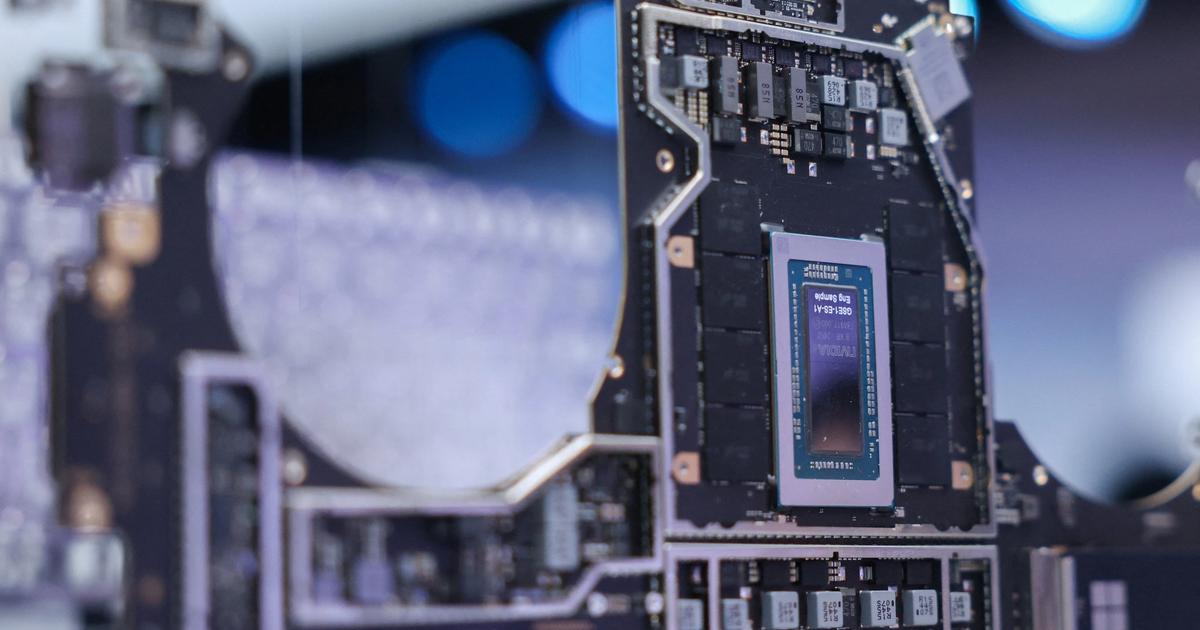
The ban would cover new models of Chinese optical transceivers, which send data over fiber-optic cables inside data centers. asserted
which → cover → centers
The concern is that Beijing could use the parts to steal data or disrupt service, according to Reuters. uncertain
Beijing → use → Reuters
Microsoft was one of a handful of companies that met in September with officials from the White House Office of Science and Technology Policy and the National Security Council to raise supply chain concerns, according to the outlet. uncertain
that → meet → outlet
Microsoft declined to comment to both Reuters and the DCNF. asserted
Microsoft → decline → Reuters
(RELATED: Trump Admin Cleared AI Chip Sales To Chinese Companies With Empty Offices: REPORT) asserted
Admin → clear → Offices
The FCC did not respond to the DCNF’s request for comment. asserted
FCC → respond → comment
Cleanview, a firm that follows data center projects, counts 35 Microsoft data centers being built in the U.S. and another 134 on the drawing board, according to Reuters. “It really threatens to arguably grind (the data center rollout) to a halt,” John Miller, general counsel of the Information Technology Industry Council, a tech lobbying group, told Reuters. uncertain
Miller → follow → Reuters
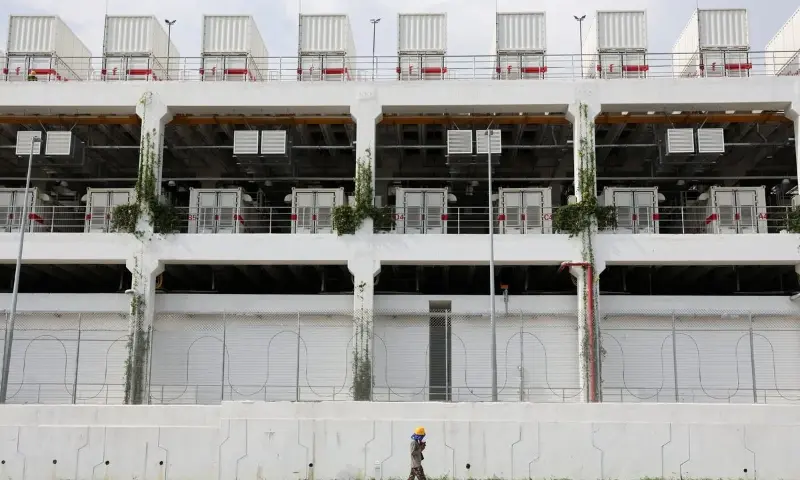
Some data centers use millions of the parts, according to Reuters. uncertain
centers → use → Reuters
Chinese companies account for two-thirds of worldwide sales of optical transceivers, Reuters reported, citing Counterpoint Research. asserted
Reuters → account → Research
American companies Coherent and Lumentum make competing products but cannot yet match the output of Chinese suppliers, Reuters reported, citing a Foundation for American Innovation report. asserted
Reuters → make → report
The FCC has not spoken publicly about the parts. asserted
FCC → speak → parts
The ban may only cover transceivers that carry 3.2 terabits of data per second, two of the sources told Reuters. uncertain
two → cover → Reuters
Production of those models is not expected to pick up until 2028, the outlet reported, citing a Morgan Stanley client note. asserted
outlet → expect → note
The Pentagon added InnoLight, a major Chinese manufacturer, to its list of Chinese military companies in June, according to a Sept. 25 release from Republican Pennsylvania Sen. Dave McCormick. uncertain
Pentagon → add → McCormick
McCormick introduced a bill with Democratic Arizona Sen. Ruben Gallego, Republican Texas Sen. John Cornyn and Democratic Pennsylvania Sen. John Fetterman to keep Chinese-made optical transceivers out of the government systems that handle the most sensitive national security information, the release says. asserted
release → introduce → information
The Senate referred the bill, S. 5548, to the Committee on Homeland Security and Governmental Affairs, its text shows. asserted
text → refer → Security
(RELATED: Microsoft Turns To Wall Street For Billions More As AI Spending Goes Through Roof) asserted
Spending → turn → Roof
“We shouldn’t rely on China for technologies that are essential to our national security,” McCormick said in the release. asserted
McCormick → rely → release
“Our reliance on China to produce these transceivers creates a serious national security vulnerability,” Gallego added in the release. asserted
Gallego → produce → release
“Critical government communication and information systems must be safe, reliable, and free of any foreign interference, but the use of Chinese technology undermines that mission,” Cornyn said. asserted
Cornyn → undermine → mission
The bill would extend an existing limit on federal purchases of semiconductors to cover the parts and would allow waivers, according to the release. uncertain
bill → extend → release
The bill would give suppliers five years to develop sources that comply, according to the release. uncertain
that → give → release
Interior Secretary Doug Burgum described data centers as “manufacturing sites” at a Daily Caller event Tuesday. asserted
Burgum → describe → event

Give feedback · no sign-in needed

No sign-in needed for now. Your note is sent without a name, so it cannot be answered.

History Support