Photo via Washington Examiner

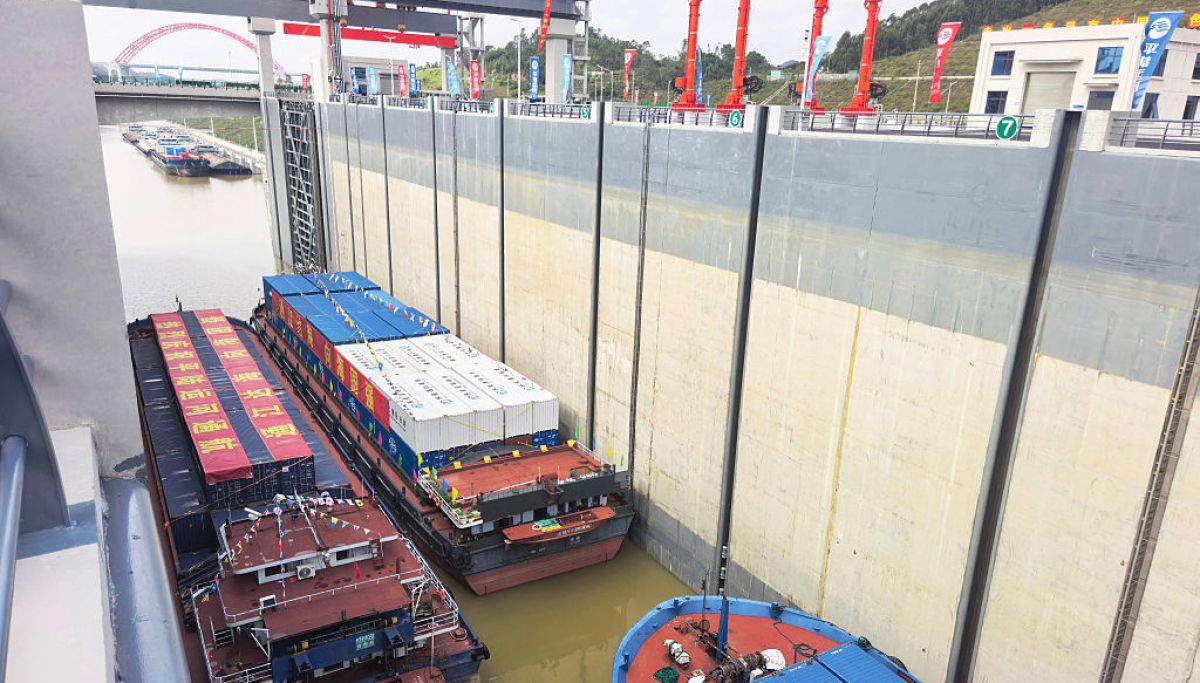
China opens $10 billion shipping canal to Southeast Asia in landmark win for Belt and Road Initiative

Read the original at Washington Examiner ↗
Cite

Nerozzi, T. (2026, September 16). China opens $10 billion shipping canal to Southeast Asia in landmark win for Belt and Road Initiative. Washington Examiner. https://www.washingtonexaminer.com/news/world/4729407/china-opens-10-billion-shipping-canal-southeast-asia-landmark-win-belt-road-initiative/

Dated when The Aporia collected the article, usually within hours of publication. Check the original for its exact date and byline.

Washington Examiner · collected 2026-09-16 · by Timothy Nerozzi

Quick Summary

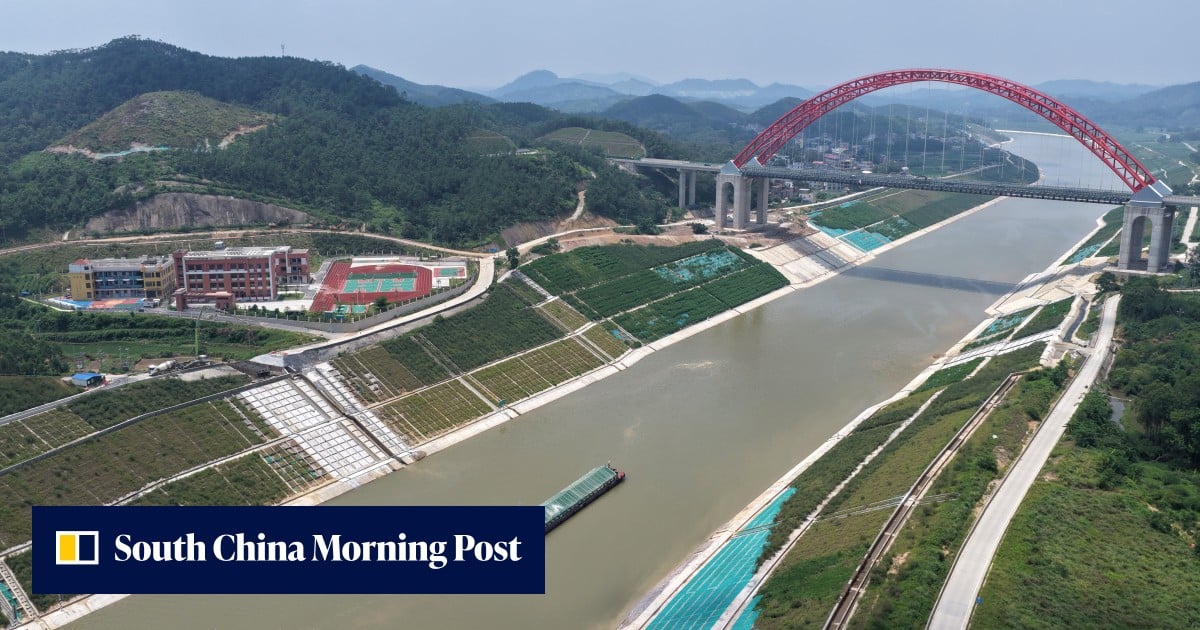
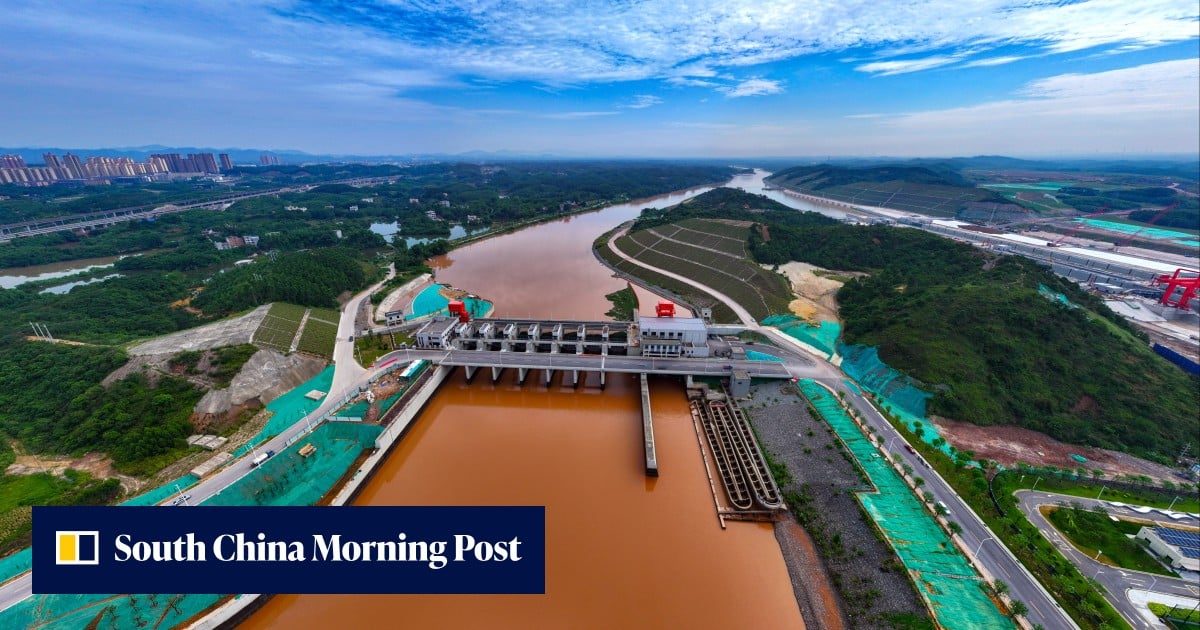
China recently opened the Pinglu Canal, a $10 billion shipping canal connecting the Xijiang River with the Gulf of Tonkin in Southeast Asia. Stretching 83 miles and capable of accommodating vessels up to 5,000 tons, the canal is expected to reduce shipping costs and logistical challenges for southwest China by cutting hundreds of miles off traditional routes. The project is part of China’s Belt and Road Initiative aimed at expanding trade through new infrastructure projects globally, particularly with Southeast Asian nations, which are its largest trading partners.
Written by AI on 2026-09-16, from this article's own text only (the story summary below draws on all the coverage).
See how they differ ↓

AI analysis

Story summary

The Chinese Communist Party recently inaugurated the Pinglu Canal, a significant project under its Belt and Road Initiative that connects the Xijiang River to the South China Sea, reducing shipping distances by hundreds of miles and cutting costs for transporting goods like coal, ore, grain, new-energy materials, and auto parts. Costing approximately $10 billion and spanning 83 miles, this canal is the first river-to-sea waterway built in China since 1949. It aims to stimulate economic growth in underdeveloped southwestern regions by improving access to overseas markets and fostering cross-border investment, potentially transforming these areas similarly to how the Yangtze River has boosted Shanghai's economy.

Written for “Pinglu Canal Opening” on 2026-11-22, grounded in this article and the 2 other(s) covering the same event.

How they differ

2 outlets covered “Pinglu Canal Opening”.

What each outlet says

One AI summary per outlet of its latest article on this story, written from that article alone and checked against it. Open the article for the outlet's own words.

Washington ExaminerThis outlet16 Sep

China recently opened the Pinglu Canal, a $10 billion shipping canal connecting the Xijiang River with the Gulf of Tonkin in Southeast Asia. Stretching 83 miles and capable of accommodating vessels up to 5,000 tons, the canal is expected to reduce shipping costs and logistical challenges for southwest China by cutting hundreds of miles off traditional routes. The project is part of China’s Belt and Road Initiative…

China opens $10 billion shipping canal to Southeast Asia in landmark win for Belt and Road Initiative (this article)
South China Morning Post18 Sep

China has officially launched the Pinglu Canal, a significant waterway project aimed at enhancing trade routes between China's southwestern regions and Southeast Asia. The canal creates a more direct maritime connection, supporting Beijing’s strategic goal of expanding economic ties in the area.

China launches Pinglu Canal; Hong Kong unveils first 5-year plan: SCMP’s 7 highlights →2 articles from South China Morning Post on this story

Compared with similar articles

This article reads leans left and hedges 13% of its claims. Each row says how that neighbour differs.
South China Morning Post
Hedges 0 of 2 claims Outlet record 62/100
South China Morning Post
Hedges 1 of 3 claims Outlet record 62/100
“While both articles discuss the opening of the Pinglu Canal, Article A focuses on the official opening ceremony and its significance for the Belt and Road Initiative, while Article B discusses broader economic implications and comparisons to other major waterways. They appear to be describing different aspects or phases related to the canal's opening rather than the same specific moment.”

Story

Pinglu Canal Opening
Politics · 3 article(s) covering the same event. See how they differ ↑
How this article was measured signals, leaning charts, publisher record, byline, topics and claims

Signals How these are calculated →

Claims extracted
15
sentences that state something as happening or true
Uncertain
13%
2 of 15 hedged ("reportedly", "may", "according to")
Leaning
Leans left
of the writing, not the subject · beta estimate
Publisher signals
66/100
Washington Examiner's corrections and hedging, across everything collected from it. Not a measure of accuracy.
Outlets on this story
3
Politics
Same framing elsewhere
1
articles that frame the event the way this one does
Analyzed 2026-09-16 · how these are computed

How this is being covered How these are calculated →

Article leaning vs. publisher reliability
Source leaning vs. consistency

Publisher

Washington Examiner · 5301 article(s) · 12 correction(s) detected
Running correction rate · 12 correction(s)

Who wrote this

Timothy Nerozzi
60 article(s) here · 1 carrying a prediction
A “Youth Experience Scheme” will also foster travel by young adults between the U.K. and the EU for work and schooling.
Journalists reported evidence that the institution was willing to ignore international regulations and anti-money-laundering protocol to secure wealthy clients — including Russian industry titans and convicted sex offender Jeffrey Epstein.
Nvidia co-founder Jensen Huang will testify before the House next month as lawmakers probe the security implications of his recent affairs with an alleged spy.
The Republican Party walked away from the midterm elections thoroughly defeated and interrogating how they lost their voting base, leading to conclusions that could dramatically change the party’s foreign policy calculus.
European leaders are in a squabble over who will represent them in peace talks to end the Russian invasion of Ukraine, even though the Kremlin has not yet affirmed that it will allow them to sit in on the negotiations.
It is the special envoys who will now head to Moscow for a meeting with Russian President Vladimir Putin, then to Dublin to meet with Ukrainian President Volodymyr Zelensky.
Trump announced a framework that is “going to involve more than Ukraine” and “might involve all of Europe.”
The Democrats’ overwhelming victory in the 2026 midterm elections might seem like a counterbalance to President Donald Trump’s animosity toward Ukraine, but a reinvigoration of U.S. support for Kyiv is not necessarily on the way.
President Donald Trump revealed in an interview that all military funding to Israel will be cut by the end of the year, despite claiming no bad blood with the Middle East ally.
The official results of this week’s Israeli election have been released, and as many observers forecasted, the ethnic Arab political parties have successfully positioned themselves as kingmakers.
Also by Timothy Nerozzi
Nothing else under this byline is closely related to this article, so these are simply their most recent.
All 60 articles by Timothy Nerozzi →

Topics

Beijing CCP China Chinese The Chinese Communist Party

Subjects

Chinese NORP · 6× China GPE · 4× CCP ORG · 2× Beijing GPE · 1× The Association of Southeast Asian Nations ORG · 1× The Center for Global Development ORG · 1× The Chinese Communist Party ORG · 1× The United States GPE · 1× Xi Jinping PERSON · 1×

Narrative

It’s the first canal of its kind built in China since 1949 and is touted as a feather in the CCP’s cap as it continues to build out its New International Land-Sea Trade Corridor — a massive infrastructure project aimed at expanding Chinese trade through new passages and shipping infrastructure.
framing: assertive · carried by 1 article(s) · first seen 2026-09-16
The Chinese Communist Party has chalked up a major win for its Belt and Road Initiative, opening a massive shipping canal that will connect swaths of the country to trade routes in Southeast Asia.

Claims (15 extracted, 2 hedged)

The Chinese Communist Party has chalked up a major win for its Belt and Road Initiative, opening a massive shipping canal that will connect swaths of the country to trade routes in Southeast Asia. asserted
that → chalk → Asia
Beijing announced the official opening of the Pinglu Canal on Wednesday, connecting the Xijiang River with the Gulf of Tonkin in the South China Sea. asserted
Beijing → announce → Sea
The 83-mile waterway will cut hundreds of miles off traditional shipping routes and slash logistical costs. asserted
waterway → cut → costs
“The new artery carries particular significance for China’s southwest, which has long lagged behind the more prosperous eastern coast and faced higher costs getting goods to seaports,” the Chinese government said in a statement celebrating the opening. asserted
government → carry → opening
“Coal, ore, grain, new-energy materials and auto parts from the region can now take a more direct route to overseas markets.” asserted
Coal → take → markets
It additionally claimed that the impact of the canal “could extend beyond the movement of goods, spurring new cross-border investment and deepening regional supply-chain integration.” The canal has been under construction since late 2022 and is estimated to have cost approximately $10.1 billion dollars to finish. uncertain
canal → claim → dollars
It reportedly has the capacity to accommodate vessels weighing up to 5,000 tons. uncertain
It → have → tons
It’s the first canal of its kind built in China since 1949 and is touted as a feather in the CCP’s cap as it continues to build out its New International Land-Sea Trade Corridor — a massive infrastructure project aimed at expanding Chinese trade through new passages and shipping infrastructure. asserted
it → ’ → passages
The project is particularly focused on building out shipping routes to Europe and the Southeast. asserted
project → focus → Europe
The Land-Sea Trade Corridor is only one facet of President Xi Jinping’s grand Belt and Road Initiative, an international finance and construction project aimed at exporting Chinese infrastructure across the globe through ports, railways, canals, pipelines, highways, and border crossings. asserted
Corridor → aim → ports
The scope of the BRI is overwhelming, with approximately 150 countries signed on to at least one project. asserted
countries → sign → project
The United States and its allies have for years cautioned against cooperation with the BRI, characterizing it as a dangerous expansion of Chinese soft power. asserted
States → caution → power
Additionally, the electrical and digital infrastructure provided by Chinese companies is subject to control from the CCP. asserted
infrastructure → provide → CCP
While impoverished nations were initially enthusiastic about participation, the debt accrued from Chinese projects in places like Africa has at times reached crisis levels. asserted
debt → accrue → levels
The Center for Global Development has characterized the current trajectory of the BRI as China’s “transition from financier to debt collector.” asserted
Center → characterize → collector
Give feedback · no sign-in needed

No sign-in needed for now. Your note is sent without a name, so it cannot be answered.

History Support