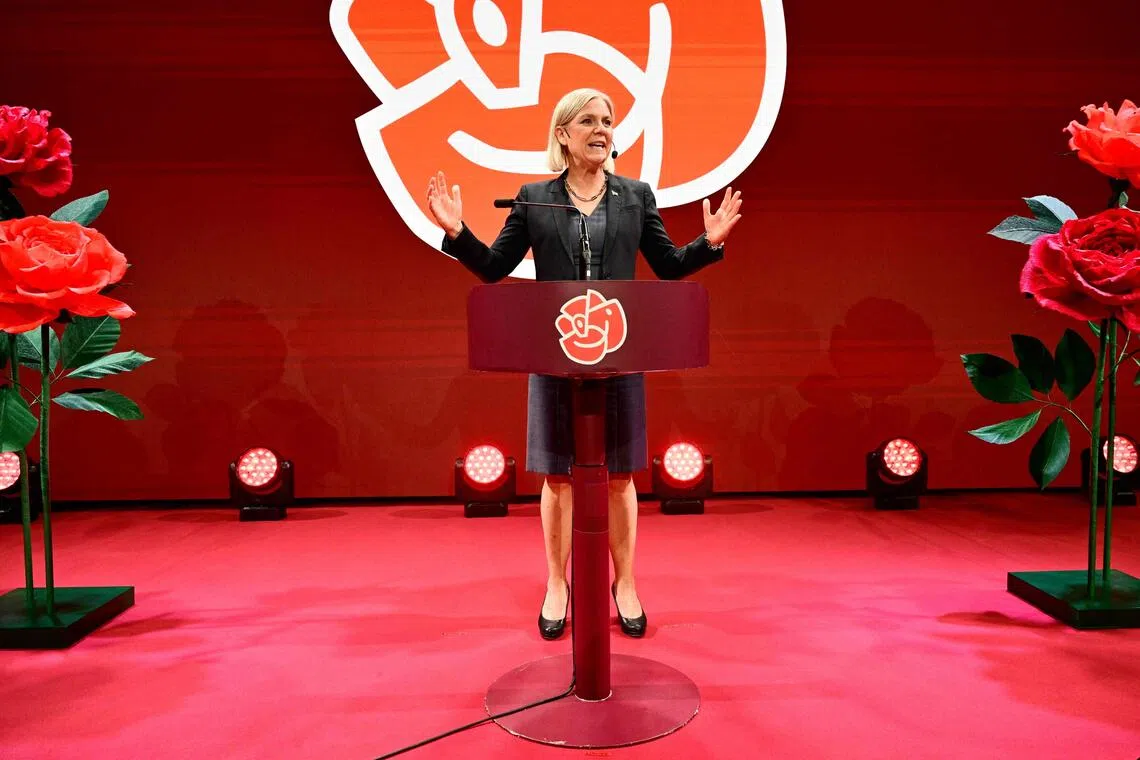
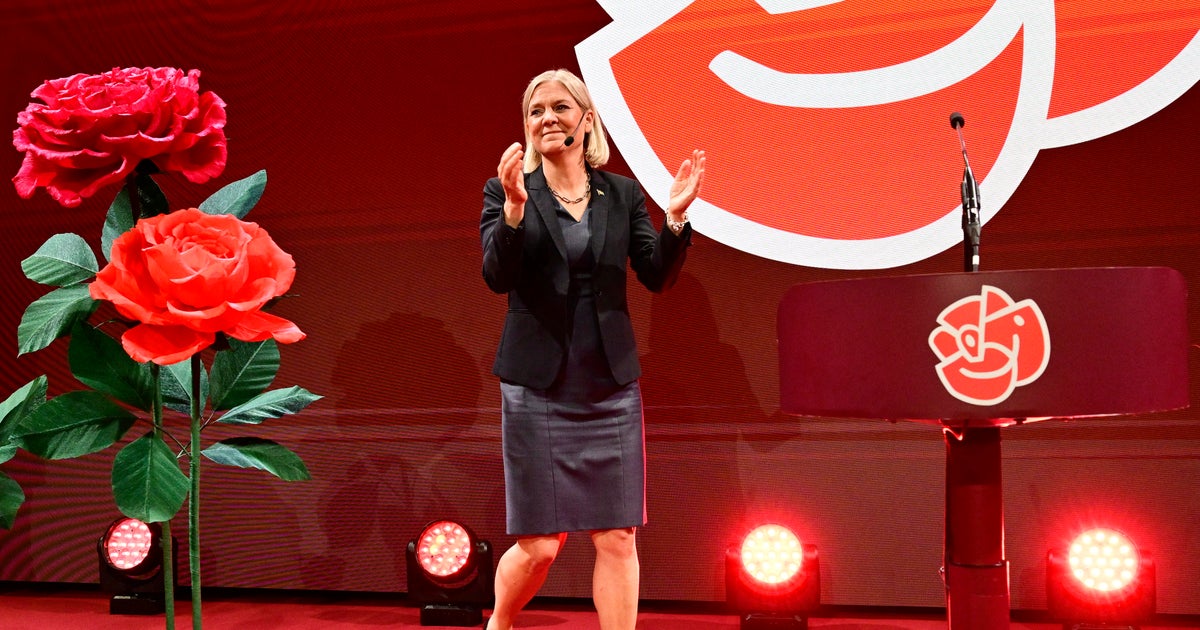
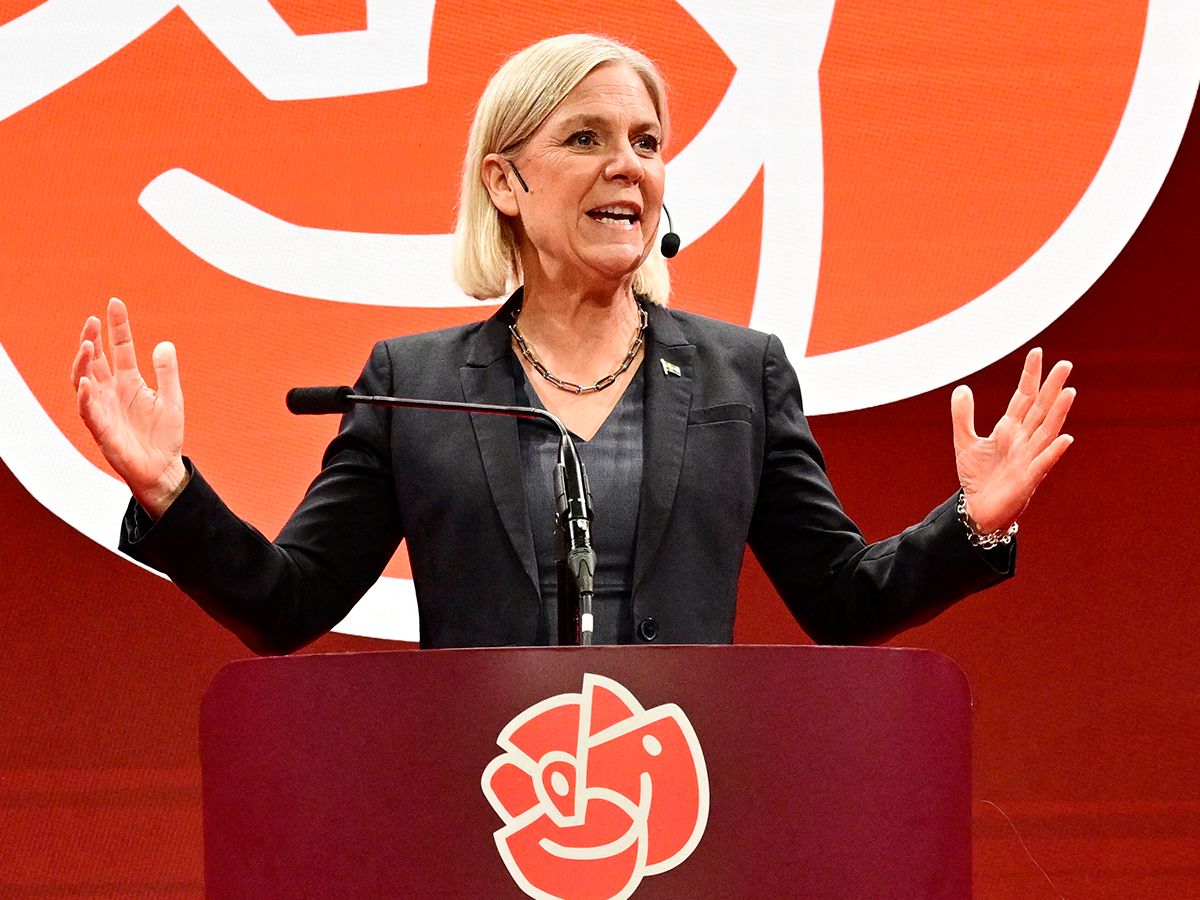
Photo via The Guardian

Sweden voted against more power for the far right – but are centrists listening?

Read the original at The Guardian ↗
Cite

Butler, K., & editor, a. (2026, September 16). Sweden voted against more power for the far right – but are centrists listening? The Guardian. https://www.theguardian.com/world/2026/sep/16/sweden-voted-against-far-right-centrists-afd

Dated when The Aporia collected the article, usually within hours of publication. Check the original for its exact date and byline.

The Guardian · collected 2026-09-16 · by Katherine Butler, associate editor

Quick Summary

Sweden's general election resulted in a setback for the far-right Sweden Democrats, who lost support and slipped from second to third place among political parties. This outcome contrasts with recent gains made by far-right groups elsewhere in Europe. While it is too early to determine the exact coalition that will form under Magdalena Andersson’s leadership, if confirmed as leader of the Social Democrats, her path to power may take months due to the narrow majority held by the left bloc. The election's results have sparked debate over whether this signals a turning point in Europe’s political landscape or if it is merely reflective of specific local conditions.
Written by AI on 2026-09-16, from this article's own text only (the story summary below draws on all the coverage).
See how they differ ↓

AI analysis

Story summary

On September 13, 2026, Sweden held a closely contested general election with over 8 million registered voters out of a population of about 10.6 million, voting to decide the country's next government. The main battle was between Prime Minister Ulf Kristersson’s center-right coalition and the opposition led by Magdalena Andersson from the Social Democrats. Initial results showed a narrow lead for the left-wing bloc, but with counting ongoing until Wednesday to include late-arriving votes, the final outcome remained uncertain.

If the center-right wins, it could bring the Sweden Democrats into government for the first time, raising concerns about potential policy shifts and impacts on civil liberties. The opposition, however, holds a slim lead as of Monday morning with approximately 20,000 vote advantage over the incumbent coalition in preliminary counts.

With each side needing to make significant concessions to form a majority, Sweden may face prolonged negotiations similar to or even longer than its previous record of 37 days after the 2022 election. Political analysts suggest this could lead to weeks of talks and potentially a snap election if consensus is not reached quickly on forming a new government.

Written for “Sweden Election Results” on 2026-11-21, grounded in this article and the 23 other(s) covering the same event.

How they differ

13 outlets covered “Sweden Election Results”.

What each outlet says

One AI summary per outlet of its latest article on this story, written from that article alone and checked against it. Open the article for the outlet's own words.

The GuardianThis outlet16 Sep

Sweden's general election resulted in a setback for the far-right Sweden Democrats, who lost support and slipped from second to third place among political parties. This outcome contrasts with recent gains made by far-right groups elsewhere in Europe. While it is too early to determine the exact coalition that will form under Magdalena Andersson’s leadership, if confirmed as leader of the Social Democrats, her path…

Sweden voted against more power for the far right – but are centrists listening? (this article)2 articles from The Guardian on this story
The Independent17 Sep

Sweden's Prime Minister Ulf Kristersson announced his resignation after his ruling right-wing bloc lost Sunday’s parliamentary election to the centre-left opposition, which secured 176 seats compared to the bloc’s 173 in a 349-seat parliament. In a letter posted on social media, Kristersson said that Speaker of Parliament Andreas Nordström will lead efforts to form a new government, with Social Democratic Party…

Sweden’s Prime Minister Ulf Kristersson resigns after election loss →4 articles from The Independent on this story
The Straits Times17 Sep

In recent Swedish elections on September 13, centre-left parties narrowly won with 49.5% of the vote compared to the centre-right’s 48.8%, securing a slight majority in Parliament. The election results show that while far-right nationalists previously gained support by focusing on crime and migration issues, this time voters prioritized healthcare and education, leading to a comeback for Sweden's centre-left…

Sweden swings back left, bucking a far right march in Europe →4 articles from The Straits Times on this story
Al Jazeera18 Sep

Magdalena Andersson, leader of Sweden’s centre-left Social Democrats, started discussions to form a new coalition government after her party won a slim majority in last week’s parliamentary elections. With Parliament Speaker Andreas Norlen’s request and Prime Minister Ulf Kristersson’s resignation, Andersson faces the challenge of uniting other left-wing parties like the Greens, Centre Party, and Left Party by…

Sweden’s left-wing opposition leader begins efforts to form government →3 articles from Al Jazeera on this story
South China Morning Post17 Sep

Ulf Kristersson, Sweden’s conservative Prime Minister, has resigned after his bloc lost to a left-wing opposition coalition that won a narrow majority in parliament following the general election. Magdalena Andersson’s Social Democrats lead the winning left-wing bloc, which holds three more seats than Kristersson’s right-wing alliance in the 349-seat legislature. The vote difference between the two sides was…

Sweden’s PM Kristersson resigns after left-wing wins slim majority in election →2 articles from South China Morning Post on this story
BBC17 Sep

Ulf Kristersson, Sweden's Prime Minister, resigned on Thursday following his right-wing bloc's narrow defeat in the country’s general election. Preliminary results showed a difference of about 50,000 votes between the two major political blocs, with the centre-left opposition expected to secure 176 seats out of 349 in Sweden's parliament. Kristersson had promised cabinet positions to the anti-immigration Sweden…

Swedish PM Kristersson resigns after election loss →2 articles from BBC on this story
Show 7 more outlets
The Hindu13 Sep

Swedes voted on September 13, 2026, in a highly contested election that could see the far-right Sweden Democrats enter government for the first time. Prime Minister Ulf Kristersson's ruling right-wing bloc is competing against the centre-left opposition led by Magdalena Andersson’s Social Democrats. Opinion polls indicated a narrow lead for the opposition but showed the ruling bloc closing the gap, with Kristersson…

Swedes vote in election that could usher far right into government →
CBC14 Sep

Sweden's recent national election ended in a tight race, with preliminary results showing a slight majority for the opposition parties but significant uncertainty about the final outcome and formation of the next government. With nearly 95% of districts counted, the opposition secured 176 seats out of 349 in parliament, while the current conservative-led coalition has 173 seats. The Sweden Democrats, an…

Preliminary results suggest a 3-seat majority for opposition as tight Swedish election ends →
Semafor14 Sep

Sweden's center-left opposition is likely to win the recent tight election, though far-right parties have gained significant influence due to rising anti-immigrant sentiment. This shift reflects broader changes in European politics, as evidenced by Marine Le Pen’s expected victory in France and Nigel Farage's financial boost from megadonors in the UK.

Sweden's center left looks set to win in tight election race →
CBS News14 Sep

Sweden's recent election resulted in a tight race with left-wing opposition parties maintaining a slim majority over Prime Minister Ulf Kristersson's right-wing alliance as of Monday. With 95% of votes counted, the four left-wing parties had a three-seat advantage in the 349-seat parliament, but negotiations to form a government are expected to be challenging and could last several weeks. Both sides need to make…

Sweden faces political uncertainty as election deals far-right a blow →
Washington Examiner14 Sep

Swedish national election results show the left-wing opposition led by Social Democrat Magdalena Andersson is projected to win with 176 seats, compared to the right-wing incumbent’s 173 seats. The margin of victory for Andersson's coalition is extremely narrow, with only about 30,000 votes separating them. While the Sweden Democrats lost significant ground, their role in future governance remains uncertain due to…

Swedish Left projected for narrow victory in national elections, but pathway to governing coalition unclear →
Daily Mail17 Sep

Sweden's Prime Minister Ulf Kristersson has resigned after his coalition lost the general election to a centre-left opposition alliance that won 176 seats in Sweden’s 349-seat parliament. The Social Democrats, led by former PM Magdalena Andersson, emerged as the single largest party with 99 seats but will face challenges forming a government due to internal tensions within the left-leaning bloc. Despite securing…

Sweden's PM resigns after losing general election to centre-left opposition →
National Post18 Sep

In Sweden's recent parliamentary election, the Red-Green bloc led by the Social Democrats narrowly won with 176 seats compared to 173 for the opposing Tidö bloc. Immigration policy played a significant role; despite initial concerns from progressive voters about immigration restrictions, the election results indicate that stricter immigration policies did not alienate them as expected. Prime Minister Magdalena…

Geoff Russ: Sweden’s left does U-turn on immigration, wins government →

Where they agree and split

Agreed

AI · cited, from two or more outlets

  • The election results showed a narrow lead for the centre-left opposition over the incumbent right-wing governing bloc, with about 95 percent of districts counted.34
  • Prime Minister Ulf Kristersson resigned after his ruling right-wing bloc was narrowly defeated by the centre-left opposition in the election.56
Quoted from the coverage (1)

Parliament can vote on a new prime minister on Sept. 29, at the earliest.

4 outlets

Disputed

Picked by our model, which is sometimes wrong

  • The Hindu highlighted the possibility of a far-right party entering government, whereas other outlets focused more on the shift back towards liberalism or the narrow lead maintained by the centre-left opposition.124

Framing

How the first headlines put it

  • The Hindu's headline emphasized the potential for a far-right party to enter government, while CBS News focused on political uncertainty and the blow dealt to the far right.12
  • Al Jazeera framed the election as too close to call with the far right losing ground, whereas The Straits Times highlighted the centre-left opposition maintaining a narrow lead.34
The full story: what happened, how it changed, and all 24 articles →

Compared with similar articles

This article reads leans left and hedges 8% of its claims. Each row says how that neighbour differs.
BBC News
Leans right further right than this Hedges 2 of 15 claims Outlet record 65/100
The Straits Times
Leans left Hedges 6 of 28 claims Outlet record 64/100
The Hindu
Hedges 2 of 26 claims Outlet record 60/100
“The articles describe voting and results of a Swedish election on September 13, 2026, but Article B discusses post-election vote counting and analysis, indicating they are not describing the exact same moment or incident.”
South China Morning Post
Leans strongly right further right than this Hedges 0 of 7 claims Outlet record 62/100
“The articles describe different stages of the election process; Article A is about voting day, while Article B discusses the aftermath and results analysis.”
CBC News
Leans left Hedges 4 of 23 claims Outlet record 60/100
“While both articles discuss the Swedish election results, Article A reports on preliminary results and their immediate implications, while Article B focuses on the broader context and ongoing vote counting several days later.”
CBS News
Hedges 4 of 29 claims Outlet record 66/100
“The articles discuss different stages of the election process and its outcomes, with Article A covering immediate aftermath and uncertainty while Article B focuses on anticipation and results before full counting.”
Al Jazeera
Leans left Hedges 4 of 18 claims Outlet record 60/100
The Guardian
Leans left Hedges 0 of 31 claims Outlet record 64/100
“Article A describes the uncertainty surrounding the Swedish election results and potential outcomes before the votes were fully counted, while Article B reports on the actual results and subsequent resignation of the Prime Minister.”
National Post
Leans right further right than this Hedges 1 of 43 claims Outlet record 60/100
The Guardian
Leans left Hedges 3 of 26 claims Outlet record 64/100
“The articles describe different elections in Sweden and Germany at distinct times, not the same specific incident.”

Story

Sweden Election Results
Politics · 24 article(s) covering the same event. Compare every outlet's account →
How this article was measured signals, leaning charts, publisher record, byline, topics and claims

Signals How these are calculated →

Claims extracted
49
sentences that state something as happening or true
Uncertain
8%
4 of 49 hedged ("reportedly", "may", "according to")
Leaning
Leans left
of the writing, not the subject · beta estimate
Publisher signals
64/100
The Guardian's corrections and hedging, across everything collected from it. Not a measure of accuracy.
Outlets on this story
24
Politics
Same framing elsewhere
1
articles that frame the event the way this one does
Analyzed 2026-09-16 · how these are computed

How this is being covered How these are calculated →

Article leaning vs. publisher reliability
Source leaning vs. consistency

Publisher

The Guardian · 3749 article(s) · 8 correction(s) detected
Running correction rate · 8 correction(s)

Who wrote this

Katherine Butler
2 article(s) here · 1 carrying a prediction
If Margaret’s query expressed a hope that the Democrats’ blue wave could transform Europe’s fortunes after two years of Maga-induced trauma, she was probably not alone.
A party with neo-Nazi roots has been pulling the government’s strings in Sweden for the last four years – would the country’s general election put the far right formally in government?
Also by Katherine Butler
Nothing else under this byline is closely related to this article, so these are simply their most recent.
associate editor
2 article(s) here · 1 carrying a prediction
If Margaret’s query expressed a hope that the Democrats’ blue wave could transform Europe’s fortunes after two years of Maga-induced trauma, she was probably not alone.
A party with neo-Nazi roots has been pulling the government’s strings in Sweden for the last four years – would the country’s general election put the far right formally in government?
Also by associate editor
Nothing else under this byline is closely related to this article, so these are simply their most recent.

Topics

German Germany Nazi Sweden Swedes

Subjects

Sweden GPE · 9× Mudde PERSON · 2× Social Democrats NORP · 2× Swedes NORP · 2× the Social Democrats ORG · 2× the Sweden Democrats ORG · 2× German NORP · 1× Germany GPE · 1× Nazi NORP · 1× neo-Nazi NORP · 1×

Narrative

For Mudde, the scale of the AfD’s win in Saxony Anhalt, however, was “a black day for Europe” – and with far-right ideas gaining ground across the continent, he warned mainstream politicians that “today’s key fight is for democracy, rather than for party or power”.
framing: assertive · carried by 1 article(s) · first seen 2026-09-16
A party with neo-Nazi roots has been pulling the government’s strings in Sweden for the last four years – would the country’s general election put the far right formally in government?

Claims (49 extracted, 4 hedged)

Europe’s focus turned nervously to Sweden on Sunday, after an explosive election in Germany just a week earlier placed a far-right party, officially classed as “extremist”, on the brink of power in a German state for the first time since the Nazi era. asserted
election → turn → era
A party with neo-Nazi roots has been pulling the government’s strings in Sweden for the last four years – would the country’s general election put the far right formally in government? asserted
election → pull → government
Or would enough Swedes opt for a gear change, having seen the Sweden Democrats’ hardline (some would say poisonous) agenda in action? asserted
agenda → opt → action
Votes were still being counted on Wednesday but it was immediately clear that the far-right Sweden Democrats had suffered a setback; their first loss of support among voters since it entered parliament for the first time 16 years ago. asserted
it → count → time
The party slipped from being the country’s second biggest party to its third. asserted
party → slip → third
The centre-left Social Democrats appear poised for a return to power, although it could take months for their leader, Magdalena Andersson, to form a coalition. uncertain
leader → appear → coalition
Strong results for the left and green parties gave her left bloc a wafer-thin, three-seat majority. asserted
results → give → majority
Have Swedes reached the limits of a taboo-busting experiment with populist, nationalist rightwing prescriptions? asserted
Swedes → reach → prescriptions
And is there a message for mainstream leaders across Europe, many of whom seem fatalistic about a continental far-right surge? asserted
many → seem → surge
France goes to the polls in April while governments in Italy, Spain and Poland, all face their electorates later next year. asserted
governments → go → electorates
The Dutch political scientist Cas Mudde says elections in one country are a poor guide to what will happen in another. asserted
what → say → another
Specific local factors in Sweden, including a scandal, may have dented the far right’s support. uncertain
factors → include → support
For Mudde, the scale of the AfD’s win in Saxony Anhalt, however, was “a black day for Europe” – and with far-right ideas gaining ground across the continent, he warned mainstream politicians that “today’s key fight is for democracy, rather than for party or power”. asserted
fight → gain → party
This is where Sweden offers a cautionary tale. asserted
Sweden → offer → tale
Its political establishment had “fully normalised” the far-right party, Mudde said. asserted
Mudde → normalise → party
“Its nativism is now shared by all the major parties, albeit in lighter form, from the Moderates on the right to the Social Democrats on the left. asserted
nativism → share → left
But the decline in the far right’s support, for now, he thinks, “at the very least creates space for mainstream parties to focus on issues other than immigration”. asserted
parties → think → immigration
Electoral rankings go up and down, she said, and the party’s influence will endure. asserted
influence → go → ?
More important now is how the mainstream parties respond. asserted
parties → respond → ?
“We focus a lot on the extreme and radical right parties, but the key to their influence is what the other parties do. asserted
parties → focus → what
Why have Sweden’s mainstream parties adopted the far right’s policies? asserted
parties → adopt → policies
The Social Democrats have co- asserted
Democrats → co → ?
opted their ideas, even though they are counter to the country’s needs. asserted
they → opt → needs
In Sweden, we need competent, talented people who want to come and live here, we need labour for health and social care. asserted
we → need → health
Yet nationalism seems to be the prevailing ideology now. asserted
nationalism → seem → ?
In a widely read Guardian essay headlined How Sweden lost its soul – and stopped being Sweden, published before the vote, Martin Gelin documented his country’s transformation after 2022. asserted
Gelin → read → 2022
Rightwing parties that year signed a Faustian pact with the Sweden Democrats, buying its support for a minority rightwing government. asserted
parties → sign → government
The far right was given a direct hand in shaping policy. asserted
right → give → policy
“A new Sweden has emerged, cruel and cold for migrants”, wrote Gelin, with xenophobic and ethno-nationalist ideas “now comfortably embedded in the political mainstream”. asserted
ideas → emerge → mainstream
Most shockingly, Andersson’s Social Democrats, modelling themselves on their hardline Danish counterparts, had bought into the far right’s framings on crime and immigration. asserted
Democrats → model → crime
Will Sweden’s Social Democrats now learn from their worst performance in more than 100 years, and embrace an agenda that does not involve deporting toddlers to Iran, people with dementia to the UK, or locking up 14-year-olds? asserted
that → learn → olds
“When it comes to linking crime and immigration, this is the new normal,” she said. asserted
she → come → crime
“The Social Democrats will not pursue policies that are more liberal.” asserted
that → pursue → policies
Yet the political centre in Sweden could articulate a clear alternative to the far right, Mudde says. uncertain
Mudde → articulate → right
The Left and the Greens did significantly better among young voters in this week’s election. asserted
Left → do → election
“This reflects a development we see across Europe, namely that young people prefer outspokenly leftwing parties over centre-left parties. asserted
people → reflect → parties
the Sweden Democrats have “deradicalised” in selective ways, to broaden their appeal, Jungar told me. asserted
Jungar → deradicalise → me
By contrast, what was striking in Germany, was how the AfD doubled its score to 44% of the vote, on what Constanze Stelzenmuller in the FT called “a programme of stunning malevolence”. asserted
Stelzenmuller → strike → malevolence
Two further regional elections this Sunday in Berlin and Mecklenburg-Western Pomerania will be closely watched, including by the AfD’s American backers such as Elon Musk. asserted
elections → watch → Musk
Mecklenburg-Western Pomerania has economic and demographic conditions comparable to Saxony Anhalt. asserted
Pomerania → have → Anhalt
…and 9 more, not listed.
Give feedback · no sign-in needed

No sign-in needed for now. Your note is sent without a name, so it cannot be answered.

History Support