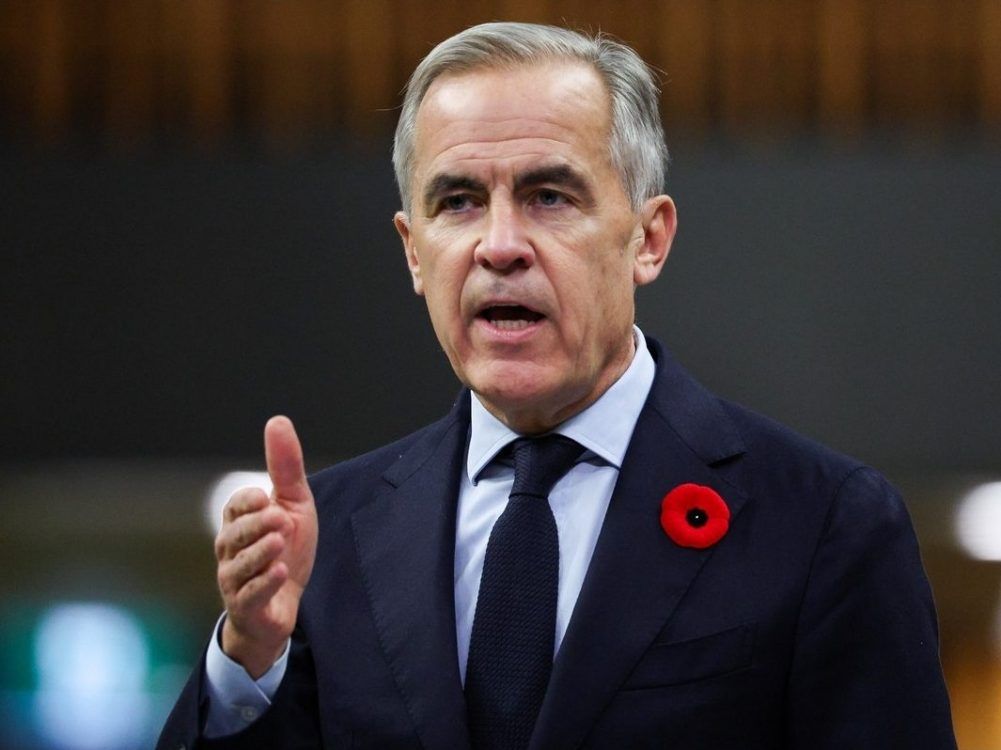
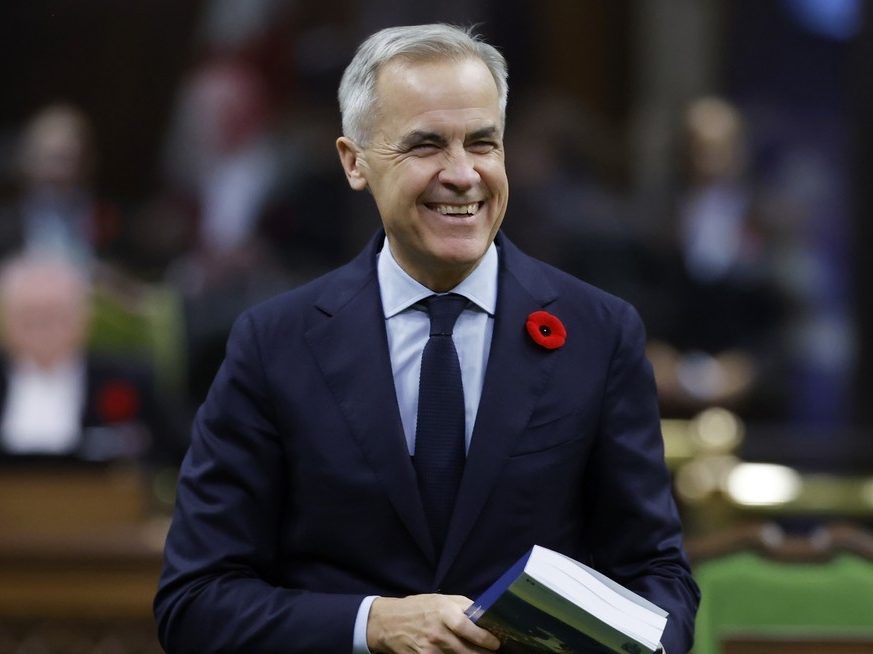
Photo via Blaze Media

'This is insane': Mark Carney slammed for overloading Canada with immigrants

Read the original at Blaze Media ↗
Cite

MacKinnon, J. (2026, November 9). 'This is insane': Mark Carney slammed for overloading Canada with immigrants. Blaze Media. https://www.theblaze.com/news/this-is-insane-mark-carney-slammed-over-brazen-plot-to-overload-canada-with-immigrants

Dated from the outlet's own feed. Check the original for its byline.

Blaze Media · collected 2026-11-09 · by Joseph MacKinnon

Quick Summary

Prime Minister Mark Carney’s Liberal government announced plans to increase immigration to Canada, aiming to grant permanent residency to approximately 380,000 migrants and admit another 370,000 temporary residents each year from 2027 to 2029. This includes additional one-time measures that could boost the number of permanent residents in 2027 to about 660,000. Conservative Party leader Pierre Poilievre and other party members criticized these plans as unsustainable and potentially harmful to Canada's infrastructure and security. They also linked Carney’s policies to the Century Initiative, which aims to increase Canada’s population to 100 million by 2100, suggesting corporate interests may be driving this push for higher immigration levels.
Written by AI on 2026-11-09, from this article's own text only (the story summary below draws on all the coverage).
See how they differ ↓

AI analysis

Story summary

The Canadian government under Prime Minister Mark Carney officially unveiled its 2026 federal budget on November 5, 2026, focusing on a plan to change the nation's growth model and reduce economic reliance on the United States. Finance Minister Francois-Philippe Champagne stated that the budget prioritizes building domestic commerce, diversifying trade, and increasing Canadian sovereignty in response to shifting global trade dynamics and a U.S. trade war involving President Donald Trump. To achieve these goals, the government is utilizing a federal balance sheet bolstered by high energy prices and corporate profits to fund a long-term investment agenda, including financial guarantees for AI infrastructure and tax cuts for small businesses. Despite these measures, the budget has resulted in increased deficits and debt, with critics like former deputy finance minister Kevin Lynch warning that the government has spent its revenue windfall on new programs rather than reducing the deficit. Furthermore, the budget includes immigration targets that have faced criticism from Conservative Party leader Pierre Poilievre, who suggested the measures are part of a plan to increase the population to 100 million. While the government argues these investments will deliver future economic gains, some reports highlight that interest payments on existing debt are rising and that the federal borrowing rate remains a significant concern for taxpayers.

Written for “Canada's Budget 2026” on 2026-11-22, grounded in this article and the 55 other(s) covering the same event.

How they differ

9 outlets covered “Canada's Budget 2026”.

What each outlet says

One AI summary per outlet of its latest article on this story, written from that article alone and checked against it. Open the article for the outlet's own words.

The BlazeThis outlet9 Nov

Prime Minister Mark Carney’s Liberal government announced plans to increase immigration to Canada, aiming to grant permanent residency to approximately 380,000 migrants and admit another 370,000 temporary residents each year from 2027 to 2029. This includes additional one-time measures that could boost the number of permanent residents in 2027 to about 660,000. Conservative Party leader Pierre Poilievre and other…

'This is insane': Mark Carney slammed for overloading Canada with immigrants (this article)
Toronto Star6 Nov

The federal budget for 2026 in Canada did not introduce any new measures to address student affordability issues or funding shortfalls in post-secondary education. Despite recognizing the importance of universities and colleges as key contributors to economic growth, the budget failed to provide additional support for students facing financial hardships or academic staff experiencing program cuts and job losses…

Federal budget 2026 silent on student affordability and public funding shortfall in post-secondary education →14 articles from Toronto Star on this story
Global News6 Nov

Budget 2026 proposes several tax changes aimed at reducing the administrative burden on Canadians. Key among these is changing the tax filing deadline from April 30 to May 15 for all taxpayers and self-employed individuals, eliminating the previous June 15 deadline for self-employed workers. This change aims to simplify tax filings and could save Canadians $230 million in interest and penalty payments over five…

These are all the key tax changes and credits impacting you from the budget →12 articles from Global News on this story
CBC6 Nov

Prime Minister Mark Carney defended Canada's new immigration levels plan, which expects almost 660,000 new permanent residents in 2027, while Conservative Leader Pierre Poilievre criticized the numbers as unsustainable. The federal government plans to grant a combined total of more than one million people either permanent or temporary residency next year, with regular intakes set at 380,000 permanent and 370,000…

Carney says new immigration levels plan is 'sustainable' as it draws ire of Conservatives →11 articles from CBC on this story
The Globe and Mail9 Nov

Prime Minister Mark Carney’s federal budget proposes a $30-billion plan to end homelessness in Canada by 2036. The initiative includes funding for 25,000 supportive and transitional homes, rental assistance, and health facilities addressing social needs. Housing experts welcome the pledge but emphasize the need for additional details and provincial cooperation to ensure success.

Housing experts welcome Ottawa’s plan to eradicate homelessness, but call for more details, funding →7 articles from The Globe and Mail on this story
The Hub9 Nov

The Canadian federal government has announced that it has reduced its workforce to meet the target of 330,000 employees by March 2029, well ahead of schedule. This reduction includes significant cuts in major departments such as the Canada Revenue Agency and Immigration, Refugees and Citizenship Canada, with reductions ranging from 15% to almost 32%. However, despite these cuts, federal employment is still 29%…

Is Canada’s runaway big-government bureaucracy finally under control? →5 articles from The Hub on this story
Show 3 more outlets
Toronto Sun12 Nov

This editorial criticizes Prime Minister Mark Carney’s government for misclassifying hundreds of billions of dollars in borrowing to finance government programs as investments rather than liabilities, thus obscuring the true extent of federal debt. Parliamentary Budget Officer Annette Ryan warns that federal borrowing is growing at more than double the rate of deficits, reaching $732.9 billion over the next five…

EDITORIAL: Beware Carney’s borrowing bomb →4 articles from Toronto Sun on this story
The Straits Times5 Nov

Canadian Prime Minister Mark Carney’s government presented its second budget on November 5 aimed at reducing reliance on the United States. Finance Minister Francois-Philippe Champagne emphasized diversifying trade and boosting domestic commerce within Canada as key priorities. The budget includes funding for national projects such as infrastructure for energy production and critical mineral mining, while also…

Canada unveils budget to curb reliance on US →
South China Morning Post6 Nov

Canada has unveiled a new budget titled “Masters of our Destiny,” which emphasizes economic independence from the United States. The plan acknowledges the ongoing shift away from traditional reliance on the U.S., noting it will take time but is underway. Presented two days after President Trump’s midterm election losses, the budget outlines Canada's intention to reduce its dependence on the U.S. market despite…

Canada budget charts ‘economic independence’ in decisive shift from US →

Where they agree and split

Framing

How the first headlines put it

Attributed to a source2
Stated as fact1
The headlines (3)

Budget 2026 is about ‘us,’ not the U.S. trade war, finance minister says Global News · attributed to a source

Federal budget is about 'changing Canada's growth model,' finance minister says Toronto Star · attributed to a source

Canada's next budget to be unveiled this week amid U.S. trade war, economic uncertainty CBC · stated as fact

Words to watch (1)

'This is insane': Mark Carney slammed for overloading Canada with immigrants The Blaze

The full story: what happened, how it changed, and all 56 articles →

Compared with similar articles

This article reads unscored and hedges 21% of its claims. Each row says how that neighbour differs.
Global News
Hedges 1 of 10 claims Outlet record 63/100
CBC News
Leans left Hedges 0 of 20 claims Outlet record 70/100
“While both articles discuss a similar immigration plan, they refer to different dates in their reports (2026 vs. 2027-2029).”
Toronto Star
Hedges 0 of 2 claims Outlet record 65/100
“Article A discusses the inclusion of immigration plans in the budget, while Article B criticizes the revealed Immigration Levels Plan. Although related, they describe different aspects and timing.”
The Hub
Hedges 2 of 51 claims
“The articles discuss different aspects of the government's immigration policy and do not refer to the same specific event or time frame.”
Toronto Sun
Leans right Hedges 1 of 21 claims Outlet record 96/100
“Both articles discuss Mark Carney's immigration plans, but they describe different aspects and reactions over different dates.”
Toronto Sun
Hedges 0 of 27 claims Outlet record 96/100
“While both articles discuss Canada's immigration policy under Prime Minister Mark Carney, they focus on different aspects and timeframes of the policy.”
Toronto Sun
Hedges 1 of 39 claims Outlet record 96/100
“Both articles discuss Mark Carney's immigration plans but cover different aspects and timelines, with Article A focusing on the immediate reaction to the budget announcement and statistical impacts, while Article B discusses long-term conservative reactions and critiques.”
Toronto Star
Leans strongly left Hedges 4 of 28 claims Outlet record 65/100
“Article A discusses the 2027-2029 Immigration Levels Plan, while Article B does not mention this specific plan and instead refers to past immigration policies during the pandemic.”
Toronto Star
Leans right Hedges 0 of 2 claims Outlet record 65/100
“Article A describes an immediate exchange between Carney and Poilievre in the House of Commons, while Article B discusses Poilievre's broader criticism of Carney’s immigration policies through a longer-term plan.”

Story

Canada's Budget 2026
Economy/Business · 56 article(s) covering the same event. Compare every outlet's account →
How this article was measured signals, leaning charts, publisher record, byline, topics and claims

Signals How these are calculated →

Claims extracted
19
sentences that state something as happening or true
Uncertain
21%
4 of 19 hedged ("reportedly", "may", "according to")
Leaning
withheld
no quote in the article backed the model's score
Publisher signals
94/100
Blaze Media's corrections and hedging, across everything collected from it. Not a measure of accuracy.
Outlets on this story
56
Economy/Business
Same framing elsewhere
1
articles that frame the event the way this one does
Analyzed 2026-11-09 · how these are computed

How this is being covered How these are calculated →

Article leaning vs. publisher reliability
Source leaning vs. consistency

Publisher

Blaze Media · 312 article(s) · 2 correction(s) detected
Running correction rate · 2 correction(s)

Who wrote this

Joseph MacKinnon
26 article(s) here · 1 carrying a prediction
Violations of the ban could result in big fines and/or prison for up to two years.
The following summer, special counsel Jack Smith brought charges against Trump for alleged willful retention of national defense information and obstruction and false statements.
RONALDO SCHEMIDT / AFP via Getty Images President Trump hinted that CAIR may instead find itself with a federal terrorist designation.
The sad part is though, would anyone really be surprised if [he] were waiving [sic] the Russian flag at this point?"
We are, have been, and will remain a steadfast friend of the United States.'
'It may take a little longer.'
"If we had an HHS Secretary willing to say that plainly, we would not be watching children die of a disease this country beat a generation ago."
The campaign will have more to say by the end of this week.'
'It would bring mass deportations to an essential halt.'
" Tillis and Cornyn — who have long subverted the MAGA agenda in the Senate — informed Senate Judiciary Committee Chairman Chuck Grassley (R-Iowa) earlier this month that they would vote against Rudofsky, two sources familiar with the discussions told the Associated Press.
Also by Joseph MacKinnon
Nothing else under this byline is closely related to this article, so these are simply their most recent.
All 26 articles by Joseph MacKinnon →

Topics

Canada Canadian Conservative Party Liberal the Century Initiative

Subjects

Carney PERSON · 8× Canadian NORP · 6× Canada GPE · 5× the Century Initiative ORG · 3× Conservative Party ORG · 2× Liberal NORP · 2× Pierre Poilievre PERSON · 2× Poilievre PERSON · 2× Dan Mullan PERSON · 1× Getty Images ORG · 1×

Narrative

Carney, the self-identified "European" World Economic Forum regular who all but guaranteed British economic decline while governor of the Bank of England, told reporters on Friday that he believes these targets are "in line with sustainable immigration" and claimed that the one-time measures planned for 2027 were "the right thing to do." Getty Images
framing: mixed · carried by 1 article(s) · first seen 2026-11-09
State media highlighted that the number of permanent residency admissions next year will actually be in the neighborhood of 660,000 as the result of multiple "one-time" measures.

Claims (19 extracted, 4 hedged)

Conservative Party leader Pierre Poilievre suggested this is part of a plot to increase Canada's population to 100 million. Canadian Prime Minister Mark Carney appears keen to outdo his predecessor's work of making Canada unrecognizable — and conservatives are none too pleased. uncertain
conservatives → suggest → work
The Carney Liberal government revealed last week in its 2027-2029 Immigration Levels Plan that it intends to import 370,000 new "temporary resident arrivals" and grant permanent residency to 380,000 migrants for each of the next three years. asserted
it → reveal → years
State media highlighted that the number of permanent residency admissions next year will actually be in the neighborhood of 660,000 as the result of multiple "one-time" measures. asserted
number → highlight → measures
The Carney government notes in its plan for 2027 that beyond the 380,000 baseline, it will grant permanent residency to 100,000 foreign laborers already in Canada as well as to their families. asserted
it → note → families
Additionally, the regime will "transition up to 100,000 people" in the so-called "humanitarian cohort" — largely from Ukraine and Hong Kong — to permanent residency. asserted
regime → transition → residency
Carney, the self-identified "European" World Economic Forum regular who all but guaranteed British economic decline while governor of the Bank of England, told reporters on Friday that he believes these targets are "in line with sustainable immigration" and claimed that the one-time measures planned for 2027 were "the right thing to do." Getty Images asserted
measures → identify → 2027
The Conservative Party of Canada, on the other hand, emphasized that "immigration must go WAY down to give relief for our housing, jobs and hospitals." asserted
immigration → emphasize → housing
Michelle Rempel Garner, a conservative member of the Canadian House of Commons, called for an end to "Carney's mass immigration" and noted that the permanent residency admissions planned for next year amount to "a city roughly the size of Winnipeg." "This is insane. asserted
This → call → Winnipeg
Population growth already outstripped housing, health care, and jobs for a decade. asserted
growth → outstrip → decade
Criminals and terrorists have gotten in through open Liberal borders," said Conservative Party leader Pierre Poilievre. asserted
Poilievre → get → borders
"And now Carney wants even more numbers? asserted
Carney → want → numbers
How could Liberals make this mistake? uncertain
Liberals → make → mistake
Poilievre noted that key individuals in Carney's orbit are involved with the Century Initiative — a movement started in 2014 with the stated aim of boosting Canada's population to 100 million people by 2100. asserted
individuals → note → 2100
The Century Initiative — whose co-founder Mark Wiseman became Carney's ambassador to the U.S. in February — claims that its plot is about protecting Canadian sovereignty and prosperity, but Poilievre suggested another motivation: "Mass migration makes corporate brokers a lot richer." uncertain
brokers → become → motivation
The Century Initiative criticized the Carney government's new immigration targets last week for being "below Century Initiative's long-standing benchmark of 1.15 to 1.25 per cent of Canada's population." asserted
Initiative → criticize → population
The decision to bring millions more foreigners to a country with an estimated population of 41,798,407 — including over 8.3 million immigrants as of 2021 — was announced the same week that Statistics Canada posted a 6.7% unemployment rate and another month of job losses. asserted
Canada → bring → losses
It also comes one year after the Canadian government released a report admitting that the influx of immigrants has in recent years "accounted for 21% of the overall increase in median house values and 13% of the increase in median rents" in 53 cities with populations exceeding 100,000. asserted
influx → come → 100,000
Canadian census data from 2021 — the most recent publicly available — also shows that: - immigrants accounted for 23% of the total population; - immigrants accounted for roughly 50% of all STEM degree holders; - migrant men had a higher employment rate and higher labor participation rate than their Canadian-born counterparts; - immigrants are "more likely to be business owners than the Canadian-born population"; - 10 years after admission, 6.2% of all immigrants and 22.8% of refugees were still on social assistance; and - 17.6% of the population are second-generation individuals. According to the Canadian government, India, the Philippines, and China were the top three places of birth among immigrants to Canada. uncertain
India → show → Canada
In addition to making up roughly 10.7% of the immigrant population, India was the top source country last year for study permit holders and foreign worker permit holders — 24.6% and 28.9%, respectively — as well as for economic permanent resident admissions and sponsored family admissions. asserted
India → make → admissions
Give feedback · no sign-in needed

No sign-in needed for now. Your note is sent without a name, so it cannot be answered.

History Support