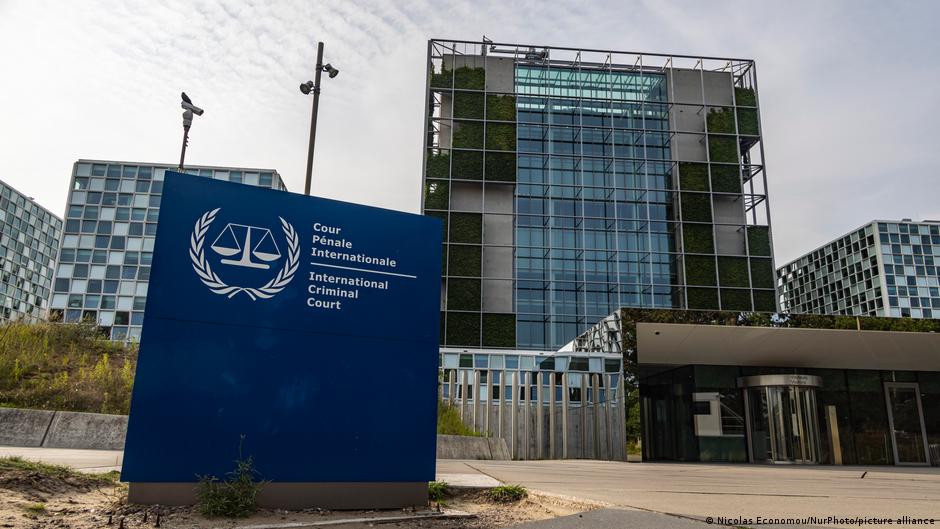
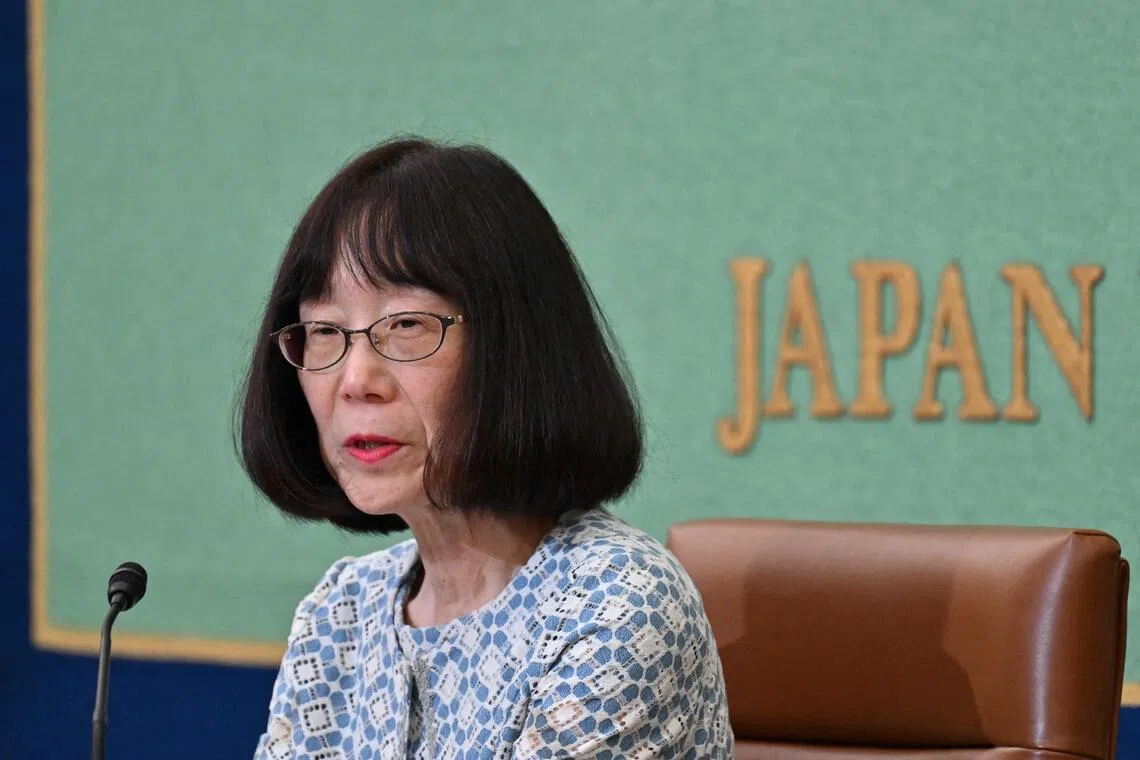
Photo via The Guardian

US sanctions international criminal court president and prosecutor

Read the original at The Guardian ↗
Cite

Washington, A. R. i. (2026, August 19). US sanctions international criminal court president and prosecutor. The Guardian. https://www.theguardian.com/us-news/2026/aug/18/us-icc-sanctions

Dated when The Aporia collected the article, usually within hours of publication. Check the original for its exact date and byline.

The Guardian · collected 2026-08-19 · by Andrew Roth in Washington

Quick Summary

US Secretary of State Marco Rubio has sanctioned Tomoko Akane, president of the International Criminal Court (ICC), and Abdoulaye Seye, a senior trial lawyer at the ICC, for their alleged efforts to investigate and prosecute officials without consent. The sanctions come as part of a broader effort by the US to "dismantle the threat" posed by the ICC to American sovereignty, which Rubio claims has been maliciously abused its authority. This is not the first time the US has taken action against the ICC, with at least 11 officials already sanctioned and former President Donald Trump targeting the court in an executive order in 2025. The sanctions have been criticized by human rights groups who argue they prevent victims of war crimes from seeking justice.
Written by AI on 2026-08-19, from this article's own text only (the story summary below draws on all the coverage).
See how they differ ↓

AI analysis

Story summary

The United States has imposed sanctions on Tomoko Akane, the president of the International Criminal Court (ICC), and Abdoulaye Seye, a senior trial lawyer at the ICC. The sanctions were announced by Marco Rubio, the US Secretary of State, who accused the ICC of being "corrupt and fatally politicized" and exceeding its mandate. Rubio claimed that Akane and Seye had directly engaged in efforts to investigate and prosecute officials whose governments had not consented to ICC jurisdiction. The sanctions bar Akane and Seye from entering the United States and from carrying out transactions in the US financial system. This move is part of a broader campaign by the Trump administration to dismantle the ICC, which has been investigating crimes committed by Israel during its war on Gaza. The ICC has called the US measures a "flagrant attack" on the court's independence, and the United Nations rights chief Volker Turk has thrown his support behind Akane and the institution.

Written for “US Sanctions ICC Officials” on 2026-11-20, grounded in this article and the 2 other(s) covering the same event.

How they differ

3 outlets covered “US Sanctions ICC Officials”.

What each outlet says

One AI summary per outlet of its latest article on this story, written from that article alone and checked against it. Open the article for the outlet's own words.

The GuardianThis outlet19 Aug

US Secretary of State Marco Rubio has sanctioned Tomoko Akane, president of the International Criminal Court (ICC), and Abdoulaye Seye, a senior trial lawyer at the ICC, for their alleged efforts to investigate and prosecute officials without consent. The sanctions come as part of a broader effort by the US to "dismantle the threat" posed by the ICC to American sovereignty, which Rubio claims has been maliciously…

US sanctions international criminal court president and prosecutor (this article)
Deutsche Welle20 Aug

US Secretary of State Marco Rubio announced sanctions against the president of the International Criminal Court (ICC), Tomoko Akane of Japan, and a senior trial lawyer, Abdoulaye Seye of Senegal, due to alleged corruption and abuse of authority. The sanctions include freezing of their US-held bank assets and limiting access to the US financial system. This move marks a significant escalation in the US's campaign…

Why the US is going after the International Criminal Court →
The Straits Times21 Aug

International Criminal Court President Tomoko Akane of Japan has warned against "the demise of international rule of law" following her sanctioning by the US along with trial lawyer Abdoulaye Seye of Senegal. The sanctions, imposed on August 18, bar Akane and Seye from entering the United States and carrying out transactions in the US financial system. This is not Akane's first experience with criticism or…

US-sanctioned ICC head Akane warns against ‘demise of international rule of law’ →

Where they agree and split

The full story: what happened, how it changed, and all 3 articles →

Compared with similar articles

This article reads leans strongly right and hedges 7% of its claims. Each row says how that neighbour differs.
Deutsche Welle
Leans strongly right Hedges 3 of 46 claims Outlet record 95/100
The Straits Times
Leans left further left than this Hedges 0 of 16 claims Outlet record 64/100

Story

US Sanctions ICC Officials
Politics · 3 article(s) covering the same event. Compare every outlet's account →
How this article was measured signals, leaning charts, publisher record, byline, topics and claims

Signals How these are calculated →

Claims extracted
15
sentences that state something as happening or true
Uncertain
7%
1 of 15 hedged ("reportedly", "may", "according to")
Leaning
Leans strongly right
of the writing, not the subject · beta estimate
Publisher signals
64/100
The Guardian's corrections and hedging, across everything collected from it. Not a measure of accuracy.
Outlets on this story
3
Politics
Same framing elsewhere
1
articles that frame the event the way this one does
Analyzed 2026-08-19 · how these are computed

How this is being covered How these are calculated →

Article leaning vs. publisher reliability
Source leaning vs. consistency

Publisher

The Guardian · 2608 article(s) · 8 correction(s) detected
Running correction rate · 8 correction(s)

Who wrote this

Andrew Roth in Washington
9 article(s) here · 1 carrying a prediction
A new indictment alleged that Mohammad Dawood al-Saadi, a dual Iranian and Iraqi national, plotted while in custody and then transmitted plans – using coded messages in calls to his family – to two co-conspirators to buy large quantities of chemicals that could be used as explosives in an attack on the RAF Fairford base in September. Al-Saadi, who was accused of being associated with Kata’ib Hezbollah and Iran’s Islamic Revolutionary Guard Corps, was said to have planned the attack as retribution for the US war in Iran. He had already been charged for his alleged links to 18 terrorist attacks in Europe and for allegedly planning to bomb a synagogue in New York as well, according to a statement by the southern district of New York. He was already imprisoned when he began planning the attack, according to the indictment, which said he then transmitted his plans by using coded messages in calls to his family to pass on to Mohsen Mohajeri, an operative of the Islamic Revolutionary Guard Corps, and another Iranian, Mohammad Ali al-Hassani. Al-Hassani then tasked others with surveilling the Fairfield RAF base and with procuring vans and barrels of fuel, and researching the purchase of chemical accelerants and metallic objects to be used as shrapnel, the indictment claimed.
US officials said they would seek a “final end” to the war between Russia and Ukraine, beginning with trilateral talks in Abu Dhabi on Tuesday in the first substantive negotiations between the two countries since February.
Donald Trump has said that the war in Iran is “effectively over” as he played down concerns that the US would escalate its military campaign against Tehran after the midterm elections.
The evacuation from Oleshky, a frontline Ukrainian town now occupied by Russia where 800 people lived through a protracted humanitarian crisis, may seem like a sideshow at this point in the war.
Donald Trump is expected to press Ukrainian leader Volodymyr Zelenskyy on an energy ceasefire during a face-to-face meeting this week during United Nations high-level week, as world diesel prices have soared due to the war in Iran, as well as Russia’s war in Ukraine.
Latvia’s president has warned that Europe is not keeping up with developments of drone and aerial warfare in Ukraine and that most countries in Nato could not repulse an attack by Russian missiles if the conflict expands.
Trump, who also claimed North Korea had 57 nuclear weapons, had suggested he and Kim were holding secret negotiations on Tuesday after announcing the US would downgrade its participation in military exercises held by South Korea, a US ally.
Rubio announced that the US would sanction Tomoko Akane of Japan, the ICC president, and Abdoulaye Seye of Senegal, an ICC senior trial lawyer, because they had “directly engaged in efforts by the ICC to investigate, arrest, detain, or prosecute officials whose government has not consented to ICC jurisdiction”.
Also by Andrew Roth in Washington
Nothing else under this byline is closely related to this article, so these are simply their most recent.
All 9 articles by Andrew Roth in Washington →

Topics

American ICC Israel Israeli the West Bank

Subjects

ICC ORG · 16× Israel GPE · 4× Israeli NORP · 4× Rubio PERSON · 3× American NORP · 2× Trump PERSON · 2× the West Bank GPE · 2× Gaza GPE · 1× Hague GPE · 1× Marco Rubio PERSON · 1×

Narrative

Rubio announced that the US would sanction Tomoko Akane of Japan, the ICC president, and Abdoulaye Seye of Senegal, an ICC senior trial lawyer, because they had “directly engaged in efforts by the ICC to investigate, arrest, detain, or prosecute officials whose government has not consented to ICC jurisdiction”.
framing: assertive · carried by 1 article(s) · first seen 2026-08-19
Rubio announced that the US would sanction Tomoko Akane of Japan, the ICC president, and Abdoulaye Seye of Senegal, an ICC senior trial lawyer, because they had “directly engaged in efforts by the ICC to investigate, arrest, detain, or prosecute officials whose government has not consented to ICC jurisdiction”.
2026-08-19 · The Guardian
US sanctions international criminal court president and prosecutor · assertive framing

Claims (15 extracted, 1 hedged)

The US has sanctioned the president of the international criminal court (ICC) and a prosecutor tasked with investigating crimes committed by Israel during its war on Gaza. asserted
US → sanction → Gaza
The new sanctions designations were unveiled by Marco Rubio, the US secretary of state, who called the Hague-based ICC a “corrupt and fatally politicized supranational court that has maliciously abused its authority and exceeded its mandate”, in a statement. asserted
that → unveil → statement
Rubio announced that the US would sanction Tomoko Akane of Japan, the ICC president, and Abdoulaye Seye of Senegal, an ICC senior trial lawyer, because they had “directly engaged in efforts by the ICC to investigate, arrest, detain, or prosecute officials whose government has not consented to ICC jurisdiction”. asserted
government → announce → jurisdiction
The state department last month unveiled an effort to “dismantle the threat” posed by the ICC to US sovereignty. asserted
department → unveil → sovereignty
The ultimate goal was to “disable the ICC’s ability to operate, target American servicemen or officials, or otherwise threaten American sovereignty”, the department said in a statement. asserted
department → disable → statement
Rubio has called on the 125 member countries of the ICC to withdraw from the body. asserted
Rubio → call → body
Donald Trump has said that he is targeting the ICC because of the threat it poses to Israel. asserted
it → say → Israel
The US had previously sanctioned Karim Khan, an ICC prosecutor, who had successfully sought arrest warrants for the Israeli prime minister, Benjamin Netanyahu, and for former defense minister Yoav Gallant, over war crimes during the Gaza war. asserted
who → sanction → war
Trump in 2025 sanctioned the court, stating in an executive order that it had “engaged in illegitimate and baseless actions targeting America and our close ally Israel”. asserted
it → sanction → America
Rubio did not say specifically which efforts the two ICC officials had engaged in, but Israeli media have reported that Seye is also overseeing the investigation into Israeli funding for illegal settlements and the distribution of weapons to settlers in the West Bank. asserted
Seye → say → Bank
Israeli officials warned local media in May that the ICC may seek five more arrest warrants for ministers and senior military officials involved in violence against Palestinians in the West Bank. uncertain
ICC → warn → Bank
The US has already designated at least 11 ICC officials for sanctions, stemming from cases that also include investigations into the actions of US soldiers in Afghanistan. asserted
that → designate → Afghanistan
Neither the US nor Israel are member states of the ICC or recognise its jurisdiction. asserted
US → recognise → jurisdiction
Four human rights groups sued Trump last week for targeting the ICC. asserted
groups → sue → ICC
In the lawsuit, they said that the sanctions prevent victims of war crimes from seeking justice. asserted
sanctions → say → justice
Give feedback · no sign-in needed

No sign-in needed for now. Your note is sent without a name, so it cannot be answered.

History Support