Photo via Dawn

AI-enabled cyberthreats could target financial services, critical infrastructure such as banks, utility providers

Read the original at Dawn ↗
Cite

News Desk. (2026, November 6). AI-enabled cyberthreats could target financial services, critical infrastructure such as banks, utility providers. Dawn. https://www.dawn.com/news/2042639/ai-enabled-cyberthreats-could-target-financial-services-critical-infrastructure-such-as-banks-utility-providers

Dated from the outlet's own feed. Check the original for its byline.

Dawn · collected 2026-11-06 · by News Desk

Quick Summary

The National Cyber Emergency Response Team (NCERT) issued an advisory on November 5 warning about increased AI-driven cyber threats targeting financial services and critical infrastructure like utility providers. The team noted that threat actors could broaden their attacks using automated bots and agentic tools, potentially disrupting banking systems, digital platforms, and industrial control systems. NCERT provided specific indicators of such attacks, including unusual login attempts and changes to operational parameters, and recommended security measures for both financial institutions and critical infrastructure operators.
Written by AI on 2026-11-06, from this article's own text only (the story summary below draws on all the coverage).

AI analysis

Story summary

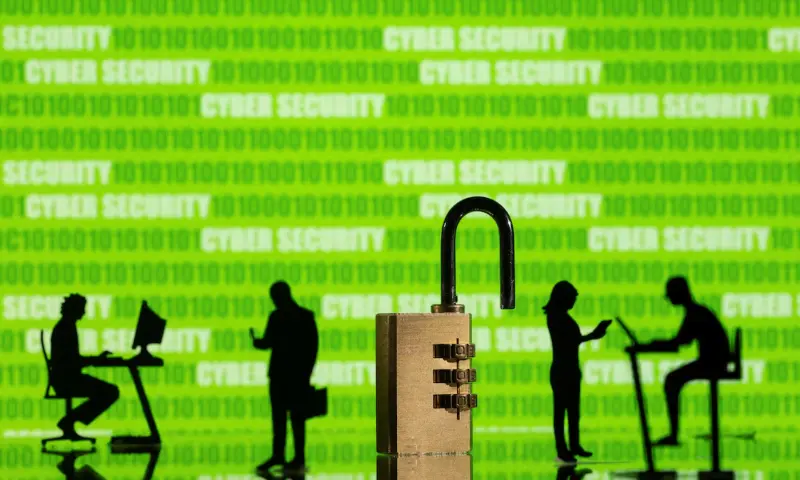
The National Cyber Emergency Response Team (NCERT) issued an advisory on November 5, 2026, warning about increased threats from AI-enabled cyberattacks targeting critical infrastructure and financial services. NCERT noted that artificial intelligence, automated bots, botnets, and agentic tools are being used to identify vulnerabilities and conduct sophisticated attacks at a faster pace than before. Specifically, banks could face disruptions in core banking systems, digital platforms, payment systems, and customer applications, with risks including service interruptions, credential theft, and balance manipulation. Critical infrastructure such as oil and gas facilities, water utilities, power networks, manufacturing plants, and transportation systems are also at high risk due to vulnerabilities in third-party services, connected IoT devices, industrial control systems, and insecure remote access points. NCERT urged organizations to stay updated with security patches, maintain backup procedures, and enhance their incident response capabilities to mitigate these threats.

Written for “Ai Enabled Cyberthreats Alert Banks Utilities” on 2026-11-22, grounded in this article and the 2 other(s) covering the same event.

Compared with similar articles

This article reads unscored and hedges 50% of its claims. Each row says how that neighbour differs.
Dawn
Hedges 8 of 18 claims Outlet record 65/100
Washington Examiner
Hedges 2 of 5 claims Outlet record 67/100
“The articles discuss related topics but cover different aspects of cybersecurity risks associated with AI, rather than describing the same specific incident.”
Daily Mail
Hedges 1 of 21 claims Outlet record 69/100
“While both articles warn about AI-powered cyberattacks on critical infrastructure, Article A focuses specifically on warnings by Richard Horne of the NCSC predicting a major hack by 2028, while Article B cites an advisory from NCERT warning about broader risks to financial services and critical infrastructure.”
The Independent
Hedges 5 of 18 claims Outlet record 59/100
“The articles discuss similar topics but are not reporting on the same specific incident or warning.”

Story

Ai Enabled Cyberthreats Alert Banks Utilities
Technology · 3 article(s) covering the same event. See how they differ ↑
How this article was measured signals, leaning charts, publisher record, byline, topics and claims

Signals How these are calculated →

Claims extracted
16
sentences that state something as happening or true
Uncertain
50%
8 of 16 hedged ("reportedly", "may", "according to")
Leaning
not political
takes no side on a contested political question
Publisher signals
65/100
Dawn's corrections and hedging, across everything collected from it. Not a measure of accuracy.
Outlets on this story
3
Technology
Same framing elsewhere
2
articles that frame the event the way this one does
Analyzed 2026-11-06 · how these are computed

How this is being covered How these are calculated →

Article leaning vs. publisher reliability
Source leaning vs. consistency

Publisher

Dawn · 3548 article(s) · 7 correction(s) detected
Running correction rate · 7 correction(s)

Who wrote this

News Desk
455 article(s) here · 1 carrying a prediction
His contributions will always be remembered.”
2026-11-22 · assertive framing · Veteran journalist Husain Naqi passes away in Lahore
According to FO, Rangel will hold delegation-level talks with DPM Dar as well as meetings with Pakistani leadership.
Security forces remain committed to eradicating terrorism from Balochistan, and operations will continue until the last terrorist is eliminated, security sources asserted.
Malik is in New Delhi on a three-day trip to attend the SCO Civilisational Dialogue Forum, making him the first Pakistani minister to visit the neighbour since former foreign minister Bilawal Bhutto-Zardari attended an SCO meeting in May 2023.
The visit marks the first by a Pakistani minister to India since Bilawal Bhutto-Zardari attended the SCO meeting in Goa in May 2023.
It said that the school was located in an underprivileged area where access to education was limited and girls were expected to contribute to household income or take on household responsibilities. “Recognising that fixed schedules, rigid policies and a standardised curriculum of conventional approaches only deepen exclusion, the school has redesigned its structure to fit the lived reality of its students through a flexible, context-responsive model that prioritises continuity of learning over compliance,” it said.
Dr Malik will lead the Pakistan delegation at the forum, being held from November 20 to 22.
Pakistan has been and will continue to make all efforts for achieving lasting peace and stability in the region,” the statement said.
Pakistan, along with 14 other countries, has welcomed the imposition of sanctions by the United Kingdom and Australia in response to Israeli settlement activities in the occupied Palestinian territory and expressed hope that the decisions would encourage others to follow suit.
Wire or desk byline, not an individual reporter.
Also by News Desk
Nothing else under this byline is closely related to this article, so these are simply their most recent.
All 455 articles by News Desk →

Topics

NCERT The National Cyber Emergency Response Team

Subjects

NCERT ORG · 8× The National Cyber Emergency Response Team ORG · 1×

Narrative

“Keep applying security updates and maintain backup operating procedures for essential processes.” NCERT also urged all organisations to check their preparedness against bot-driven AI cyberattacks, maintain incident logs and enhance arrangements for incident response, business continuity and security monitoring.
framing: mixed · carried by 2 article(s) · first seen 2026-11-06
“These capabilities may help threat actors and sophisticated cyber criminal groups to broaden the scale, speed and sophistication of their operations,” NCERT said in its advisory dated Nov 5.

Claims (16 extracted, 8 hedged)

The National Cyber Emergency Response Team (NCERT) has warned of an increased use of artificial intelligence (AI), automated bots, botnets, and agentic tools to carry out credential-based and coordinated cyberattacks, noting that critical infrastructure and financial services are most at risk. asserted
infrastructure → warn → risk
“These capabilities may help threat actors and sophisticated cyber criminal groups to broaden the scale, speed and sophistication of their operations,” NCERT said in its advisory dated Nov 5. uncertain
NCERT → help → advisory
It warned banks that they could face attacks targeting core banking systems, digital banking platforms, payment systems and customer-facing applications, with potential scenarios including the disruption of online services, automated credential attacks, and manipulation of displayed account balances. uncertain
they → warn → balances
In terms of critical infrastructure, NCERT warned, “Third-party service providers, connected IoT (internet of things) devices, vulnerabilities in industrial control systems and insecure remote access may expose oil and gas facilities, water utilities, power generation and distribution networks, manufacturing, transportation and other essential services. uncertain
providers → warn → facilities
“A compromise could disrupt physical processes and critical services,” it added. uncertain
it → disrupt → processes
NCERT cited recent incidents in Europe, where supermarket refrigerators and freezers were targeted in cyberattacks, as examples of the “physical and commercial consequences of attacks against connected operational systems”. “However, AI involvement in said incidents has not been confirmed yet,” it added. asserted
it → cite → incidents
The advisory listed anomalies which may indicate a potential cyberattack targeting financial institutions, such as frequent automated login attempts, repeated authentication failures, and unusual application programming interface (API) requests. uncertain
which → list → attempts
Abnormal transaction patterns, a difference between core banking records and the displayed account balance, and unauthorised payment access were other indicators. asserted
patterns → display → records
For critical infrastructure, NCERT said changes to refinery, pipeline, grid, power generation or distribution parameters could indicate an attack, as could unexpected changes to pressure, temperature, cooling or heading control settings. uncertain
changes → say → settings
Unexpected access sessions remotely or changes to IoT/operational technology (OT) device configurations could also point towards a cyberattack. uncertain
sessions → point → cyberattack
Recommendations NCERT recommended that financial institutions check their core banking security, APIs, third-party integrations, payment gateways and digital banking applications. asserted
institutions → recommend → security
It further urged them to use multi-factor authentication and protection against automated login attempts, while enforcing integrity checks between consumer-facing applications and core banking records. asserted
It → urge → applications
The team also suggested monitoring bot-driven attempts, potential service disruption and abnormal API activity. uncertain
team → suggest → attempts
For utility providers, NCERT’s advice was to limit direct internet exposure and remote access and check the security of IoT assets and industrial control systems. asserted
advice → limit → assets
“Enforce OT/IT network segmentation and continuously monitor access to operational systems,” it recommended. asserted
it → enforce → systems
“Keep applying security updates and maintain backup operating procedures for essential processes.” NCERT also urged all organisations to check their preparedness against bot-driven AI cyberattacks, maintain incident logs and enhance arrangements for incident response, business continuity and security monitoring. asserted
NCERT → apply → response
Give feedback · no sign-in needed

No sign-in needed for now. Your note is sent without a name, so it cannot be answered.

History Support