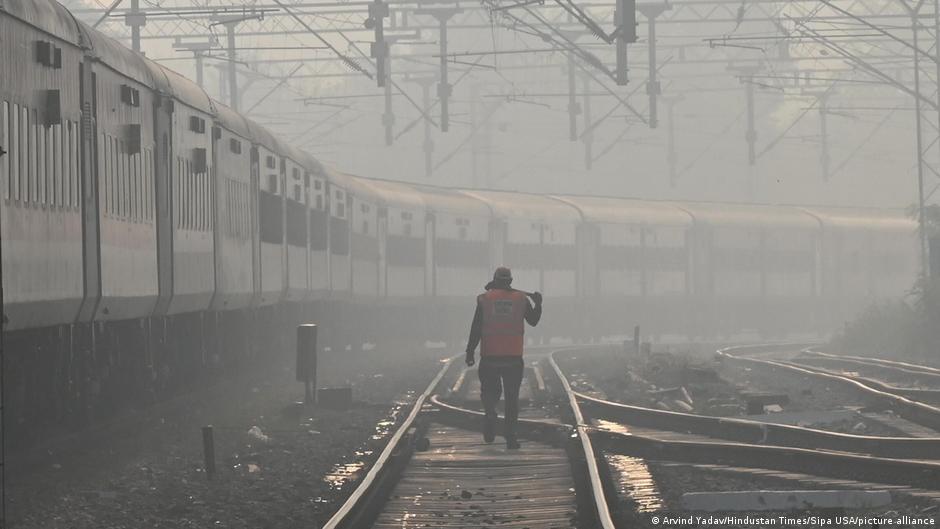
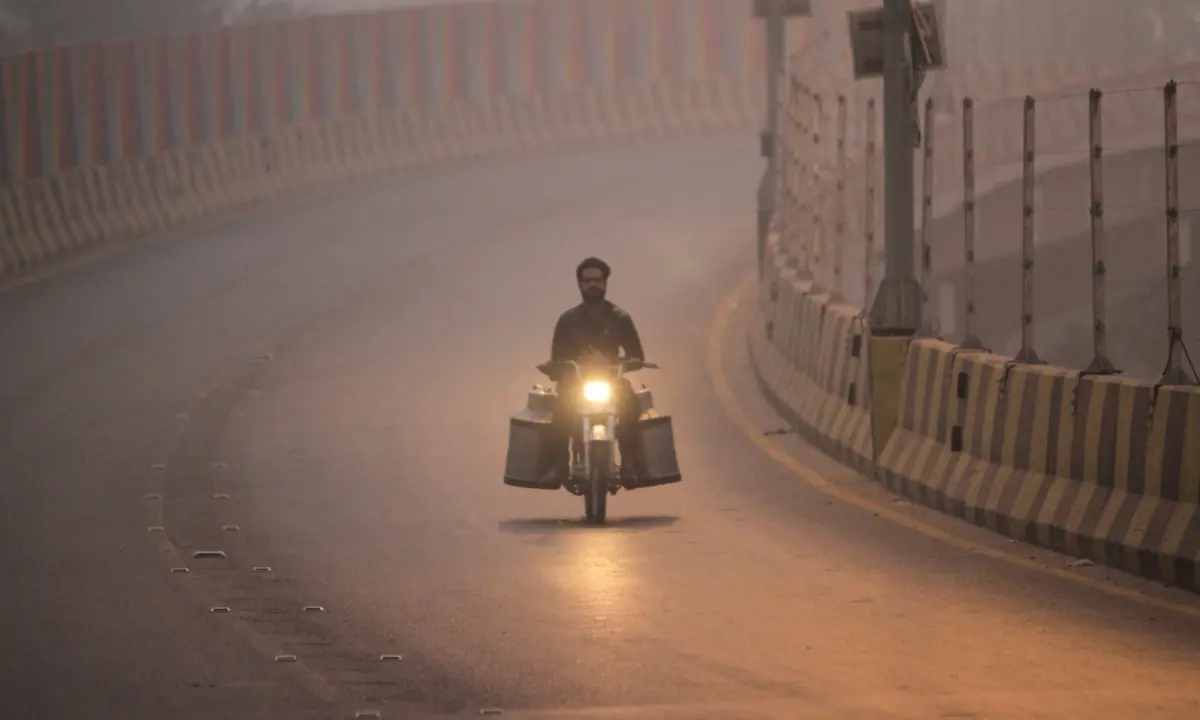
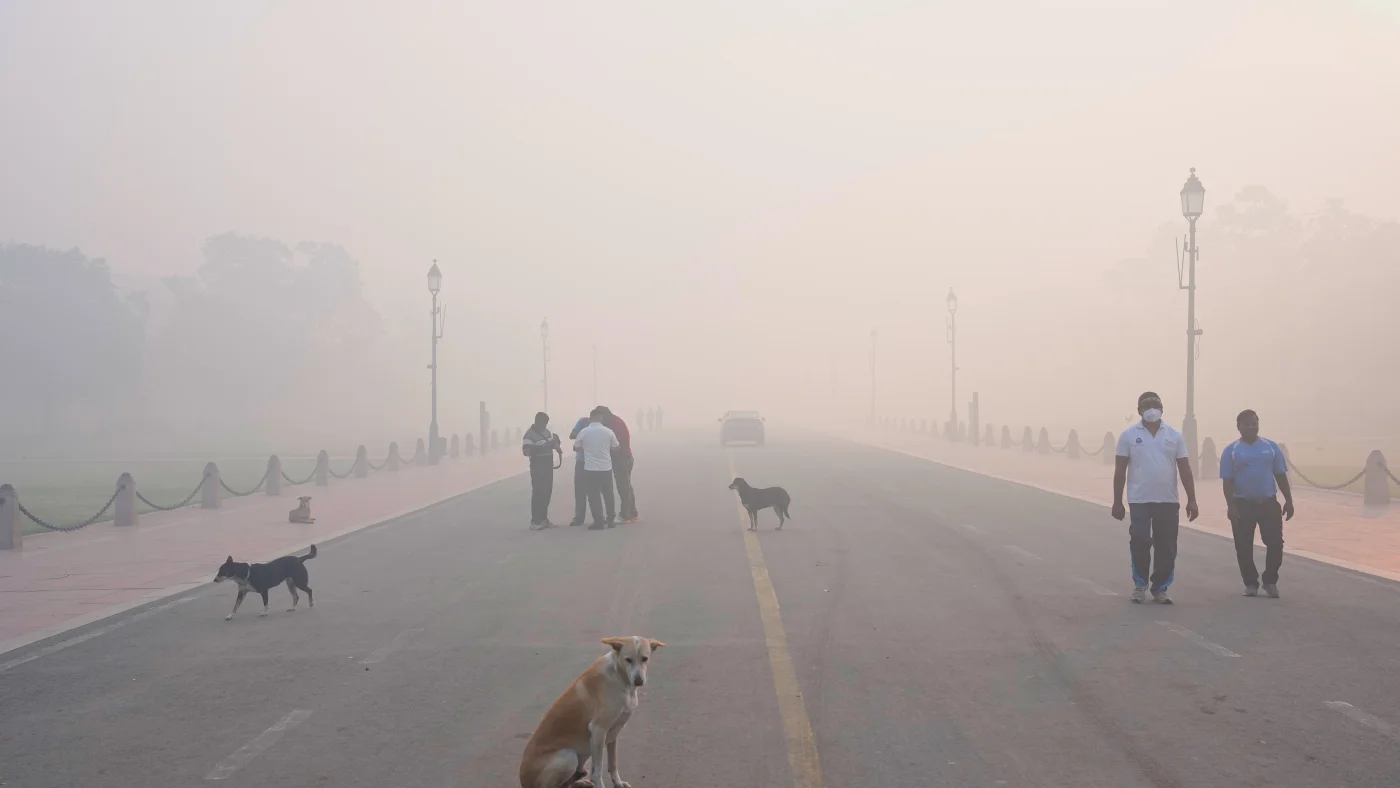
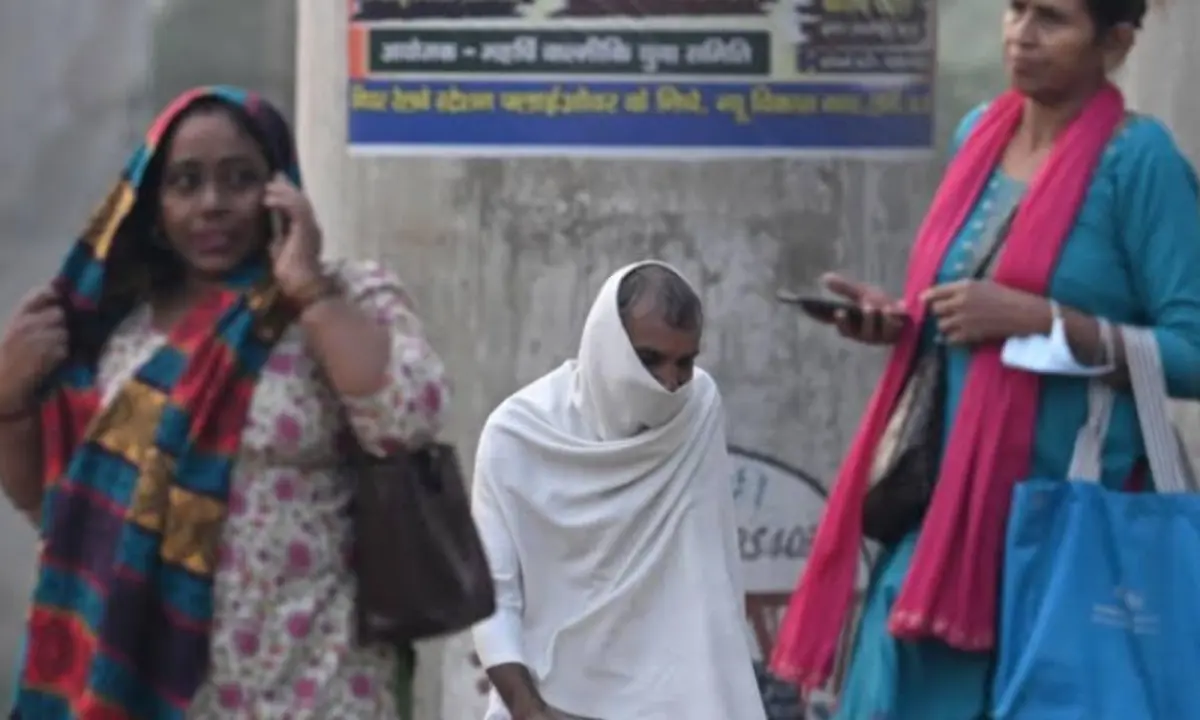
Photo via Deutsche Welle

"No choice but to bear it": Delhi's unrelenting air pollution crisis

Read the original at Deutsche Welle ↗
Cite

Sobhan, S. (2026, November 6). "No choice but to bear it": Delhi's unrelenting air pollution crisis. Deutsche Welle. https://www.dw.com/en/no-choice-but-to-bear-it-delhi-s-unrelenting-air-pollution-crisis/a-79873124?maca=en-rss-en-world-4025-rdf

Dated from the outlet's own feed. Check the original for its byline.

Deutsche Welle · collected 2026-11-06 · by Shakeel Sobhan

Quick Summary

Khushboo Arora in New Delhi describes her struggle with worsening air quality as she prepares for another winter season burdened by pollution. The city's air quality index fell to the "Very unhealthy" category on Thursday, with PM2.5 concentrations at 157.9 micrograms per cubic meter—far above the WHO annual safe limit of 5 micrograms. Arora has stopped outdoor activities and filled her home with air purifiers and plants to mitigate the effects, which include headaches and throat irritation. The article highlights the recurring pattern of deteriorating air quality in Delhi each winter, despite efforts to address pollution from sources both within and outside the city.
Written by AI on 2026-11-06, from this article's own text only (the story summary below draws on all the coverage).

AI analysis

Story summary

As winter sets in 2026, Delhi faces another severe air pollution crisis, with residents like Khushboo Arora struggling daily due to poor air quality. The city's PM2.5 levels are exacerbated by sources both inside and outside of Delhi; according to government data analyzed by an expert, approximately 65% of the particulate matter originates from neighboring regions such as Noida and Gurugram, while 35% comes from within Delhi itself. This pattern forces residents to adopt measures like using air purifiers and growing indoor plants to mitigate pollution's health impacts, but these actions are seen as temporary fixes. Despite emergency restrictions being implemented each winter, the situation remains unresolved due to a lack of coordinated regional efforts and political commitment across various states involved in the National Capital Region (NCR).

Written for “Delhi Air Pollution Crisis” on 2026-11-21, grounded in this article and the 1 other(s) covering the same event.

Compared with similar articles

This article reads leans left and hedges 7% of its claims. Each row says how that neighbour differs.
Deutsche Welle
Leans left Hedges 4 of 58 claims Outlet record 95/100
Al Jazeera
Hedges 0 of 2 claims Outlet record 60/100
“The articles describe different stages or aspects of Delhi's ongoing air pollution crisis, not a single specific incident.”
Dawn
Hedges 1 of 4 claims Outlet record 66/100
“The articles describe different locations and distinct smog incidents occurring at separate times.”
Al Jazeera
Leans left Hedges 2 of 13 claims Outlet record 60/100
“The articles describe different stages of Delhi's air pollution crisis, with Article A focusing on a general day and Article B specifically addressing Diwali celebrations and their impact on air quality.”
NPR
Hedges 0 of 21 claims Outlet record 60/100
“While both articles discuss pollution issues in New Delhi, Article A focuses on a general day-to-day situation with ongoing air quality concerns, whereas Article B specifically addresses the impact of Diwali firecrackers on smog levels.”
Dawn
Hedges 2 of 13 claims Outlet record 66/100
“The articles discuss air pollution in Delhi but describe different aspects: Article A focuses on personal experiences and impacts of daily life, while Article B reports on technical issues with monitoring equipment during a severe pollution event related to Diwali.”
BBC News
Leans left Hedges 1 of 61 claims Outlet record 65/100
“The articles describe different moments and experiences of people dealing with Delhi's pollution, but do not report on a single specific incident.”
CBC News
Leans left Hedges 0 of 22 claims Outlet record 60/100
“The articles discuss different times and conditions: Article A describes a general air pollution crisis without mentioning Diwali, while Article B specifically refers to smog caused by firecrackers during the Diwali festival.”
BBC News
Hedges 2 of 33 claims Outlet record 65/100
“While both articles discuss poor air quality in Delhi, they refer to different time periods and details, suggesting separate reporting on an ongoing issue rather than a single specific incident.”
Toronto Star
Leans left Hedges 0 of 3 claims Outlet record 64/100
“The articles describe different time periods and distinct situations related to air pollution in Delhi, with Article A focusing on general winter smog before Diwali and Article B specifically addressing the aftermath of Diwali fireworks.”

Story

Delhi Air Pollution Crisis
Environment · 2 article(s) covering the same event. See how they differ ↑
How this article was measured signals, leaning charts, publisher record, byline, topics and claims

Signals How these are calculated →

Claims extracted
58
sentences that state something as happening or true
Uncertain
7%
4 of 58 hedged ("reportedly", "may", "according to")
Leaning
Leans left
of the writing, not the subject · beta estimate
Publisher signals
95/100
Deutsche Welle's corrections and hedging, across everything collected from it. Not a measure of accuracy.
Outlets on this story
2
Environment
Same framing elsewhere
2
articles that frame the event the way this one does
Analyzed 2026-11-06 · how these are computed

How this is being covered How these are calculated →

Article leaning vs. publisher reliability
Source leaning vs. consistency

Publisher

Deutsche Welle · 740 article(s) · 0 correction(s) detected
No corrections detected for this publisher. That may mean careful reporting, or simply that nothing has been checked.

Who wrote this

Shakeel Sobhan
3 article(s) here · 1 carrying a prediction
Implementation, regional coordination and political will are," said Dahiya.
Also by Shakeel Sobhan
Nothing else under this byline is closely related to this article, so these are simply their most recent.

Topics

Delhi IQAir New Delhi Swiss The World Health Organization

Subjects

Delhi GPE · 9× Dahiya PERSON · 3× Arora PERSON · 1× IQAir ORG · 1× India GPE · 1× Khushboo Arora PERSON · 1× New Delhi GPE · 1× Sunil Dahiya PERSON · 1× Swiss NORP · 1× The World Health Organization ORG · 1×

Narrative

"Analysis of the government's Decision Support System (DSS) data for winter 2025 found that around 65% of Delhi's PM2.5 came from outside the city and about 35% from sources within it," he told DW, adding that neighboring Noida and Gurugram, which comprise the National Capital Region (NCR), are some of the biggest contributors.
framing: assertive · carried by 2 article(s) · first seen 2026-11-06
Implementation, regional coordination and political will are," said Dahiya.
2026-11-06 · Deutsche Welle
India: Why does Delhi keep failing to tackle its air pollution crisis? · assertive framing
2026-11-06 · Deutsche Welle
"No choice but to bear it": Delhi's unrelenting air pollution crisis · assertive framing

Claims (58 extracted, 4 hedged)

On a slightly chilly and distinctly smoggy morning in New Delhi, Khushboo Arora was looking for another air purifier for her mother, who has underlying health complications, before the city's air quality deteriorated further. asserted
quality → look → complications
"Already, I am starting to get a recurring headache," she said. asserted
she → start → headache
"These days when I wake up, I don't feel fresh. asserted
I → wake → ?
As the day progresses, I feel a heaviness in my head, itching in my eye and a constantly parched throat. asserted
I → progress → eye
Not too long ago, the unpacking of woolens announced the advent of winter in Delhi. asserted
unpacking → announce → Delhi
Arora said she has already stopped doing yoga in the park and taking her morning walks. asserted
she → say → walks
She has also filled her house with air-purifying plants and started spraying water mist inside the house to bring down the level of pollution. asserted
She → fill → pollution
"My parents look at me like I have gone mad. asserted
I → look → me
But I feel people are not realizing the gravity of the situation," she said. asserted
she → feel → situation
A recurring crisis Winters in Delhi increasingly follow a familiar pattern: Air quality deteriorates, residents struggle to breathe, emergency restrictions kick in and governments exchange blame. asserted
governments → recur → blame
Then the season changes, only for the cycle to repeat the following year. asserted
cycle → change → ?
On Thursday, Delhi's air fell into the "Very unhealthy" category, according to Swiss air quality monitor IQAir, with an average PM2.5 concentration of 157.9 micrograms per cubic meter of air. uncertain
air → fall → air
The World Health Organization (WHO) recommends an annual safe limit of no more than 5 micrograms. asserted
Organization → recommend → micrograms
Studies have shown that exposure to PM2.5 — air particles with a diameter smaller than 2.5 micrometers that can penetrate deep into the lungs and enter the bloodstream — is associated with an increased incidence of head and neck cancer (HNC), like oral, nasal and throat cancers. asserted
that → show → cancers
But despite years of attempted interventions, India's capital continues to struggle with the same pollution crisis. asserted
capital → attempt → crisis
What is causing the air pollution? asserted
What → cause → pollution
Delhi is not dealing with an unknown problem. asserted
Delhi → deal → problem
A 2026 assessment by an expert panel reviewed by the Delhi government identified the major winter contributors of PM2.5 as vehicular emissions, industrial activity, road and construction dust, biomass and waste burning, and pollution from neighboring regions. asserted
assessment → review → regions
Sunil Dahiya, founder of the environmental group EnviroCatalysts, said Delhi is part of a larger airshed. asserted
Delhi → say → airshed
On most winter days, more pollution comes into Delhi than is generated inside it, according to the environmentalist. uncertain
pollution → come → environmentalist
"Analysis of the government's Decision Support System (DSS) data for winter 2025 found that around 65% of Delhi's PM2.5 came from outside the city and about 35% from sources within it," he told DW, adding that neighboring Noida and Gurugram, which comprise the National Capital Region (NCR), are some of the biggest contributors. asserted
which → find → contributors
Coordinating action across the NCR, which spans Delhi and parts of three neighboring states, remains a major obstacle. asserted
which → coordinate → states
"This is a shared problem, and no single city can solve it alone," Dahiya said. asserted
Dahiya → share → it
Why aren't anti-pollution policies working? asserted
policies → work → ?
To understand why existing policies have not delivered sustained improvements, Dahiya highlighted the gap between scientific recommendations and state action. asserted
Dahiya → understand → recommendations
"Scientists have said for over a decade that we need airshed-wide, year-round, source-specific action. asserted
we → say → action
What we mostly get is seasonal and reactive," he said. asserted
he → get → What
According to the environmentalist, emergency restrictions kick in only after pollution has reached dangerous levels. uncertain
pollution → accord → levels
Short-term measures such as water sprinklers and smog towers provide little relief, while bigger structural changes are slow to materialize. asserted
changes → provide → relief
These include stricter enforcement of industrial emissions, cleaner fuels, expanded public transport, vehicle electrification and viable alternatives to crop burning for farmers. asserted
These → include → farmers
Implementation, regional coordination and political will are," said Dahiya. asserted
Dahiya → say → ?
"Until targets are tied to emission reductions at each source, and someone is held accountable for meeting them, we will keep having the same conversation every November." asserted
we → tie → conversation
Bhavreen Kandhari, co-founder of Warrior Moms, agrees that official responses focus on reacting rather than preventing. asserted
responses → agree → Moms
"They allow pollution to occur and then try to clean it up — producing nice photo opportunities of water sprinklers and smog guns, or talking about cloud seeding," Kandhari told DW. asserted
Kandhari → allow → DW
"Creating pollution only to clean it up later is a waste of public funds, time, and health." asserted
Creating → create → funds
Kandhari also added that incinerating waste instead of proper waste management has only exacerbated the situation. asserted
incinerating → add → situation
Another obstacle to a lasting solution has been the political blame game that starts as soon as the air quality worsens. asserted
quality → last → solution
On Thursday, Delhi Environment Minister Manjinder Singh Sirsa said stubble-burning in the neighboring state of Punjab is contributing to the capital's rising pollution, according to public broadcaster All India Radio. uncertain
burning → say → Radio
He insisted that in Delhi, construction, vehicle and industrial sources were controlled. asserted
sources → insist → Delhi
Dahiya agreed that seasonal crop-burning fires in neighboring states of Punjab and Haryana "is an episodic but sharp contributor" which "can tip 'very poor' air into 'severe'" for a few weeks. asserted
which → agree → weeks
…and 18 more, not listed.

Give feedback · no sign-in needed

No sign-in needed for now. Your note is sent without a name, so it cannot be answered.

History Support