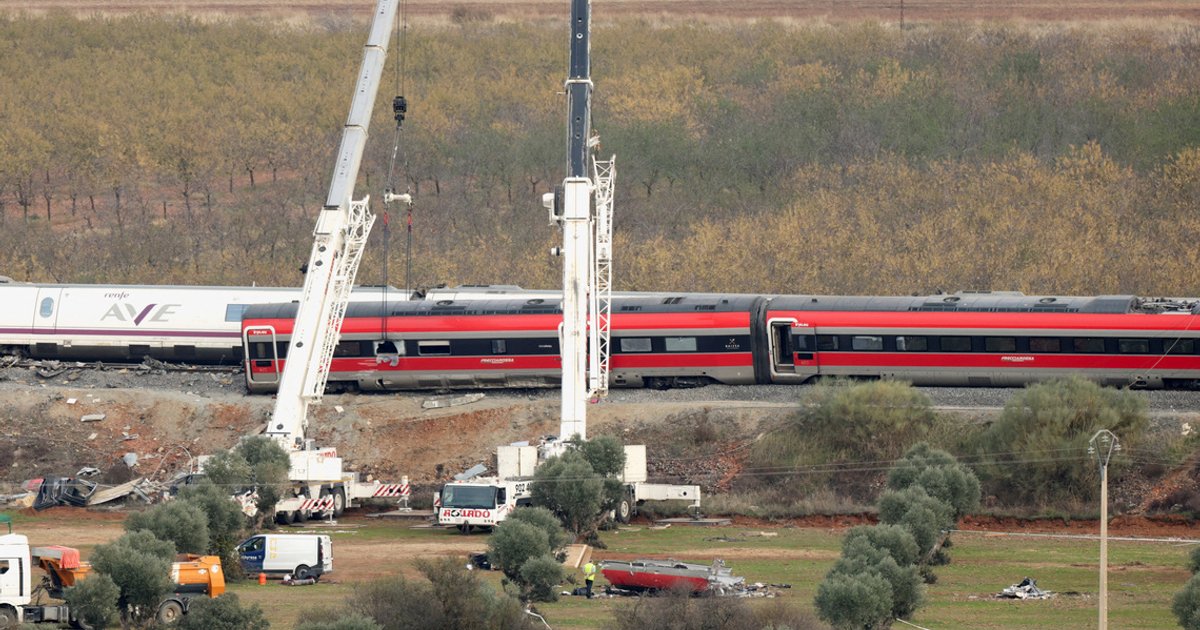
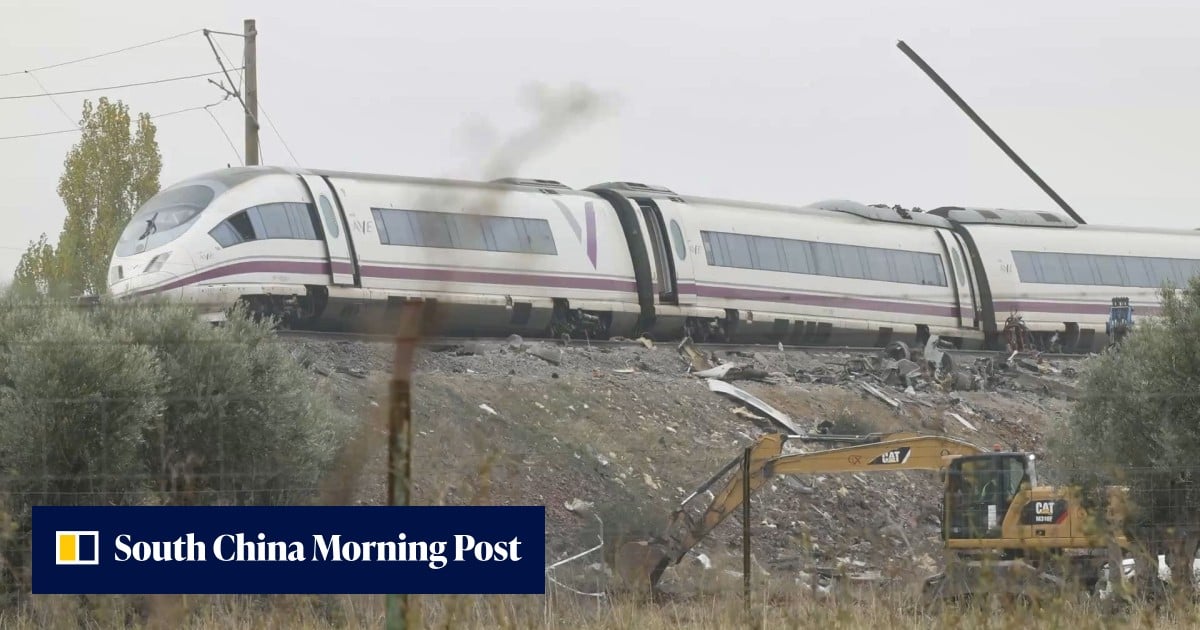
Photo via The Guardian

Spain’s deadly train crashes have damaged public confidence in the system

Read the original at The Guardian ↗
Cite

Jones, S. (2026, November 4). Spain’s deadly train crashes have damaged public confidence in the system. The Guardian. https://www.theguardian.com/world/2026/nov/04/spains-deadly-train-crashes-have-damaged-public-trust-in-the-system

Dated from the outlet's own feed. Check the original for its byline.

The Guardian · collected 2026-11-04 · by Sam Jones
Content note This article describes violence described in detail.

Quick Summary

A high-speed train operated by Spain’s state-owned rail company Renfe crashed into a stationary private rail company Iryo train near Urda, killing over 100 people and injuring many more. This incident followed another crash on the same line nine months prior that killed dozens of passengers. Both accidents have severely damaged public confidence in Spain’s rail network, prompting calls for increased focus on rail safety ahead of upcoming elections.
Written by AI on 2026-11-04, from this article's own text only (the story summary below draws on all the coverage).
See how they differ ↓

AI analysis

Story summary

On November 3, 2026, Óscar Puente, Spain's Transport Minister, resigned from his position six days after a high-speed train crash near Urda, south of Madrid, which killed at least 69 people and injured dozens. The resignation came during an appearance before lawmakers where details about the crash were discussed. This is the second deadly collision involving Spain’s extensive high-speed rail network in a year. Key to the disaster was a malfunctioning communication system on the Madrid-Seville line; central controllers then gave clearance for one train to proceed despite another train being stalled ahead, leading to the collision. Prime Minister Pedro Sánchez has vowed to restore confidence in the rail network, which is the second-largest high-speed rail system globally.

Written for “Spanish Transport Minister Resigns Over Train Crashes” on 2026-11-20, grounded in this article and the 11 other(s) covering the same event.

How they differ

9 outlets covered “Spanish Transport Minister Resigns Over Train Crashes”.

What each outlet says

One AI summary per outlet of its latest article on this story, written from that article alone and checked against it. Open the article for the outlet's own words.

The GuardianThis outlet4 Nov

A high-speed train operated by Spain’s state-owned rail company Renfe crashed into a stationary private rail company Iryo train near Urda, killing over 100 people and injuring many more. This incident followed another crash on the same line nine months prior that killed dozens of passengers. Both accidents have severely damaged public confidence in Spain’s rail network, prompting calls for increased focus on rail…

Spain’s deadly train crashes have damaged public confidence in the system (this article)2 articles from The Guardian on this story
The Straits Times4 Nov

Spanish Transport Minister Oscar Puente resigned six days after a deadly train crash, leaving Prime Minister Pedro Sanchez's ruling Socialists without one of their most vocal supporters ahead of the November 29 election. The resignation follows intense criticism from lawmakers and opposition parties following two major rail disasters this year that killed 115 people in total. Despite previously vowing to stay and…

Spain's Sanchez loses key ally as transport minister quits over train crashes →2 articles from The Straits Times on this story
Al Jazeera4 Nov

Oscar Puente, Spain’s Transport Minister, has stepped down following a second fatal train accident within twelve months. Prime Minister Pedro Sanchez responded by appointing Carlos Cuerpo, the First Deputy Prime Minister, to serve as the interim Transport Minister in this role.

Spanish Transport Minister resigns over train crash disasters →2 articles from Al Jazeera on this story
BBC3 Nov

Spain's Transport Minister Óscar Puente resigned six days after a deadly train crash near Urda that killed at least 69 people and injured many others. The minister cited two serious accidents within less than a year as his reason for stepping down, referencing another crash in January. He made the announcement during a congressional session where he had been discussing new rail safety measures following the recent…

Spanish transport minister resigns days after deadly train crash →
South China Morning Post3 Nov

Spain’s transport minister, Oscar Puente, resigned on Tuesday following a train crash that killed 69 people last week. The incident is one of the worst railway disasters in Europe this century and has affected confidence in Spain’s second-largest high-speed rail network. Prior to his resignation, Puente had vowed to work tirelessly to restore trust in the rail system but withdrew from participating in the upcoming…

Spain’s transport minister resigns after train crash that killed 69 →
The Independent3 Nov

Spain's transport minister Oscar Puente resigned on Tuesday following a high-speed train collision six days earlier that killed 69 people near Madrid. The accident occurred when one high-speed train collided with another that was stopped on the tracks due to a communication system failure, leading central controllers in Madrid to authorize the proceeding train despite an obstruction ahead. This resignation follows a…

Spain's transport minister resigns after 69 killed in train crash disaster →
Show 3 more outlets
Toronto Star3 Nov

Óscar Puente, Spain’s transport minister, resigned on Tuesday, just six days after a fatal high-speed train accident south of Madrid that killed 69 people. The resignation came during an appearance before lawmakers to discuss the crash, which is the second deadly incident involving Spain's high-speed rail system this year.

Spain's transport minister steps down 6 days after fatal high-speed rail crash →
ABC News (AU)4 Nov

Spain's Transport Minister Óscar Puente has resigned six days after a high-speed train crash near Madrid that killed 69 people. The accident involved a communication system failure on the Madrid-Seville line, leading to a collision between two trains. Two Australians were among 15 foreign nationals who died in the incident, and remains of 59 victims have been returned to their families. This resignation follows…

Spain's Transport Minister resigns after deadly high-speed train crash →
The Hindu4 Nov

Spain’s Transport Minister Oscar Puente resigned on November 3, 2026, following a train crash that killed 69 people near Madrid. The incident, one of Europe's deadliest railway disasters this century, occurred when a Renfe train collided with a stationary Iryo train due to the failure of an automatic safety system. Ahead of snap polls scheduled for November 29, Puente announced measures to improve rail safety…

Spain’s Transport Minister offers resignation after deadly train crash →

Where they agree and split

Framing

How the first headlines put it

Stated as fact9
The headlines (9)

Spanish transport minister resigns days after deadly train crash BBC · stated as fact

Spain’s transport minister resigns after train crash that killed 69 South China Morning Post · stated as fact

Spain's transport minister resigns after 69 killed in train crash disaster The Independent · stated as fact

Spanish transport minister resigns after deadly train crash The Guardian · stated as fact

Spain's transport minister steps down 6 days after fatal high-speed rail crash Toronto Star · stated as fact

Spanish transport minister offers resignation after deadly train crash The Straits Times · stated as fact

Spain's Transport Minister resigns after deadly high-speed train crash ABC News (Australia) · stated as fact

Spain’s Transport Minister offers resignation after deadly train crash The Hindu · stated as fact

Spanish transport minister resigns after train crash killed 69 people Al Jazeera · stated as fact

Words to watch (1)

Spain's transport minister resigns after 69 killed in train crash disaster The Independent

The full story: what happened, how it changed, and all 12 articles →

Compared with similar articles

This article reads leans left and hedges 10% of its claims. Each row says how that neighbour differs.
CBC News
Hedges 1 of 3 claims Outlet record 60/100
Toronto Star
Hedges 2 of 27 claims Outlet record 64/100
BBC News
Leans left Hedges 1 of 51 claims Outlet record 65/100
The Straits Times
Hedges 0 of 17 claims Outlet record 64/100
The Independent
Hedges 0 of 15 claims Outlet record 59/100
ABC News (AU)
Hedges 1 of 18 claims Outlet record 67/100
The Hindu
Hedges 1 of 18 claims Outlet record 78/100
Al Jazeera
Hedges 0 of 16 claims Outlet record 60/100
The Independent
Hedges 2 of 27 claims Outlet record 59/100
South China Morning Post
Hedges 0 of 3 claims Outlet record 62/100

Story

Spanish Transport Minister Resigns Over Train Crashes
Politics · 12 article(s) covering the same event. Compare every outlet's account →
How this article was measured signals, leaning charts, publisher record, byline, topics and claims

Signals How these are calculated →

Claims extracted
41
sentences that state something as happening or true
Uncertain
10%
4 of 41 hedged ("reportedly", "may", "according to")
Leaning
Leans left
of the writing, not the subject · beta estimate
Publisher signals
64/100
The Guardian's corrections and hedging, across everything collected from it. Not a measure of accuracy.
Outlets on this story
12
Politics
Same framing elsewhere
1
articles that frame the event the way this one does
Analyzed 2026-11-04 · how these are computed

How this is being covered How these are calculated →

Article leaning vs. publisher reliability
Source leaning vs. consistency

Publisher

The Guardian · 3728 article(s) · 8 correction(s) detected
Running correction rate · 8 correction(s)

Who wrote this

Sam Jones
4 article(s) here · 1 carrying a prediction
The shock and sorrow has echoed around Spain as the country tries to come to terms with what has happened, and to accept that its extensive and modern speed rail system – long a source of national pride – may not be the safe and reliable network it once seemed.
“Luckily, I had my flak jacket and helmet, otherwise I probably wouldn’t even be here, because they just kept kicking and kicking me.”
“The Kyiv regime is resisting, but this cannot change the course of events,” he said, answering a question about how Russia might respond to Kyiv’s attack on St Petersburg.
Announcing that an early general election would be held on Sunday 29 November, the prime minister defended his government’s record in office and admitted it had made mistakes, but insisted it was time to let the Spanish people have their say.
Also by Sam Jones
Nothing else under this byline is closely related to this article, so these are simply their most recent.

Topics

Adamuz Madrid Renfe Spain Urda

Subjects

Spain GPE · 5× Urda GPE · 5× Adamuz GPE · 3× Sánchez PERSON · 3× American NORP · 2× Austin GPE · 2× Iryo ORG · 2× Madrid GPE · 2× Medina GPE · 2× Renfe ORG · 2×

Narrative

The things I saw and heard in Urda mirrored those I’d seen and heard in Adamuz: local people rushing to the train tracks to help the injured; the rapid repurposing of municipal halls into emergency triage centres; and all manner of spontaneous acts of selflessness, bravery, practicality and compassion.
framing: assertive · carried by 1 article(s) · first seen 2026-11-04
The shock and sorrow has echoed around Spain as the country tries to come to terms with what has happened, and to accept that its extensive and modern speed rail system – long a source of national pride – may not be the safe and reliable network it once seemed.
2026-11-04 · The Guardian
Spain’s deadly train crashes have damaged public confidence in the system · assertive framing

Claims (41 extracted, 4 hedged)

A week ago today, for the second time in nine months, I got in my car and drove south from Madrid to cover a deadly train crash. asserted
I → get → crash
At 8.53am last Wednesday, a high-speed train operated by Spain’s state-owned rail company, Renfe, smashed into the back of a stationary train run by the private rail company Iryo, on the outskirts of the small town of Urda in Castilla-La Mancha. asserted
train → operate → Mancha
Sixty-nine people died in the accident, more than 100 were injured, and Spain’s already depleted confidence in its treasured rail network plummeted. asserted
confidence → die → network
As I drove to Urda, I – along with much of Spain – was feeling a grim sense of deja vu. asserted
I → drive → vu
On 18 January, an Iryo train on the same line from Madrid to Seville had derailed near the Andalucían town of Adamuz before being struck by a Renfe train coming from the opposite direction. asserted
train → derail → direction
Forty-six people died, scores were injured and public trust in Spain’s trains was badly shaken. asserted
trust → die → trains
The things I saw and heard in Urda mirrored those I’d seen and heard in Adamuz: local people rushing to the train tracks to help the injured; the rapid repurposing of municipal halls into emergency triage centres; and all manner of spontaneous acts of selflessness, bravery, practicality and compassion. asserted
I → see → selflessness
Some of the passengers whose journey south had come to a violent and premature end near Urda stood in line, many still with their wheelie cases and rucksacks, waiting for the coaches that had been chartered to take them onward. asserted
that → come → them
The queues looked almost normal until you noticed the odd bandaged head, torn trouser leg, or bloodstained top. asserted
you → look → head
Josimar Medina, a young Peruvian who was travelling with his Brazilian girlfriend, Vitoria Maia, told me the blood on his brown T-shirt belonged to an American called Austin. asserted
blood → travel → American
Medina had helped free Austin from the wreckage and had managed to get him out of the train. asserted
Medina → help → train
Although the young American was badly hurt, Medina had seen far worse injuries as he clambered off the train. asserted
he → hurt → train
“I saw … people missing limbs, and I saw one person who had nothing left below the chest,” he said. asserted
he → see → chest
“I saw people with their heads crushed and people with mutilated arms.” asserted
heads → see → arms
The shock and sorrow has echoed around Spain as the country tries to come to terms with what has happened, and to accept that its extensive and modern speed rail system – long a source of national pride – may not be the safe and reliable network it once seemed. uncertain
it → echo → pride
As the prime minister, Pedro Sánchez, put it last week, “public trust in the high-speed system has been broken”. asserted
trust → put → system
Sánchez and his socialist-led coalition government are now racing to rebuild that trust, but the task they face is immense – especially given the current circumstances. asserted
they → lead → circumstances
How will this play out in the elections? asserted
this → play → elections
The prime minister’s critics point out that 115 people died at Adamuz and Urda, and Sánchez and his ministers have had eight years to focus on, and invest in, rail safety. asserted
Sánchez → point → years
On Tuesday evening, the transport minister, Óscar Puente, accepted the inevitable, announcing his resignation, with the acknowledgment that “neither the country, nor I, can bear 100 deaths in less than a year”. asserted
country → accept → year
With the election drawing closer, the language from opposition parties is becoming more strident. asserted
language → draw → parties
Alberto Núñez Feijóo, the leader of the conservative People’s party (PP), which is expected to finish first in next month’s vote, has accused the Sánchez administration of failing to keep Spaniards safe and of trying to use the latest tragedy to political ends. asserted
which → expect → ends
“It’s not just obvious that they’re not good at being in charge,” Feijóo said on Monday. asserted
Feijóo → ’ → Monday
“It’s that I’m also not sure that they’re good people, either.” asserted
they → ’ → ?
The far-right Vox party, with whom the PP could form a national coalition government, has been even more scathing, accusing the government of “killing” the train crash victims and of “incompetence, corruption, cronyism, and a lack of investment in maintenance and infrastructure improvements”. uncertain
PP → form → maintenance
It is also urging the supreme court to investigate Puente on suspicion of manslaughter and causing bodily harm through gross negligence. asserted
It → urge → negligence
Puente has rejected allegations of mismanagement, and has insisted that Spain’s railway system is “safe and reliable”. asserted
system → reject → mismanagement
Despite signs of a modest resurgence in support just before the latest crash, Sánchez always faced a tough road to re-election. asserted
Sánchez → face → election
Corruption scandals have bedevilled his inner circle and his government was much criticised for its response to the mass crossing into Spain’s north African territory of Ceuta over the summer. asserted
government → bedevil → summer
That road now looks even more impassable. asserted
road → look → ?
But with disasters, emergencies and deaths so frequently politicised, especially in Spain, the worry now is that solutions to the failings at Adamuz and Urda may be missed amid all the campaigning and point-scoring. uncertain
solutions → politicise → campaigning
As the politicians bicker and Spain prepares for its fifth general election in 10 years, the long process of recovery is just beginning for some of those who survived last week’s crash. asserted
who → bicker → crash
On Saturday afternoon, I got an email from the family of Austin Hartman, the young American pulled out of the train by Josimar Medina. asserted
I → get → Medina
They told me that Austin, a Cal Poly State University student who had been studying in Madrid, was being treated in a Spanish hospital for multiple fractures to his pelvis, hip, femur, humerus and rib, and was unlikely to be well enough to return home for at least two months. asserted
who → tell → months
GoFundMe pages have been set up for Austin and his friend Leah Silver-Fajardo, who was also badly hurt in the accident. asserted
who → set → accident
His family had seen the photo I took of Josimar and Vitoria in Urda and wanted to know if there was any way of contacting them so that Austin could say thank you. uncertain
Austin → see → you
By the following day, Austin and his family had video called the couple. asserted
Austin → call → couple
“It was so helpful for us to … thank Josimar for treating Austin with such loving care when he needed it more than anything,” Austin’s stepmother, Sandi, told me in an email on Tuesday. asserted
stepmother → thank → Tuesday
“Austin credits him with saving his life. asserted
Austin → credit → life
As we know, beautiful things are born of tragedy and it’s usually in the relationships that are formed out of it.” asserted
that → know → it
…and 1 more, not listed.
Give feedback · no sign-in needed

No sign-in needed for now. Your note is sent without a name, so it cannot be answered.

History Support