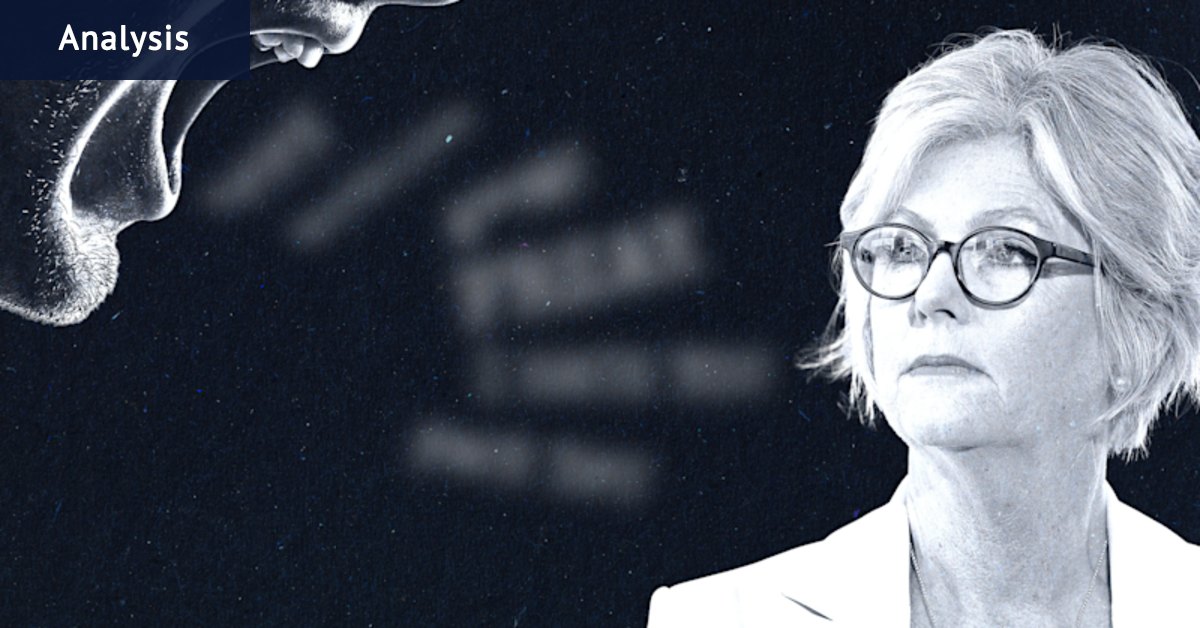
It is not often that the interests of Pauline Hanson and constitutional law buffs collide.
asserted
interests → collide → Hanson
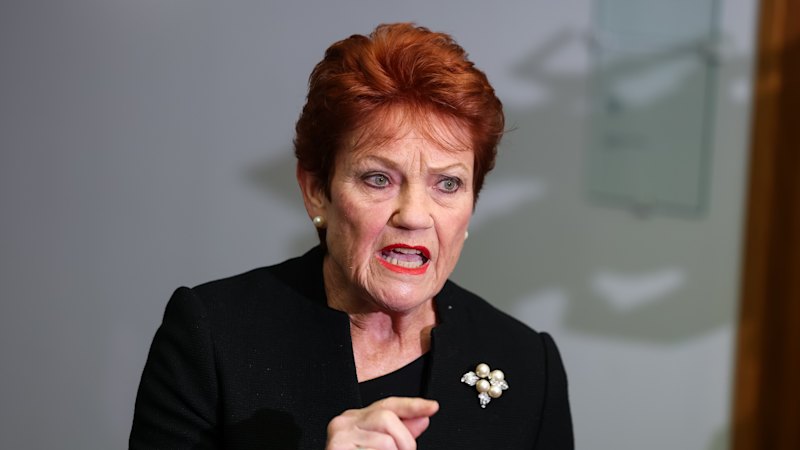
The High Court is expected to publish a decision imminently on whether it will hear Hanson’s last-ditch appeal of Federal Court findings that her “piss off back to Pakistan” tweet to Greens senator Mehreen Faruqi was unlawful hate speech.
asserted
tweet → expect → Faruqi
The High Court’s decision will be short, with one pivotal word: “granted” or “refused”.
asserted
decision → grant → word
Either result will feed into a swirling, complex and increasingly nasty debate about freedom of expression in this country.
asserted
result → feed → country
A win would allow the One Nation leader to argue that section 18C of the Racial Discrimination Act – which bans speech that “offends, insults, humiliates or intimidates” on the basis of race – is invalid.
asserted
that → allow → race
Hanson says it interferes unacceptably with political communication.
asserted
it → say → communication
But a knockback by the High Court would work for Hanson, too.
asserted
knockback → work → Hanson
It would add moral leverage to her larger political goal, one most Australians would be unaware of: to hold a referendum on adding an American-style free speech clause to the Constitution.
asserted
Australians → add → Constitution
The seven black-robed justices of the High Court are already facing a stack of tricky political communication matters, described by one barrister as “unusually spicy”.
asserted
justices → face → barrister
Everyone from the far-right to the far-left is asking where the lines are drawn, and who gets to draw them.
asserted
who → ask → them
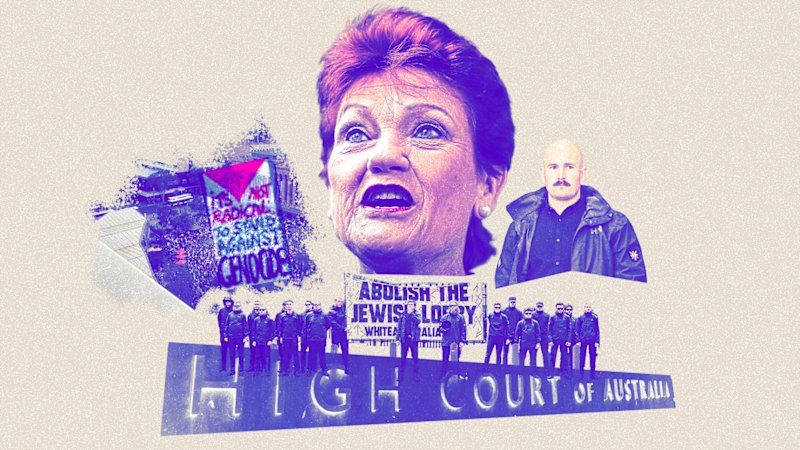
Can parliaments legally ban a neo-Nazi party as a hate group?
asserted
parliaments → ban → group
Make it a crime to chant “from the river, to the sea” at a protest against Israel?
asserted
it → make → Israel
“This will be a litmus test for where the High Court stands on freedom of speech,” says Mia Schlicht, executive director of the conservative Samuel Griffith Society.
asserted
Schlicht → stand → Society
Judges have spent decades in bitter disagreement about the “implied freedom of political communication”, first found by the High Court in the 1990s.
asserted
Judges → spend → 1990s
The court has long held the freedom is real, if unwritten.
asserted
freedom → hold → ?
For citizens to enjoy the democracy promised by the Constitution, they must be able to discuss politics.
asserted
they → enjoy → politics
But legal conservatives despise what they see as a dangerous invention, one used by activist judges to grab power from parliaments.
asserted
they → despise → parliaments
The dispute has fuelled a war of words between some of the most powerful judges in the country.
asserted
dispute → fuel → country
It’s a fight over authority, influence, and integrity.
asserted
It → ’ → authority
The black belt judge
The Betoota Advocate once ran a story headlined: ‘You Can’t Say Anything These Days’, Says Man Who Says Whatever He Wants All The Time.
asserted
He → run → Whatever
But polling suggests there is a grain of truth in the comedy.
uncertain
polling → suggest → comedy
Only 58 per cent of Australians feel they have the freedom to express political opinions, according to new research by McKinnon.
uncertain
they → feel → McKinnon
The number fell 10 percentage points in a year.
asserted
number → fall → year
Among young men, it plummeted from 72 per cent to just under 50 per cent.
asserted
it → plummet → cent
The High Court does not see itself as a free speech saviour.
asserted
Court → see → saviour
It likes to project a quiet, stable, apolitical image.
asserted
It → like → image
But the low-profile High Court will struggle to navigate away from political controversy with its current crop of implied freedom of political communication cases.
asserted
Court → struggle → cases
“It’s an incredibly hot topic,” says one senior Australian legal figure, who expects Hanson will be granted leave to appeal.
asserted
Hanson → ’ → leave
(This masthead spoke to a wide range of legal professionals, who were granted anonymity to discuss current cases and serving judges.
asserted
who → speak → cases
“It’s an opportunity for the court which [Chief Justice Stephen] Gageler, who retires in 2028, will grab,” the source predicts.
asserted
source → ’ → 2028
Gageler grew up in the NSW town of Sandy Hollow, the son of a sawmiller.
asserted
Gageler → grow → sawmiller
He attended primary school in a one-teacher shack, before later studying at Harvard.
asserted
He → attend → Harvard
Other qualifications include a black belt in taekwondo.
asserted
qualifications → include → taekwondo
Once a minority voice on political communication cases, he has become influential over time.
asserted
he → become → time
“No High Court justice surpasses Chief Justice Stephen Gageler in supporting a robust implied freedom,” says former public law barrister Louise Clegg.
asserted
Clegg → surpass → freedom
A rarity in the law, Clegg is a legal conservative who broadly supports the implied freedom.
asserted
who → support → freedom
(She is also married to federal Opposition Leader Angus Taylor.)
asserted
She → marry → Taylor
“We have a mechanism for the court to protect political communication, while being more deferential to parliament than the US Supreme Court might be,” she says, predicting Hanson will win her hearing bid and then her appeal.
uncertain
Hanson → have → bid
“I sense this could be a legacy case for the Chief Justice.”
uncertain
this → sense → Justice
When Queen Elizabeth died in 2022, Mehreen Faruqi shed no tears.
asserted
Faruqi → die → tears
…and 89 more, not listed.
 The Aporia