Photo via The Straits Times

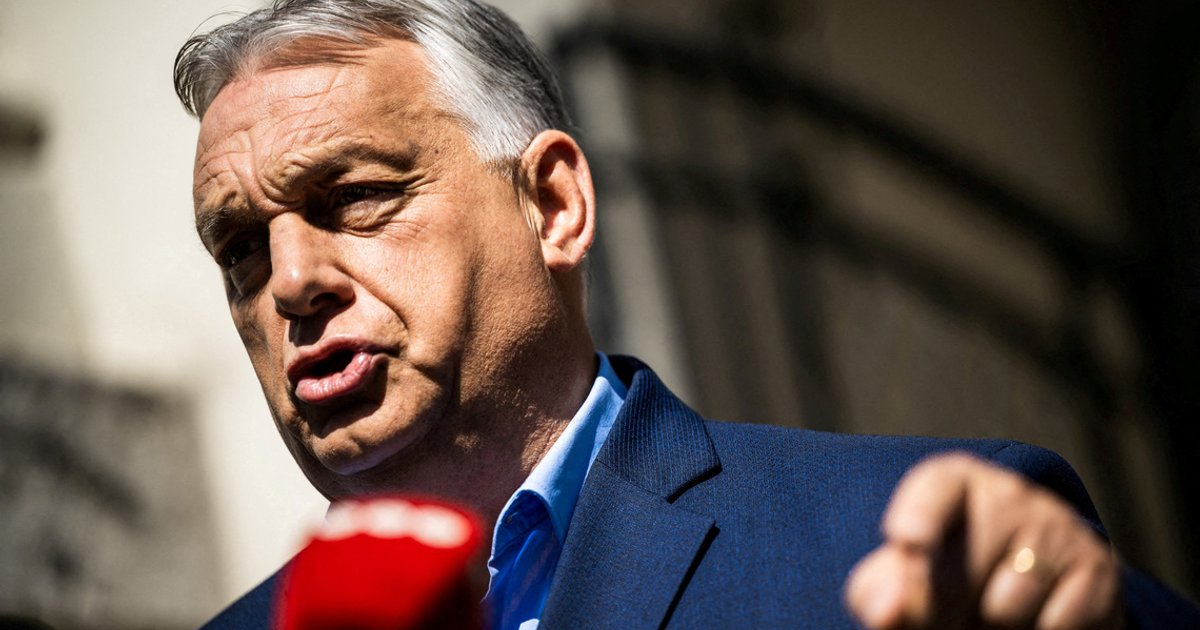
Hungary's former PM Orban says he rebuffed secret police recruitment

Read the original at The Straits Times ↗
Cite

The Straits Times. (2026, November 3). Hungary's former PM Orban says he rebuffed secret police recruitment. The Straits Times. https://www.straitstimes.com/world/europe/hungarys-former-pm-orban-says-he-rebuffed-secret-police-recruitment

Dated from the outlet's own feed. Check the original for its byline.

The Straits Times · collected 2026-11-03 · by The Straits Times

Quick Summary

Viktor Orban, former Hungarian Prime Minister, revealed on Facebook that he had rejected attempts by Communist-era secret services to recruit him as an informer during his military service in the early 1980s. He also stated that he and his associates faced extensive surveillance thereafter. The disclosure comes ahead of Hungary’s planned release of over 55,000 Communist-era police files online, part of a new initiative by Prime Minister Peter Magyar's government to make these records publicly accessible for the first time.
Written by AI on 2026-11-05, from this article's own text only (the story summary below draws on all the coverage).

AI analysis

Story summary

Hungary's former prime minister Viktor Orban has claimed on Facebook that he refused secret police recruitment attempts during his military service in 1982. Documents from that period reveal efforts to recruit Orban as an informant by the Communist-era secret services but were unsuccessful. According to Orban, after this refusal, he and other opposition members faced continuous surveillance. Hungary plans to release tens of thousands of Communist-era police files starting on Wednesday, providing public access to lists of informants used by the former state security services. This move comes as a response to historical records showing extensive monitoring of political figures like Orban during the Communist era in Hungary.

Written for “Hungary Former PM Orban Secret Police Rejection” on 2026-11-21, grounded in this article and the 0 other(s) covering the same event.

Compared with similar articles

This article reads unscored and hedges 0% of its claims. Each row says how that neighbour differs.
The Straits Times
Hedges 0 of 10 claims Outlet record 64/100
“Article A describes Orban's personal statement about being approached by secret police during his military service, while Article B reports on Hungary releasing Communist-era informer files to the public.”
BBC News
Hedges 0 of 23 claims Outlet record 65/100
“Article A discusses Orban's personal history with secret police, while Article B reports on Hungary releasing communist-era secret police files to the public.”
The Guardian
Hedges 2 of 55 claims Outlet record 64/100
“Article A describes the government's plan to reveal names of communist-era informants, while Article B reports Orban's personal account and reaction to this upcoming release.”

Story

Hungary Former PM Orban Secret Police Rejection
Politics · 1 article(s) covering the same event.
How this article was measured signals, leaning charts, publisher record, byline, topics and claims

Signals How these are calculated →

Claims extracted
12
sentences that state something as happening or true
Uncertain
0%
0 of 12 hedged ("reportedly", "may", "according to")
Leaning
not political
takes no side on a contested political question
Publisher signals
64/100
The Straits Times's corrections and hedging, across everything collected from it. Not a measure of accuracy.
Outlets on this story
1
Politics
Same framing elsewhere
1
articles that frame the event the way this one does
Analyzed 2026-11-05 · how these are computed

How this is being covered How these are calculated →

Article leaning vs. publisher reliability
Source leaning vs. consistency

Publisher

The Straits Times · 5674 article(s) · 7 correction(s) detected
Running correction rate · 7 correction(s)

Who wrote this

The Straits Times
3966 article(s) here · 1 carrying a prediction
The environmental consequences of this war will last for generations,” Lewis Pugh wrote in a post on his website.
He predicts that pairing more use of these Wolbachia mosquitoes with existing steps to fight mosquito-borne disease could “knock dengue down to much lower levels” in many places.
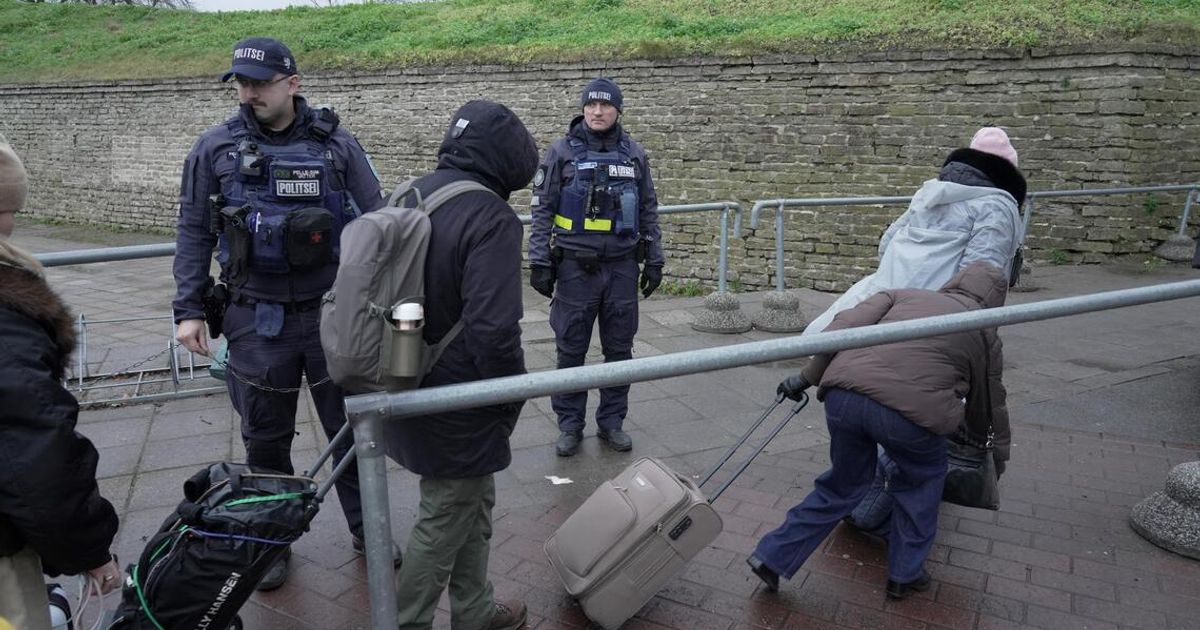
The Estonian police said on Nov 20 the closure would “make it harder for Russian intelligence services to recruit and influence people, and help prevent sanctions evasion”.
2026-11-21 · assertive framing · Queues in Russian town as Estonia border closure looms
COP31 climate summit risks failure as talks go deep into overtime ANTALYA, Turkey, Nov 21 - The COP31 climate summit will either produce a good deal or no deal at all, the European Union's top climate official said on Saturday as talks stretched deep into overtime.
He was considered one of the leaders of the Beltran Leyva cartel, which had reportedly allied with the Los Mayors faction of the powerful Sinaloa Cartel.
Trump told European leaders they were spending a lot on Ukraine, Zelenskiy says KYIV, Nov 21 - US President Donald Trump told European leaders this week they were spending a lot on the war in Ukraine and could use that money at home if a peace deal were reached with Russia, Ukrainian President Volodymyr Zelenskiy said on Saturday.
Denmark would present its proposals at a meeting of EU ambassadors in Brussels on Monday.
NATO will defend every inch of Polish territory, Rutte says WARSAW, Nov 21 - NATO will defend every inch of Polish territory, NATO Secretary General Mark Rutte said in Warsaw, a day after Poland said Russia violated its airspace with three objects that were probably two missiles and a drone.
The cuts proposed by Antonio Costa, who chairs summits of EU leaders, would reduce the overall seven-year budget by €40 billion to €1.582 trillion compared to a proposal presented by the Irish EU presidency in October, and by €180.6 billion compared to the original Commission proposal.
Catherine, Britain’s Princess of Wales, will reflect on her experience with cancer and recovery in a documentary to be broadcast internationally in November, Kensington Palace said on Nov 21.
Also by The Straits Times
Nothing else under this byline is closely related to this article, so these are simply their most recent.
All 3966 articles by The Straits Times →

Topics

BUDAPEST Communist Facebook Hungary Tisza

Subjects

Hungary GPE · 5× Orban PERSON · 4× BUDAPEST GPE · 2× Communist NORP · 2× Facebook ORG · 2× Hungarians NORP · 1× Magyar PERSON · 1× Peter Magyar PERSON · 1× Tisza ORG · 1× Viktor Orban PERSON · 1×

Narrative

Orban, whose 16-year nationalist rule ended in an election in April when Prime Minister Peter Magyar's centre-right Tisza party ousted him, said the documents revealed that "informants were set upon us, and listening devices were installed in our workplaces, our homes — and even in our bedrooms."
framing: assertive · carried by 1 article(s) · first seen 2026-11-05
Although Communist rule ended in 1989, Hungary delayed fully opening the files due to a lack of political will from successive governments.
2026-11-05 · The Straits Times
Hungary's former PM Orban says he rebuffed secret police recruitment · assertive framing

Claims (12 extracted, 0 hedged)

Hungary's former PM Orban says he rebuffed secret police recruitment BUDAPEST, Nov 3 - asserted
he → say → recruitment
Hungary's former Prime Minister Viktor Orban said on Tuesday that Communist secret services had tried to recruit him as an informer while he was doing his military service but he refused, and that he later became the target of heavy police surveillance. asserted
he → say → surveillance
Orban issued a statement on Facebook, along with secret service documents from 1982 and the late 1980s. asserted
Orban → issue → 1982
Hungary is due on Wednesday to start releasing tens of thousands of Communist-era police files in an online public database, giving people access to lists of informers and collaborators used by the former state security services. asserted
Hungary → start → services
"During the early part of my military service, they attempted to recruit me, but I refused, so the attempt proved unsuccessful," Orban wrote on Facebook. asserted
Orban → attempt → Facebook
"Later, I, my wife, and my fellow opposition members were kept under constant surveillance. asserted
I → keep → surveillance
Orban, whose 16-year nationalist rule ended in an election in April when Prime Minister Peter Magyar's centre-right Tisza party ousted him, said the documents revealed that "informants were set upon us, and listening devices were installed in our workplaces, our homes — and even in our bedrooms." asserted
devices → end → bedrooms
The opening of the archives on Wednesday is part of Magyar's pledge to make the records — stored in a vast basement of archives in Budapest — public and to allow Hungarians to come to terms with their totalitarian past. asserted
Hungarians → make → past
Although Communist rule ended in 1989, Hungary delayed fully opening the files due to a lack of political will from successive governments. asserted
Hungary → end → governments
Until now, apart from researchers, ordinary people were only able to request access to their own records or those of close family members. asserted
people → request → members
Now anybody will be able to conduct searches in the online database. asserted
anybody → conduct → database
Between 1956 and 1989, some 55,000 secret collaborators were recorded in Hungary. asserted
collaborators → record → Hungary
Give feedback · no sign-in needed

No sign-in needed for now. Your note is sent without a name, so it cannot be answered.

History Support