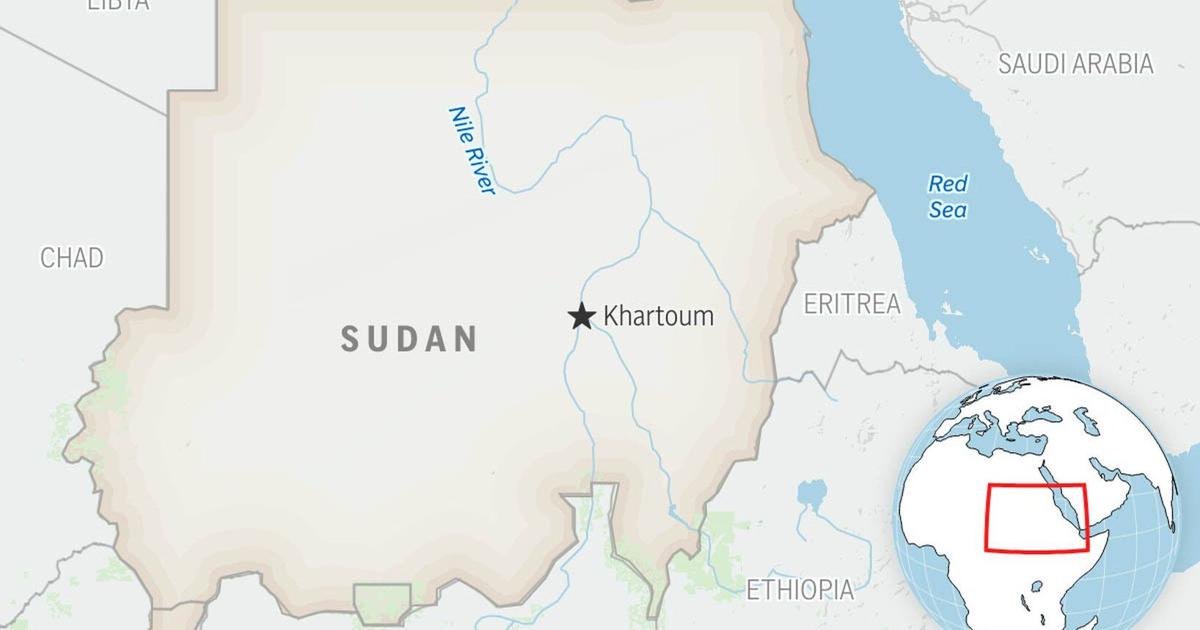
Photo via Al Jazeera

Deadly RSF drone attacks reveal deep divisions between Sudan and Ethiopia

Read the original at Al Jazeera ↗
Cite

Mansour, M. (2026, November 3). Deadly RSF drone attacks reveal deep divisions between Sudan and Ethiopia. Al Jazeera. https://www.aljazeera.com/news/2026/11/3/deadly-rsf-drone-strikes-reveal-deep-divisions-between-sudan-and-ethiopia?traffic_source=rss

Dated from the outlet's own feed. Check the original for its byline.

Al Jazeera · collected 2026-11-03 · by Mohammad Mansour

Quick Summary

Sudan has accused Ethiopia of supporting the Rapid Support Forces (RSF) paramilitary in launching deadly drone attacks against Sudanese civilian and military targets since February 2023, leading to significant damage to power stations and loss of life. According to a report by the Sudanese Ministry of Foreign Affairs, there have been 70 separate assaults involving 187 drones from Ethiopian territory, with over 90% of power stations in Sudan out of service due to these attacks. The frequency has escalated, with 28 attacks using 97 drones reported just in October, resulting in the deaths of 176 soldiers and 484 civilians.
Written by AI on 2026-11-03, from this article's own text only (the story summary below draws on all the coverage).

AI analysis

Story summary

As of November 3, 2026, Sudan has filed complaints with both the United Nations Security Council and the African Union’s Peace and Security Council against Ethiopia, accusing it of aiding the Rapid Support Forces (RSF) in launching deadly drone attacks. The RSF is a paramilitary group at war with Sudan's military since April 2023, resulting in hundreds of casualties and disruptions to essential services like power stations. Sudan alleges that Ethiopian territory was used for these "brazen aggressions" against civilian sites within its borders. This action highlights the deepening rift between the two nations, with tensions escalating amid mutual accusations of supporting opposing rebel groups.

Written for “Sudan Files Complaints Against Ethiopia” on 2026-11-21, grounded in this article and the 1 other(s) covering the same event.

Compared with similar articles

This article reads leans left and hedges 24% of its claims. Each row says how that neighbour differs.
Al Jazeera
Leans left Hedges 0 of 15 claims Outlet record 60/100
Al Jazeera
Hedges 0 of 18 claims Outlet record 60/100
“The articles discuss different aspects of conflicts in Ethiopia and Sudan; Article A focuses on WHO's warning about the health system collapse due to fighting and drone strikes in northern Ethiopia, while Article B discusses Sudanese allegations of Ethiopian involvement in RSF drone attacks against Sudan.”
Toronto Star
Leans left Hedges 3 of 30 claims Outlet record 65/100
“While both articles discuss RSF drone strikes on Sudanese infrastructure, Article A specifically describes a set of recent attacks that occurred on Sunday in two towns, while Article B discusses broader diplomatic tensions and allegations between Sudan and Ethiopia related to the conflict. They do not describe the same specific incident.”

Story

Sudan Files Complaints Against Ethiopia
Politics · 2 article(s) covering the same event. See how they differ ↑
How this article was measured signals, leaning charts, publisher record, byline, topics and claims

Signals How these are calculated →

Claims extracted
29
sentences that state something as happening or true
Uncertain
24%
7 of 29 hedged ("reportedly", "may", "according to")
Leaning
Leans left
of the writing, not the subject · beta estimate
Publisher signals
60/100
Al Jazeera's corrections and hedging, across everything collected from it. Not a measure of accuracy.
Outlets on this story
2
Politics
Same framing elsewhere
1
articles that frame the event the way this one does
Analyzed 2026-11-03 · how these are computed

How this is being covered How these are calculated →

Article leaning vs. publisher reliability
Source leaning vs. consistency

Publisher

Al Jazeera · 6251 article(s) · 4 correction(s) detected
Running correction rate · 4 correction(s)

Who wrote this

Mohammad Mansour
20 article(s) here · 1 carrying a prediction
Since taking office in May, al-Zaidi has made the disarmament of all armed factions in the country, including Kataib Hezbollah, a priority amid pressure from the United States, which has long demanded the decommissioning of the Iran-backed fighters.
Al-Bidh said that for the STC to stop the Houthi advance, it would require autonomy on the battlefield for its units.
Recommended Stories list of 3 items- list 1 of 3Yemen’s Houthis unilaterally release 600 war detainees - list 2 of 3Houthis advance in Yemen as government forces move to defend Aden - list 3 of 3The Red Sea cannot be secured without restoring the Yemeni state Retired Lebanese Brigadier-General Hassan Jouni, a military and strategic expert, said fighting is now focused on control over a mountainous triangle of territory in southern Yemen, which could decide the outcome of the war.
During the second Intifada in September 2000, his right hand was broken while confronting Ariel Sharon, who would become prime minister the following year, during his provocative storming of the Al-Aqsa Mosque compound.
“If full control is taken, which is unlikely, the government would be able to finally tell Iraqis that a militia had been removed from its base and the legal residents of the area allowed to return,” he said.
In Gaza during that period, 399 health workers were detained, including Dr Husam Abu Safia, the director of Kamal Adwan Hospital, who has spent more than 500 days in Israeli custody. “The Israeli occupation did not and will not stop targeting the health system,” al-Waheidi said.
As Eisenkot huddles with members of his alliance and negotiates with potential outside partners who could support his coalition, including Arab parties, Netanyahu remains ensconced as a caretaker prime minister.
The claims could not be independently verified.
The electoral gains made by the parties representing Palestinian citizens of Israel – the Joint List and the United Arab List (Ra’am) – could give the Zionist opposition to Israeli Prime Minister Benjamin Netanyahu the upper hand in forming the next government, if they choose to work with the Arab parties. Recommended Stories list of 3 items- list 1 of 3Israel’s election commission rejects Likud’s fraud claims, confirms results - list 2 of 3How big is the Republican midterms loss, and is there a silver lining? - list 3 of 3Iran’s Khamenei warns Trump loss at polls won’t end US hostility Meanwhile, Netanyahu and his allies have portrayed the increased vote share for the Palestinian-led parties as the result of illegality, a+nd say they represent Jewish Israelis. Political analyst Mamoun Abu Amer told Al Jazeera that the political backlash was preplanned. “From the beginning, it was clearly a systematic campaign when Arab citizens mobilised heavily, especially in the villages, the Naqab and the Bedouin areas,” Abu Amer said.
But Badr Hassan Al-Shafei, a professor of African studies and conflict resolution expert, said fears of an escalation that could harm Sudan and Ethiopia are preventing an all-out confrontation between the two countries.
Also by Mohammad Mansour
Nothing else under this byline is closely related to this article, so these are simply their most recent.
All 20 articles by Mohammad Mansour →

Topics

Ethiopia RSF SAF Sudan Sudanese

Subjects

Sudanese NORP · 11× Sudan GPE · 8× Ethiopia GPE · 7× Ethiopian NORP · 4× RSF ORG · 4× SAF ORG · 4× Al-Almin PERSON · 3× Addis Ababa GPE · 2× Al Jazeera ORG · 2× the United Nations Security Council ORG · 1×

Narrative

Recommended Stories list of 3 items- list 1 of 3As aid situation worsens, displaced Sudanese worry about warnings of famine - list 2 of 3Sudan files complaints against Ethiopia with UN over deadly drone spree - list 3 of 3Drone attacks extend campaign targeting Sudan’s power system Ethiopia’s alleged support for the RSF has triggered differences within the SAF on how to respond next, Sudanese border affairs specialist Abdul Kareem Al-Almin Ahmed told Al Jazeera.
framing: mixed · carried by 1 article(s) · first seen 2026-11-03
But Badr Hassan Al-Shafei, a professor of African studies and conflict resolution expert, said fears of an escalation that could harm Sudan and Ethiopia are preventing an all-out confrontation between the two countries.

Claims (29 extracted, 7 hedged)

The Sudanese government’s allegations that Ethiopia is behind a deadly wave of unmanned aerial assaults belie a deep and longstanding rift between the two countries, which threatens to intensify internal conflicts in both. asserted
which → belie → both
Sudan has officially lodged complaints with the United Nations Security Council and the African Union’s Peace and Security Council over allegations that the Rapid Support Forces (RSF) paramilitary – which has been at war with the Sudanese Armed Forces (SAF) since April 2023 – is using Ethiopian territory to launch attacks against civilian sites, including power stations. asserted
which → lodge → stations
Recommended Stories list of 3 items- list 1 of 3As aid situation worsens, displaced Sudanese worry about warnings of famine - list 2 of 3Sudan files complaints against Ethiopia with UN over deadly drone spree - list 3 of 3Drone attacks extend campaign targeting Sudan’s power system Ethiopia’s alleged support for the RSF has triggered differences within the SAF on how to respond next, Sudanese border affairs specialist Abdul Kareem Al-Almin Ahmed told Al Jazeera. asserted
Ahmed → worsen → Jazeera
“The mutual accusations are many and almost daily, and the tension on the part of the Sudanese army has reached high levels, to the degree that made some voices inside the Sudanese army and the forces allied with it demand that Sudan declare war on Ethiopia based on these interventions,” Al-Almin told Al Jazeera. asserted
Almin → reach → Jazeera
Suspected RSF drone attacks have heavily damaged civilian infrastructure in SAF-controlled areas. asserted
attacks → damage → areas
More than 90 percent of power stations in Sudanese cities have been rendered out of service due to drone attacks, and al-Almin said the technological capabilities of these weapons indicate significant external backing. asserted
capabilities → render → backing
“They are mysterious drones, drones that reach long distances, and almost all Sudanese lands are currently violated by these drones, which confirms that they are drones with a special characteristic and flight properties for a long range and have high destructive power,” Al-Almin added. asserted
Almin → reach → power
A detailed report prepared by the Sudanese Ministry of Foreign Affairs alongside military intelligence claimed that 70 separate assaults involving 187 one-way attack drones were launched from Ethiopian territory between February and October. asserted
assaults → prepare → February
The frequency of these attacks seems to be increasing, with 28 attacks carried out by 97 drones in October. asserted
frequency → seem → October
The use of armed drones has been catastrophic for civilians in Sudan, with 13 million people already displaced and thousands at risk of famine due to the war. asserted
people → displace → war
Between February 15 and October 27, drone attacks killed 176 Sudanese soldiers and 484 civilians, according to a report compiled by the Transitional Sovereignty Council, which is linked to the de facto Sudanese leader Abdel Fattah al-Burhan and the SAF. uncertain
which → kill → Burhan
It identified Asosa Airport in western Ethiopia, the Kurmuk-Gizen border area, and the Bahir Dar airbase in Amhara as specific launch sites for drone attacks. asserted
It → identify → attacks
UN Secretary-General Antonio Guterres said on Saturday he was appalled by the use of drones in the war and condemned the catastrophic toll this was having on civilians. asserted
this → say → civilians
A drone attack on displaced families in Wad el-Mahi, near the Ethiopian border on October 3, killed 26 women and four children. asserted
attack → displace → women
Another drone attack in Nyala, in Sudan’s Darfur region, on October 26 killed at least 21 people and injured at least 40. asserted
attack → kill → 40
The Sudanese military has repeatedly accused the Ethiopian government of aiding the RSF. asserted
military → accuse → RSF
Addis Ababa denies the claims and has in turn accused the Sudanese government of backing rebels linked to the Tigray People’s Liberation Front. uncertain
Ababa → deny → Front
The tensions between Sudan and Ethiopia extend beyond these drone attacks and allegations of support for rebel groups. asserted
tensions → extend → groups
They also involve a confrontation over water resources and strategic regional alliances. asserted
They → involve → resources
Egypt and Sudan rely heavily on the Nile for water supplies and, being downstream, fear the GERD threatens their national security and claim it breaches international law. uncertain
it → rely → law
“The Sudanese-Ethiopian file is a complex file, in which many factors have intertwined: The Renaissance Dam problem first … and the rapprochement between the Sudanese army and the Egyptian government,” Al-Almin said. asserted
Almin → intertwine → army
The Sudanese government is also angered that the RSF is allegedly receiving support from Ethiopia, he added. uncertain
he → anger → Ethiopia
But Badr Hassan Al-Shafei, a professor of African studies and conflict resolution expert, said fears of an escalation that could harm Sudan and Ethiopia are preventing an all-out confrontation between the two countries. uncertain
that → say → countries
In a study published by the Al Jazeera Centre for Studies, Al-Shafei wrote that “Khartoum’s interest lies in the stability of its eastern neighbourhood to avoid security threats and waves of asylum. asserted
interest → publish → asylum
“Khartoum fears that providing military support to Tigray will lead to an explosion of the situation on its borders, which may increase displacement operations that the border Sudanese states cannot bear, especially in light of the continuation of the war against Hemedti,” Al-Shafei stated. uncertain
Shafei → fear → Hemedti
A direct military confrontation with Addis Ababa would severely strain an already exhausted Sudanese military apparatus, which is still involved in intense battles with the RSF in the southeast of the country. asserted
which → strain → country
Ultimately, leaders of both countries recognise the catastrophic potential of expanding the battlefield beyond each other’s borders. asserted
leaders → recognise → borders
“If the Sudanese army opens a war front with Ethiopia, this is not in its favour and confuses the region,” Al-Amin wrote. asserted
Amin → open → region
“[Sudan could find itself] fighting on two fronts: Fighting the Rapid Support Forces that occupy part of Sudan, and fighting the Ethiopian army that possesses its capabilities and the border extension capable of reaching through it.” uncertain
that → find → it

Give feedback · no sign-in needed

No sign-in needed for now. Your note is sent without a name, so it cannot be answered.

History Support