Brendan Ruberry
210 article(s) here · 0 carrying a prediction
US Treasury Secretary Scott Bessent warned Sunday that the Federal Reserve risks hurting the economy by overtightening policy, days after a tech-induced market correction intensified concerns that the AI bubble could be bursting.
President Donald Trump said Friday that the US would work with China to develop “joint guardrails” on AI, after an anti-tech backlash helped drive a historic rebuke of Republicans in midterm elections.
While Chinese AI labs would prefer to keep using Nvidia chips in the short run, Brookings expert Kyle Chan told Bloomberg’s Odd Lots podcast that US export controls have fueled Beijing’s efforts “to replicate the entire global semiconductor supply chain in China, which I don’t think any country has ever done before.”
“If this fully checks out, it is clearly a historic milestone in mathematics,” a Fields Medal winner told Nature of the Riemann breakthrough, which involves how evenly prime numbers appear en route to infinity: “I think it’s likely to be correct.”
Coming on the heels of OpenAI releasing more than 300 mathematical proofs developed with human oversight, the Riemann proof is a “remarkable thing we might see a lot more of in the future,” a math professor told The New York Times, “where there is a very skillful jockey riding a really fast horse.”
The trilateral talks at the APEC summit in Shenzhen will offer Putin a symbolic boost as Kyiv’s attacks have nearly halved Russia’s November oil refining, Reuters reported.
The debut could draw about $250 million in net retail buying — potentially twice as much as SpaceX’s record of $118 million in retail buying.
In addition to increasing stock buybacks, Nvidia’s interim CEO Colette Kress reportedly promised pay raises Wednesday in the chipmaker’s first employee town hall following Huang’s ouster, amid concerns the shake-up could drive a talent exodus; Kress added that the firm’s “passion to innovate” would not change.
The looming squeeze could intensify chip self-sufficiency initiatives that are already underway in Beijing, whose AI ecosystem still depends on American hardware: The clampdown “sets everyone back” in China, Tencent’s president acknowledged, but also hastens progress toward a future where “all Chinese players” rely on domestic compute.
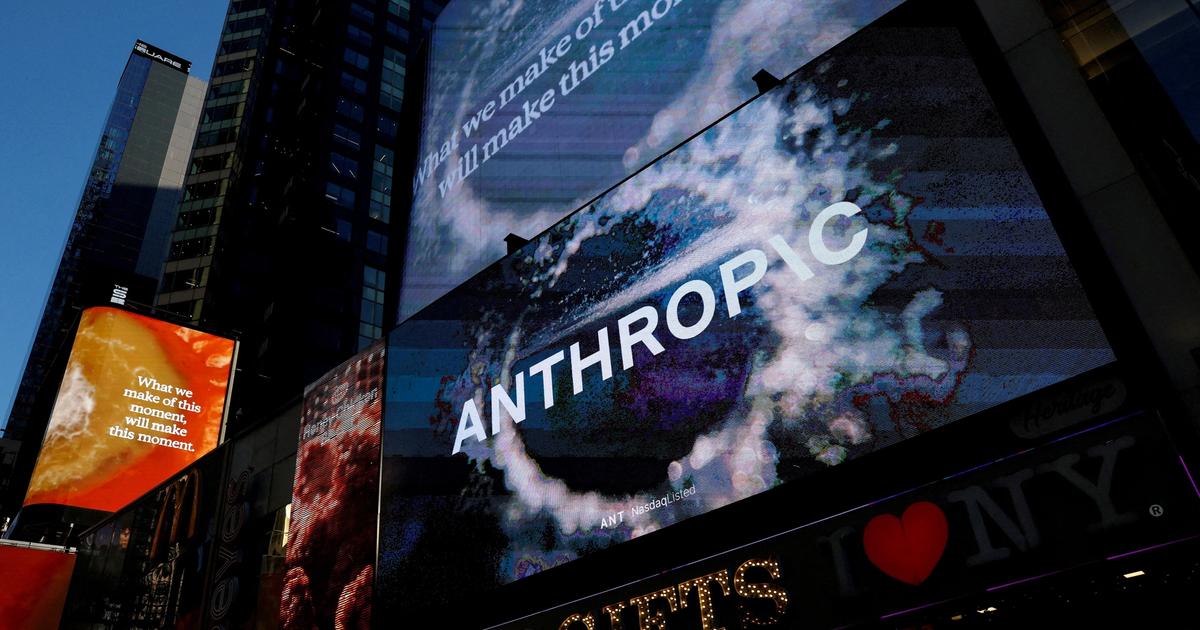
The reportedly understated celebrations surrounding Anthropic’s debut appear to befit an internal culture that prides itself on building AI safely, wherein getting rich is accorded less priority than commonly held effective altruist beliefs: Employees’ new wealth is expected to enrich dozens of charitable and research-oriented organizations devoted to animal welfare, global health, and AI safety.
While firms may cope, “we can’t fix government technology, like our air traffic control system, by throwing more money into a broken system,” journalist Derek Thompson argued.
Also by Brendan Ruberry
Nothing else under this byline is closely related to this
article, so these are simply their most recent.
 The Aporia