Photo via The Sydney Morning Herald

The reason why a rate rise will hurt Sydneysiders most

Read the original at The Sydney Morning Herald ↗
Cite

Wade, M. (2026, November 2). The reason why a rate rise will hurt Sydneysiders most. The Sydney Morning Herald. https://www.smh.com.au/business/the-economy/the-reason-why-a-rate-rise-will-hurt-sydneysiders-most-20261103-p61aj1.html?ref=rss&utm_medium=rss&utm_source=rss_feed

Dated from the outlet's own feed. Check the original for its byline.

The Sydney Morning Herald · collected 2026-11-02 · by Matt Wade

Quick Summary

NSW faces disproportionately high impacts from rising interest rates as new home borrowers in Sydney face the nation's highest mortgage repayments. According to an internal NSW Treasury paper, the share of average household earnings needed to service a new mortgage has reached 30.7% in NSW, the highest since records began 32 years ago. This financial strain is expected to worsen with another rate hike planned for Tuesday by the Reserve Bank, pushing the official cash rate to 4.85%, the highest in 18 years. The paper also predicts that a hypothetical 1 percentage point increase in interest rates would lead to a more significant decline in housing investment and property prices in NSW compared to other states over the next three years.
Written by AI on 2026-11-02, from this article's own text only (the story summary below draws on all the coverage).
See how they differ ↓

AI analysis

Story summary

On November 3, 2026, the Reserve Bank of Australia (RBA) increased interest rates from 4.60% to 4.85%, marking an 18-year high and the fifth hike this year. The decision aims to combat inflation, which has risen above the RBA's target band of 2-3%. Despite Prime Minister Anthony Albanese calling interest rates a "blunt instrument," Governor Michele Bullock defended the move as necessary to prevent more severe economic consequences. However, economists warn that further hikes could push Australia into recession and exacerbate financial stress for households, particularly in New South Wales (NSW), where mortgage repayments are already among the highest nationally.

Written for “RBA Lifts Interest Rates For Fifth Time This Year” on 2026-11-20, grounded in this article and the 19 other(s) covering the same event.

How they differ

5 outlets covered “RBA Lifts Interest Rates For Fifth Time This Year”.

What each outlet says

One AI summary per outlet of its latest article on this story, written from that article alone and checked against it. Open the article for the outlet's own words.

Sydney Morning HeraldThis outlet2 Nov

NSW faces disproportionately high impacts from rising interest rates as new home borrowers in Sydney face the nation's highest mortgage repayments. According to an internal NSW Treasury paper, the share of average household earnings needed to service a new mortgage has reached 30.7% in NSW, the highest since records began 32 years ago. This financial strain is expected to worsen with another rate hike planned for…

The reason why a rate rise will hurt Sydneysiders most (this article)8 articles from Sydney Morning Herald on this story
ABC News (AU)3 Nov

The Reserve Bank of Australia (RBA) has raised interest rates to their highest level in 18 years, aiming to reduce inflation from its current rate of 4.3% annually back down to the RBA’s 2 to 3 percent target range. The article explores why this specific range was chosen and delves into the history of the RBA's adoption of an inflation target in the early 1990s, which it adapted from New Zealand's model but with…

'No need to sack the governor' and other reasons for the RBA's inflation target →6 articles from ABC News (AU) on this story
The Guardian3 Nov

The Reserve Bank of Australia raised its cash rate for the fifth time this year, increasing it from 4.6% to 4.85%, amid efforts to control high inflation driven by global oil price shocks due to the Middle East conflict. The decision split the monetary policy board, with six members voting for a hike and three against. This latest increase will add $107 monthly to the interest payments on a $700,000 home loan…

RBA interest rates: Reserve Bank hikes cash rate for fifth time this year in blow to mortgage holders →3 articles from The Guardian on this story
Daily Mail3 Nov

The Reserve Bank of Australia raised interest rates by 25 basis points to 4.85%, marking the fifth increase this year in response to high inflation. This move is particularly challenging for households already strained by rising costs, while businesses face higher financing expenses alongside reduced customer spending. Critics argue that although rate hikes are necessary to combat inflation, the government could be…

The worst of inflation is 'well and truly behind us', Jim Chalmers said last year. That feels especially enraging right now: PVO →2 articles from Daily Mail on this story
The Independent3 Nov

Australia’s central bank raised its benchmark interest rate from 4.60% to 4.85%, marking the highest level since 18 years ago and the fifth increase this year. Reserve Bank of Australia Governor Michele Bullock defended the decision, emphasizing the need to reduce inflation despite financial pressure on mortgage holders. The RBA’s statement suggests a potential pause in further hikes over summer to assess impacts…

Australia increases interest rates to highest level in 18 years →

Where they agree and split

Framing

How the first headlines put it

Stated as fact2
The headlines (2)

It is the RBA’s job to fight inflation, but governments must do more to help Sydney Morning Herald · stated as fact

‘Sharper, longer slowdown’ predicted for economy as fifth interest rate hike looms The Guardian · stated as fact

The full story: what happened, how it changed, and all 20 articles →

Compared with similar articles

This article reads leans left and hedges 0% of its claims. Each row says how that neighbour differs.
Daily Mail
Leans left Hedges 7 of 31 claims Outlet record 69/100
The Guardian
Hedges 2 of 20 claims Outlet record 64/100
“The articles discuss different aspects of housing market impacts due to rising interest rates but describe distinct events and focuses.”
The Sydney Morning Herald
Leans left Hedges 4 of 40 claims Outlet record 61/100
“While both articles discuss an upcoming interest rate rise by the RBA, they focus on different aspects and impacts (overall economic concerns versus NSW-specific effects), indicating distinct reporting angles rather than the same specific incident.”
Daily Mail
Leans strongly left further left than this Hedges 0 of 32 claims Outlet record 69/100
“The articles discuss similar issues related to interest rate rises in Australia but describe different aspects and contexts of the economic situation.”
The Sydney Morning Herald
Leans left Hedges 1 of 29 claims Outlet record 61/100
“The articles discuss similar topics but do not describe the exact same specific occurrence at the same time and place.”
The Sydney Morning Herald
Leans left Hedges 0 of 23 claims Outlet record 61/100
“The articles discuss related issues but describe different aspects of Sydney's housing market and interest rate impacts over time, not a single specific incident.”
The Independent
Leans right further right than this Hedges 3 of 17 claims Outlet record 59/100
“Article A discusses the impact of rate rises on NSW specifically, while Article B reports on the actual decision and announcement by Australia's central bank to raise interest rates.”

Story

RBA Lifts Interest Rates For Fifth Time This Year
Economy/Business · 20 article(s) covering the same event. Compare every outlet's account →
How this article was measured signals, leaning charts, publisher record, byline, topics and claims

Signals How these are calculated →

Claims extracted
24
sentences that state something as happening or true
Uncertain
0%
0 of 24 hedged ("reportedly", "may", "according to")
Leaning
Leans left
of the writing, not the subject · beta estimate
Publisher signals
61/100
The Sydney Morning Herald's corrections and hedging, across everything collected from it. Not a measure of accuracy.
Outlets on this story
20
Economy/Business
Same framing elsewhere
1
articles that frame the event the way this one does
Analyzed 2026-11-02 · how these are computed

How this is being covered How these are calculated →

Article leaning vs. publisher reliability
Source leaning vs. consistency

Publisher

The Sydney Morning Herald · 7728 article(s) · 16 correction(s) detected
Running correction rate · 16 correction(s)

Who wrote this

Matt Wade
21 article(s) here · 1 carrying a prediction
But researchers say that figure would rise to about 45 per cent with closer analysis of Brisbane’s CBD and inner suburbs, including South Brisbane, Fortitude Valley, Newstead, Milton and Spring Hill, where knowledge-intensive services such as finance, professional services, and information technology are concentrated.
The Reserve Bank has already lifted interest rates four times this year to combat elevated inflation and is expected to deliver a fifth rate hike after its monetary policy board meets on Tuesday.
2026-11-02 · assertive framing · The reason why a rate rise will hurt Sydneysiders most
Sydney’s professional heartland is set to be reshaped by automation with hundreds of thousands of workers in the city’s inner suburbs more exposed to artificial intelligence-driven disruption than anywhere else in Australia.
2026-11-01 · assertive framing · The Sydney suburbs most exposed to AI disruption
Many aspiring home buyers will welcome the recent pullback in prices, although four interest rate hikes by the Reserve Bank this year, which has driven the downturn, have made it harder for new home borrowers to service a mortgage.
If not for a fall in the labour force participation rate – the share of people in work or looking for work – last month’s jobless rate in NSW would have been higher.
If you looked at the figures for your area across several age brackets, you may have noticed how earnings track.
“For the first time … ordinary Australians will be able to build a decent nest egg for their retirement,” said the then-Prime Minister.
2026-10-09 · assertive framing · Is Australia saving too much for retirement?
But the home building sector has this year been hit by a series of interest rate hikes, higher construction prices due to the Middle East war and uncertainty prompted by the May budget’s housing tax changes which are yet to properly flow through to the figures.
Households will face “recession-like” conditions next year, a leading forecaster has warned, as fresh evidence shows consumers are losing confidence in the economy amid growing cost-of-living pressures.
That followed hikes in February, March and May.
Also by Matt Wade
AI is coming for office workers. How vulnerable is Brisbane?
2026-11-02 · The Sydney Morning Herald
The Sydney suburbs most exposed to AI disruption
2026-11-01 · The Sydney Morning Herald
Nothing else under this byline is closely related to this article, so these are simply their most recent.
All 21 articles by Matt Wade →

Topics

Australia NSW NSW Treasury The Reserve Bank Treasury

Subjects

NSW ORG · 12× Australia GPE · 4× Treasury ORG · 2× Chris Minns PERSON · 1× Daniel Mookhey PERSON · 1× Domain ORG · 1× Labor ORG · 1× NSW Treasury ORG · 1× Sydney GPE · 1× The Reserve Bank ORG · 1×

Narrative

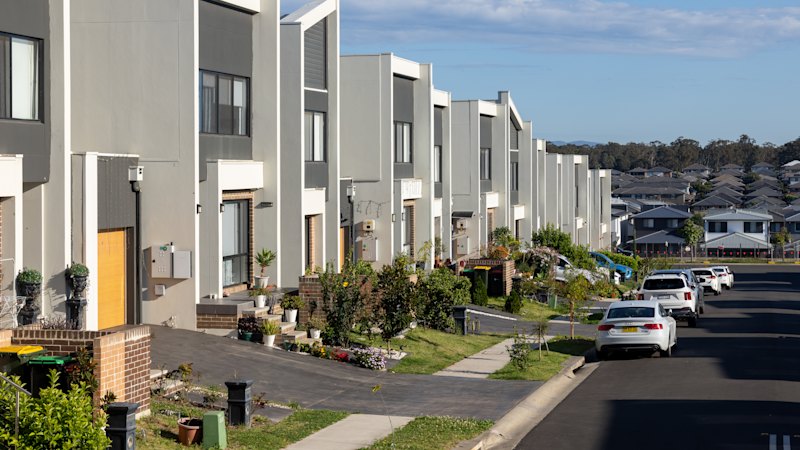
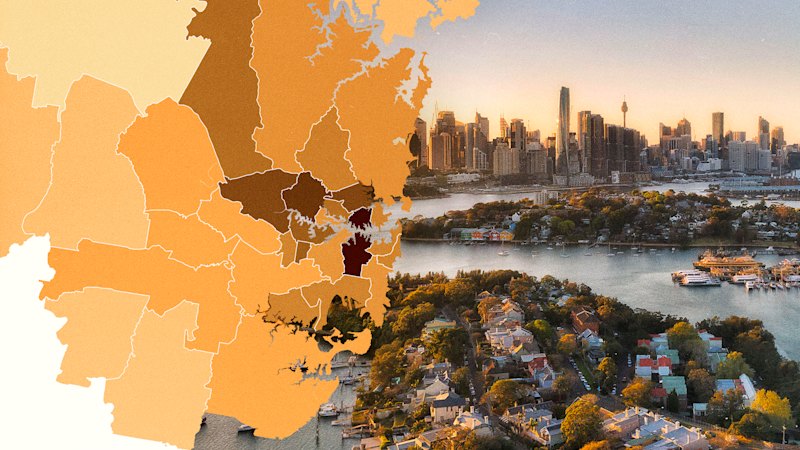
As borrowers brace for the fifth rate hike this year on Tuesday, an internal NSW Treasury paper says the state is “particularly sensitive” to rate increases because house prices are relatively high and a larger portion of mortgagees’ income is spent on servicing their loan than in other states.
framing: assertive · carried by 1 article(s) · first seen 2026-11-02
The Reserve Bank has already lifted interest rates four times this year to combat elevated inflation and is expected to deliver a fifth rate hike after its monetary policy board meets on Tuesday.
2026-11-02 · The Sydney Morning Herald
The reason why a rate rise will hurt Sydneysiders most · assertive framing

Claims (24 extracted, 0 hedged)

NSW is being hit disproportionately hard by rising interest rates as the state’s new home borrowers face the nation’s highest mortgage repayments and housing investment falls more than in other parts of the country. asserted
investment → hit → country
As borrowers brace for the fifth rate hike this year on Tuesday, an internal NSW Treasury paper says the state is “particularly sensitive” to rate increases because house prices are relatively high and a larger portion of mortgagees’ income is spent on servicing their loan than in other states. asserted
portion → brace → states
The share of average household earnings needed to service a new mortgage on a median-priced home has reached 30.7 per cent in NSW – far more than in any other state and the highest level in the 32-year history of the data series. asserted
share → need → series
The larger mortgage payment burden on NSW households affects economic activity across the state. asserted
burden → affect → state
The Reserve Bank has already lifted interest rates four times this year to combat elevated inflation and is expected to deliver a fifth rate hike after its monetary policy board meets on Tuesday. asserted
board → lift → Tuesday
Another 0.25 per cent increase will push the bank’s official cash rate to 4.85 per cent – the highest in 18 years. asserted
increase → push → years
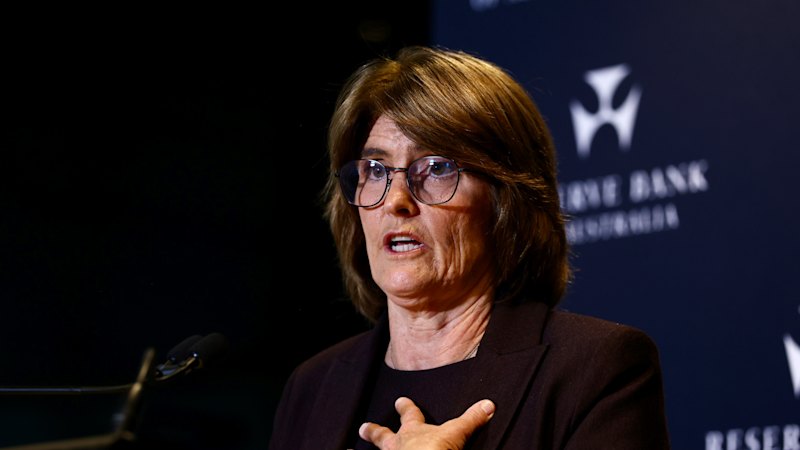
Premier Chris Minns warned on Monday another rate rise will have a “massive” impact on NSW. asserted
rise → warn → NSW
“There’ll be jobs that go that will never come back, there’ll be shops that close that do not reopen with another rate rise,” he said. asserted
he → go → rise
The state Treasury paper found interest rate increases have a larger impact on housing investment in NSW compared to the rest of Australia. asserted
increases → find → Australia
When Treasury modelled the impact of a 1 percentage point increase in official interest rates that is held over three years, it showed NSW dwelling investment would be 3 per cent lower than otherwise between mid-2026 and mid-2029. asserted
investment → model → mid-2026
But for the rest of Australia, dwelling investment is estimated to be only 1.5 per cent lower than otherwise over that period. asserted
investment → estimate → period
Under the same scenario, dwelling commencements in NSW were estimated to fall by 2.5 per cent, while in the rest of Australia the decline would be 1 per cent. asserted
decline → estimate → Australia
The modelling showed the impact of a 1 percentage point increase in rates held over three years also drives property prices down further in NSW than in other states. asserted
impact → show → states
Treasurer Daniel Mookhey said Labor was “seeking a mandate to fight inflation first” at next year’s state election to help take pressure off interest rates. asserted
Labor → say → rates
“Higher interest rates hit NSW families hardest,” he said. asserted
he → hit → families
“We’re showing voters respect by taking our debt reduction plan to the election: $11 billion less debt and $275 million a year saved in interest, backed by a legislated debt ceiling.” asserted
We → show → ceiling
The series of rate increases this year has triggered a sharp property downturn – Domain data shows Sydney’s median house price has fallen by about 8 per cent since last December to $1.66 million. asserted
price → trigger → million
Several key indicators show higher rates are taking a growing toll on the NSW economy. asserted
rates → show → economy
The state’s unemployment rate jumped from 4 per cent in June to 4.7 per cent in September, the worst since November 2021 when the economy was recovering from pandemic lockdowns. asserted
economy → jump → lockdowns
The state budget forecast the NSW economy to grow by only 1 per cent both this financial year and next, less than half the rate expected before the latest series of rate increases. asserted
economy → forecast → increases
The economic hit from higher rates is also damaging the state’s finances. asserted
hit → damage → finances
The forecast for stamp duty revenue was slashed by $5.3 billion in the June budget due to the downturn in the property market. asserted
forecast → slash → market
But Mookhey warned last week that write-downs of a similar magnitude were likely to be included in the half-yearly budget review next month. asserted
downs → warn → review
Weaker revenue is likely to worsen the state’s predicted budget deficit of $2.3 billion for 2026-27, which follows seven consecutive years in the red. asserted
which → worsen → red

Give feedback · no sign-in needed

No sign-in needed for now. Your note is sent without a name, so it cannot be answered.

History Support