Photo via Washington Examiner

Sealing Eagle 44: Why Washington and Jerusalem must bury Iran’s subterranean sanctuary

Read the original at Washington Examiner ↗
Cite

Alvarez, J. L. (2026, November 2). Sealing Eagle 44: Why Washington and Jerusalem must bury Iran’s subterranean sanctuary. Washington Examiner. https://www.washingtonexaminer.com/op-eds/4784908/eagle-44-iran-underground-air-base/

Dated from the outlet's own feed. Check the original for its byline.

Washington Examiner · collected 2026-11-02 · by Jose Lev Alvarez

Quick Summary

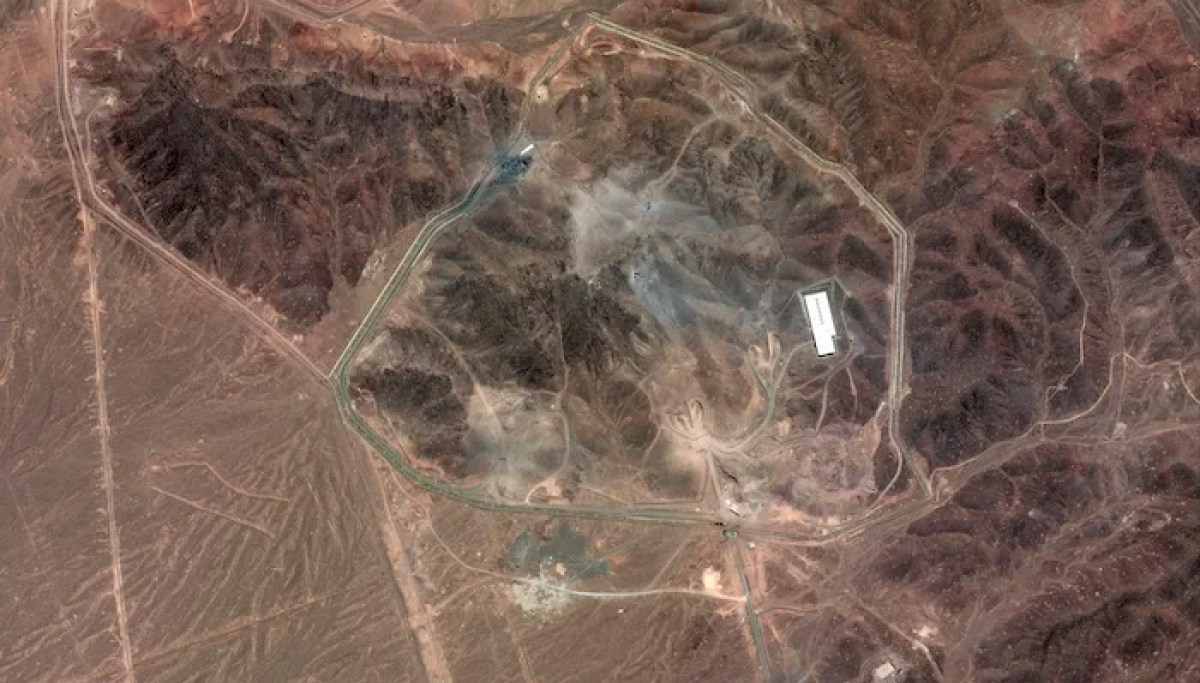
The article discusses Eagle 44, an underground Iranian air force base located near the Strait of Hormuz in Hormozgan province. Satellite imagery shows that Tehran has completed work on parts of the new taxiway and cleared debris from the runway area. The base houses F-4 Phantoms, strike drones, and heavy munitions within tunnels that have been operational since 2013. This facility is crucial to Iran's strategic military posture in the region as it allows aircraft to access a 2.5-mile-long runway even if surface routes are damaged during conflict.
Written by AI on 2026-11-03, from this article's own text only (the story summary below draws on all the coverage).

AI analysis

Story summary

Recent satellite imagery shows that Iran has completed significant construction on its secretive underground air force base called Eagle 44 in the Zagros foothills of Hormozgan province, located just 100 miles northwest of the critical Strait of Hormuz. The base, which was first unveiled in February 2023, is designed to withstand precision airstrikes and house IRIAF F-4 Phantoms, strike drones, and heavy munitions. Engineers have finished laying a new western taxiway section over stabilized soil, clearing runway obstacles, and stripping debris from the pavement, despite existing craters near tunnel entrances and ruined surface buildings. This complex is considered a vital node in Tehran's regional military strategy due to its proximity to strategic maritime routes and its capability to project lethal power directly over the Persian Gulf.

Written for “Sealing Eagle Operation Against Iran” on 2026-11-29, grounded in this article and the 0 other(s) covering the same event.

Compared with similar articles

This article reads leans right and hedges 0% of its claims. Each row says how that neighbour differs.
Daily Mail
Leans left further left than this Hedges 10 of 50 claims Outlet record 68/100
“The articles describe different aspects of Iran's military infrastructure and do not refer to the exact same incident or time.”

Story

Sealing Eagle Operation Against Iran
World · 1 article(s) covering the same event.
How this article was measured signals, leaning charts, publisher record, byline, topics and claims

Signals How these are calculated →

Claims extracted
6
sentences that state something as happening or true
Uncertain
0%
0 of 6 hedged ("reportedly", "may", "according to")
Leaning
Leans right
of the writing, not the subject · beta estimate
Publisher signals
66/100
Washington Examiner's corrections and hedging, across everything collected from it. Not a measure of accuracy.
Outlets on this story
1
World
Same framing elsewhere
1
articles that frame the event the way this one does
Analyzed 2026-11-03 · how these are computed

How this is being covered How these are calculated →

Article leaning vs. publisher reliability
Source leaning vs. consistency

Publisher

Washington Examiner · 5648 article(s) · 12 correction(s) detected
Running correction rate · 12 correction(s)

Who wrote this

Jose Lev Alvarez
33 article(s) here · 0 carrying a prediction
In 1867, Secretary of State William Seward purchased Alaska from Russia for $7.2 million, or roughly 2 cents an acre.
Sustained American intelligence, equipment, and political will under former President Alvaro Uribe eventually slashed that figure by roughly 40%.
Over the decades, this unchecked ideological hospitality yielded a party structurally unable to rank adversaries, unwilling to defend allies without apology, and incapable of sustained strategic purpose.
In the summer of 1787, delegates gathered in Philadelphia because the Articles of Confederation could not bind 13 fractious states to shared sacrifice, coherent defense, or durable governance.
Intelligence assessments indicate that the complex could support more than 100 launches daily, expanding a network of at least 11 fixed Russian drone locations.
Israel’s founding father, David Ben-Gurion, understood from the start that the newborn Jewish state could never survive by begging hostile neighbors for validation.
This outpost will track Russian proxy flights into the Sahel and choke Turkish weapon resupply into Al Watiya.
By leveraging this, Tehran has shown America’s adversaries that a regional rogue power can sustain a prolonged chokepoint before Washington musters the political will to deploy decisive force.
First, a formal pact will pool computing power, model weights, and elite talent before European regulators turn the West into a technological museum while China weaponizes algorithms.
Over a century ago, Admiral William Caperton mapped this exact transnational vulnerability.
Also by Jose Lev Alvarez
Nothing else under this byline is closely related to this article, so these are simply their most recent.
All 33 articles by Jose Lev Alvarez →

Topics

Hormozgan province IRIAF F-4 Phantoms Iranian Tehran Zagros

Subjects

Iranian NORP · 2× Tehran GPE · 2× Hormozgan province GPE · 1× Zagros GPE · 1×

Narrative

While the strategic threats posed by the Fordow nuclear facility and Pickaxe Mountain are well-known fixtures of Western security debates, it is a dangerous oversight to ignore Eagle 44, an underground Iranian air force base engineered to withstand precision airstrikes and project lethal power directly over the Persian Gulf.

framing: assertive · carried by 1 article(s) · first seen 2026-11-03

Claims (6 extracted, 0 hedged)

While the strategic threats posed by the Fordow nuclear facility and Pickaxe Mountain are well-known fixtures of Western security debates, it is a dangerous oversight to ignore Eagle 44, an underground Iranian air force base engineered to withstand precision airstrikes and project lethal power directly over the Persian Gulf. asserted
it → pose → Gulf
Recent satellite imagery reveals that Tehran has already finished the upper concrete layer of a new western taxiway section and is actively pushing a second segment across stabilized soil. asserted
Tehran → reveal → soil
Iranian engineers have cleared runway obstacles and stripped debris from the pavement, though impact craters still pockmark the ground near the western tunnel entrances and surface buildings remain in ruins. asserted
buildings → clear → ruins
Situated deep in the Zagros foothills of Hormozgan province, this complex sits a mere 100 miles northwest of the critical Strait of Hormuz. asserted
complex → situate → Hormuz
Because the tunnels excavated here since 2013 shelter IRIAF F-4 Phantoms, strike drones, and heavy munitions, the base represents a vital node in Tehran’s regional strategy. asserted
base → excavate → strategy
First unveiled in February 2023, the subterranean fortress is now receiving a redundant taxiway precisely so aircraft can still reach the 2.5-mile runway if a primary access route is cratered. asserted
route → unveil → runway
Give feedback · no sign-in needed

No sign-in needed for now. Your note is sent without a name, so it cannot be answered.

History Support