Photo via New York Post

Hackers breach emergency alert apps in Ukraine and Russia with fake warnings of nuclear attacks

Read the original at New York Post ↗
Cite

Reilly, P. (2026, November 2). Hackers breach emergency alert apps in Ukraine and Russia with fake warnings of nuclear attacks. New York Post. https://nypost.com/2026/11/02/world-news/hackers-breach-emergency-alert-apps-in-ukraine-and-russia-with-fake-warnings-of-nuclear-attacks/

Dated from the outlet's own feed. Check the original for its byline.

New York Post · collected 2026-11-02 · by Patrick Reilly

Quick Summary

Emergency alert apps in Ukraine and Russia were hacked overnight, spreading false warnings of nuclear attacks. In Ukraine, the air raid alert channel confirmed unauthorized breaches that led to alarming posts about high radiation levels and chemical attacks in Kyiv. Similar incidents occurred in Russia, where users received fake alerts urging them to stock up on food and take shelter due to supposed nuclear launches against the country. Both hacks involved spelling errors and crude language, with a hacking group called Hitcore claiming responsibility through a Russian Telegram channel. Ukrainian officials reassured citizens there was no actual radiation threat and that air raid sirens were still functional, while Russian authorities downplayed the impact of the attack on their main public warning systems.
Written by AI on 2026-11-02, from this article's own text only (the story summary below draws on all the coverage).
See how they differ ↓

AI analysis

Story summary

On November 1, 2026, Ukraine’s air force announced that the country's public air raid alert app had been hacked. The hack caused the app to falsely warn residents in Kyiv and other areas about imminent nuclear attacks, radiation hazards, chemical threats, and street combat. While initial reports suggested the issue was isolated to Ukraine, Russian officials also reported their own emergency warnings app suffered a "massive cyberattack." Both sides accused each other of carrying out these attacks as tensions escalated following the end of a long truce between them. Ukrainian citizens received false alerts via multiple apps, leading to brief unease but not widespread panic, given their familiarity with frequent air raid drills. Cybersecurity experts note this incident represents an escalation in digital warfare tactics used by both countries.

Written for “Hacked Emergency Alert Apps Spread Fake Warnings” on 2026-11-21, grounded in this article and the 23 other(s) covering the same event.

How they differ

15 outlets covered “Hacked Emergency Alert Apps Spread Fake Warnings”.

What each outlet says

One AI summary per outlet of its latest article on this story, written from that article alone and checked against it. Open the article for the outlet's own words.

New York PostThis outlet2 Nov

Emergency alert apps in Ukraine and Russia were hacked overnight, spreading false warnings of nuclear attacks. In Ukraine, the air raid alert channel confirmed unauthorized breaches that led to alarming posts about high radiation levels and chemical attacks in Kyiv. Similar incidents occurred in Russia, where users received fake alerts urging them to stock up on food and take shelter due to supposed nuclear launches…

Hackers breach emergency alert apps in Ukraine and Russia with fake warnings of nuclear attacks (this article)
The Independent3 Nov

Russia launched a series of cyberattacks on Ukraine on Sunday night, sending fake emergency alerts via the Ukrainian government's Air Alarm app, warning citizens about radiation and chemical threats. This was shortly followed by Russia claiming that Ukraine had hacked its systems to warn its own people of imminent nuclear strikes. Both countries have not officially claimed responsibility for these incidents, which…

Why Russia’s latest cyberattack on Ukraine is a desperate attempt to sow panic →3 articles from The Independent on this story
BBC2 Nov

On Sunday night, Ukrainian citizens received alarming notifications through their phone’s alert app suggesting imminent nuclear strikes and chemical attacks from Russia. However, these alerts were soon identified as a hacking attempt by a suspected hacker group linked via Telegram, leading to doubts among recipients about the messages' authenticity. Within 15 minutes of the initial scare, Ukraine's Air Force…

Fake nuclear warning from hacked app sparks unease but not panic in Ukraine →2 articles from BBC on this story
The Straits Times1 Nov

Ukraine’s Air Force announced on November 1 that a public air raid alert app had been hacked, sending out false alerts about nuclear and chemical threats in Kyiv and other areas. The erroneous message incorrectly stated that Russia's Oreshnik hypersonic missile was deployed. In response to the incident, Ukraine’s Ministry for Digital Transformation clarified that while the app was down due to hacking, alternative…

Ukrainian air force says public air raid alert app sent erroneous alerts after being hacked →2 articles from The Straits Times on this story
Daily Mail2 Nov

Russian and Ukrainian hackers have engaged in a cyber attack that resulted in fake nuclear war alerts being issued to millions of people in both countries. Ukraine's air raid app, used daily by 6.7 million people, was targeted first, with messages warning of a hypersonic missile strike and chemical threats. Shortly after, Russian emergency networks were hit, sending out false warnings of imminent nuclear attacks…

Hacker wars: Rival Russian and Ukrainian cyber groups claim credit for attacks on each country's air raid systems that saw some civilians alerted to fake nuclear and chemical warfare →2 articles from Daily Mail on this story
Al Jazeera2 Nov

Russia and Ukraine have exchanged accusations over hacked emergency alert systems that falsely warned citizens about nuclear radiation, chemical threats, and imminent attacks. These incidents occurred shortly after a localized ceasefire in Kherson ended on Sunday. Both countries’ civil defense apps were compromised, sending alarming messages to users before authorities clarified the alerts as false. The Ukrainian…

Nuclear radiation in Russia, Ukraine? No, just hacked warning alerts →2 articles from Al Jazeera on this story
Show 9 more outlets
ABC News (AU)2 Nov

Ukraine’s public air raid alert system experienced hacking incidents that triggered false warnings about nuclear and chemical threats in certain regions. Meanwhile, Russia reported a significant cyberattack on its emergency services app. Both countries have noted these breaches but did not provide specific details on the extent of damage or ongoing response measures.

Ukrainian air raid alert app sends false warnings after being hacked →2 articles from ABC News (AU) on this story
The Guardian2 Nov

Hackers sent fake nuclear threat alerts through Ukraine's emergency app in Kyiv late Sunday night, causing panic and confusion among residents. The alert warned of potential nuclear radiation and chemical threats, written in both English with errors and Ukrainian. While many ignored the messages due to their suspicious nature, others were frightened into believing an imminent attack was underway. The Ukrainian…

Hackers send fake nuclear threat alert to Ukraine emergency app →2 articles from The Guardian on this story
The Hindu2 Nov

After a five-day truce that ended on November 1, 2026, both Russia and Ukraine reported cyberattacks on their emergency warning systems. Moscow’s emergencies ministry noted a “massive cyberattack” on its app designed to warn of drone attacks and other threats, while Ukraine suspected Russian involvement in hacks that posted false alerts about radiation dangers on its air raid alert system. The renewed hostilities…

Cyber attacks hit Russia, Ukraine after truce ends →
Fox News2 Nov

Ukraine officials reported that their air-raid alert system was hacked, leading to false alerts in Kyiv about radiation and chemical attacks on Sunday. The app warned residents not to go outside due to these alleged threats, though Ukraine’s Air Force later confirmed the messages were fake and there was no actual danger. Russia's Emergencies Ministry also announced a cyberattack that allowed for spreading…

Ukraine says air alert system hacked after false radiation warning in Kyiv →
Sydney Morning Herald2 Nov

On Sunday night, Ukraine’s public air raid alert app was hacked and sent false alerts about nuclear, chemical threats, and street combat to users in Kyiv and other areas. The Ukrainian Air Force acknowledged the breach within 10 minutes, assuring there was no actual radiation threat and advising calm. About an hour later, all-clear messages were issued as normal operations resumed through alternative alert systems…

‘Stay calm’: Ukraine says public air raid alert app sent false alerts after being hacked →
NBC News2 Nov

On Sunday night, Ukrainian residents received false emergency alerts warning of nuclear danger, radiation threats, and street combat through their Air Alert application, which authorities confirmed had been hacked. Hours later, Russia reported that its own alert system was also targeted in a cyberattack, amid the end of a humanitarian ceasefire between Ukraine and Russia. Both countries’ systems were temporarily…

Fake alerts warn of nuclear danger as Ukraine and Russia report emergency app hacks →
CBC2 Nov

On Sunday, emergency alert systems in Ukraine and Russia faced cyberattacks that spread false alarms through mobile apps. In Ukraine, users received warnings about high radiation levels in Kyiv, while Russian authorities reported similar fake alerts on their app. Both countries' officials advised caution and confirmed the Ukrainian system was restored quickly without impacting military operations. Authorities in…

Ukraine, Russian alert systems hit by cyberattacks that spread alarming messages →
CBS News2 Nov

On Sunday night, emergency alert apps in Ukraine and Russia were hacked, sending false warnings about radiation, chemical attacks, and nuclear strikes to users. In Ukraine, the Air Alert app sent out these messages at 10:47 p.m., causing panic before being confirmed as fake by the Ukrainian Air Force ten minutes later. Similarly, Russia’s Emergencies Ministry app was compromised around 2:45 a.m. Moscow time, sending…

Hacked alert apps send Ukrainians, Russians fake attack warnings →
Times of India2 Nov

Hackers sent fake emergency alerts through government mobile apps in both Ukraine and Russia, falsely warning about nuclear threats and high radiation levels. In Ukraine, the messages appeared in multiple languages with grammatical errors; one reference was made to a Russian ballistic missile. While there were no reports of widespread panic, Ukrainian authorities temporarily suspended their app before restoring it…

Fake nuclear threat alert sent to Ukrainians after emergency app hacked →

Compared with similar articles

This article reads unscored and hedges 8% of its claims. Each row says how that neighbour differs.
NBC News
Hedges 3 of 28 claims Outlet record 74/100
CBC News
Hedges 3 of 29 claims Outlet record 60/100
The Sydney Morning Herald
Hedges 1 of 19 claims Outlet record 61/100
Al Jazeera
Hedges 2 of 39 claims Outlet record 60/100
Semafor
Centre Hedges 0 of 4 claims Outlet record 64/100
CBS News
Hedges 1 of 16 claims Outlet record 66/100
The Guardian
Hedges 4 of 33 claims Outlet record 64/100
BBC News
Hedges 1 of 3 claims Outlet record 65/100
ABC News (AU)
Hedges 0 of 4 claims Outlet record 67/100
Times of India
Hedges 1 of 23 claims Outlet record 59/100

Story

Hacked Emergency Alert Apps Spread Fake Warnings
Technology · 24 article(s) covering the same event. See how they differ ↑
How this article was measured signals, leaning charts, publisher record, byline, topics and claims

Signals How these are calculated →

Claims extracted
12
sentences that state something as happening or true
Uncertain
8%
1 of 12 hedged ("reportedly", "may", "according to")
Leaning
not political
takes no side on a contested political question
Publisher signals
66/100
New York Post's corrections and hedging, across everything collected from it. Not a measure of accuracy.
Outlets on this story
24
Technology
Same framing elsewhere
1
articles that frame the event the way this one does
Analyzed 2026-11-02 · how these are computed

How this is being covered How these are calculated →

Article leaning vs. publisher reliability
Source leaning vs. consistency

Publisher

New York Post · 21831 article(s) · 42 correction(s) detected
Running correction rate · 42 correction(s)

Who wrote this

Patrick Reilly
92 article(s) here · 0 carrying a prediction
An official cause of death will be determined by the coroner’s office pending an autopsy, which has been scheduled for Friday, according to Fox 59.
Advertisement There were no immediate reports of damage; however, the Los Angeles Fire Department announced it had gone into “earthquake mode” and will survey critical infrastructure for damage, officials said in an alert.
Mayor Zohran Mamdani was at least twice zip-tied and arrested by the elite NYPD tactical unit he is disbanding, old photos show.
Parke was arrested on suspicion of gross negligence manslaughter — but then also died months later, before he could be charged, police told the inquest, according to the BBC.
My answer to that is no,” Vance told Fox News’ Laura Ingraham on Monday when asked about fears that the recent outages could be signs of an impending disaster.
Department of Homeland Security Secretary Markwayne Mullin suggested that the recent technology chaos — including an issue that grounded all US flights for hours last week — may be the result of artificial intelligence.
Danielle Lopez, of Willingboro, was 37 when she vanished in April 2024 while camping with her boyfriend in Brendan T. Byrne State Forest, a sprawling 37,242-acre state park in the notoriously vast Pine Barrens.
A mysterious stash of more than $55,000 in cash found in the Maine woods will be going to help local families pay their heating bills.
Hudgins will represent Georgia’s 90th District in metro Atlanta after winning with more than 92% of the votes.
“I would have never intentionally made those noises or gestures toward a person of color.”
Also by Patrick Reilly
Nothing else under this byline is closely related to this article, so these are simply their most recent.
All 92 articles by Patrick Reilly →

Topics

Kyiv Russia Russian Ukraine Ukrainians

Subjects

Russia GPE · 4× Ukraine GPE · 3× Russian NORP · 2× Hitcore ORG · 1× Kyiv GPE · 1× Mash ORG · 1× Ministry of Emergency Situations ORG · 1× Telegram ORG · 1× Ukrainian NORP · 1× Ukrainians NORP · 1×

Narrative

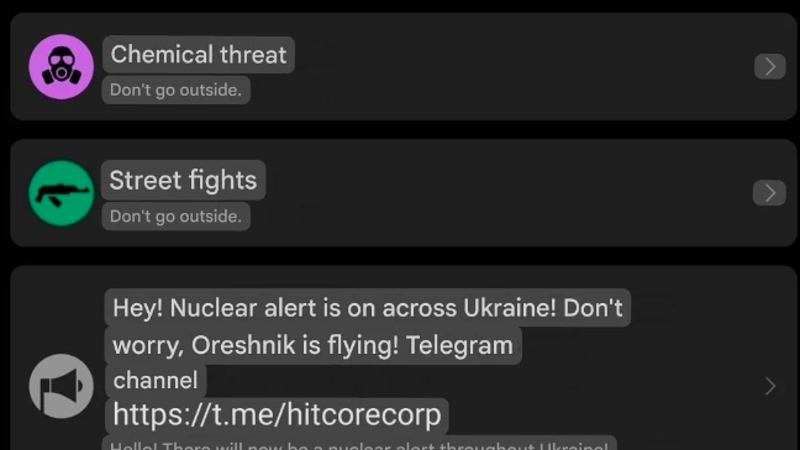
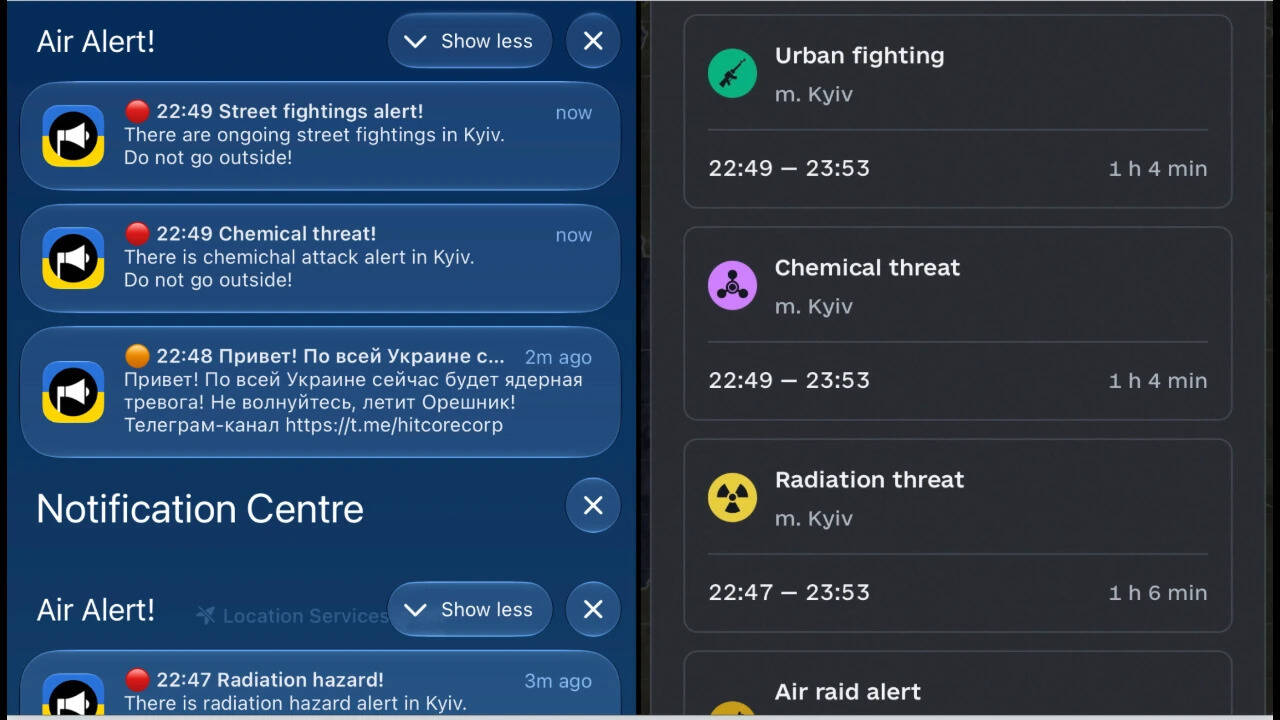
One of the fake alarms said Russia had launched a hypersonic Oreshnik missile — which is capable of carrying a nuclear warhead — and that a nuclear alert had been declared across Ukraine.
framing: assertive · carried by 1 article(s) · first seen 2026-11-02

Claims (12 extracted, 1 hedged)

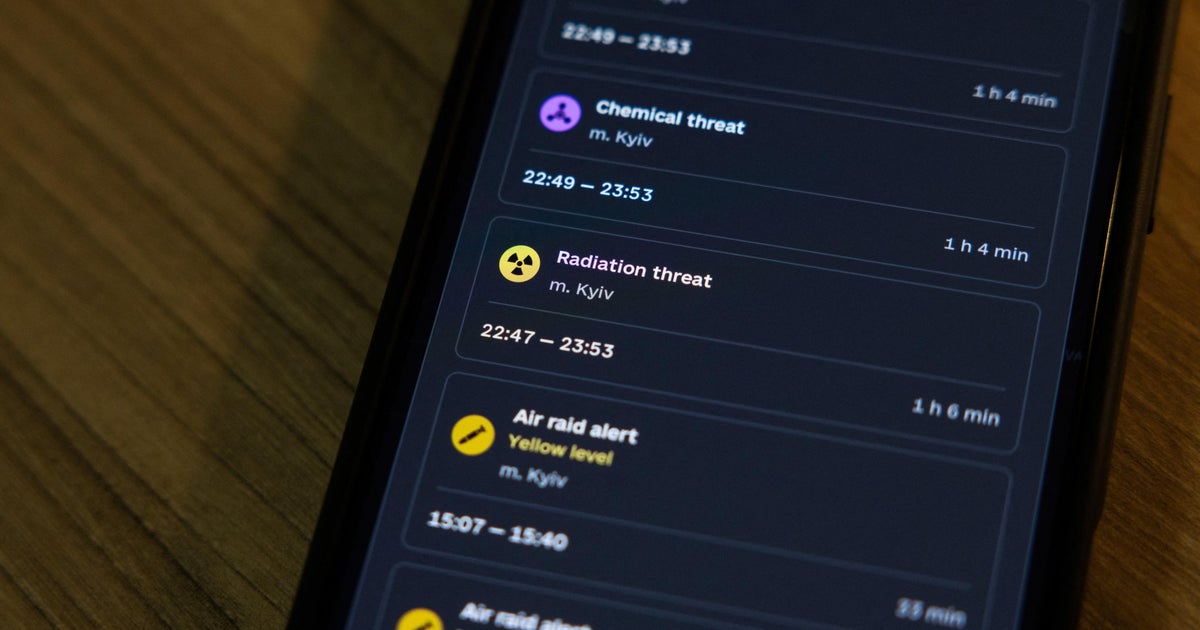
People across Ukraine and Russia were plunged into panic overnight after emergency alert apps were hacked with fake warnings of nuclear attacks. asserted
apps → plunge → attacks
Ukraine’s air raid alert channel confirmed in a social media post that “unauthorized parties” had breached the app and that the service had been temporarily suspended. asserted
service → confirm → app
The app, which Ukrainians use daily for alerts about impending Russian missile and drone strikes, was eventually restored after making alarming claims about high radiation levels and chemical attacks in Kyiv, officials said. uncertain
officials → use → Kyiv
The posts, which were full of spelling errors and written in Russian, mentioned hacking group Hitcore. asserted
which → write → Hitcore
Mash, a Russian Telegram channel with ties to the country’s security services said it spoke to representatives from the group who claimed responsibility for the attack. asserted
who → say → attack
One of the fake alarms said Russia had launched a hypersonic Oreshnik missile — which is capable of carrying a nuclear warhead — and that a nuclear alert had been declared across Ukraine. asserted
alert → say → Ukraine
“The air alert app appears to have been subjected to enemy influence,” the Ukrainian air force later said in a statement. asserted
force → appear → statement
Officials issued all-clear messages and said all public alerts, including air raid sirens, were functioning properly. asserted
alerts → issue → sirens
A few hours later, officials with Russia’s Ministry of Emergency Situations said its mobile app had also been hit by a massive cyberattack that led to false alerts about nuclear weapons. asserted
that → say → weapons
Russians were falsely warned that nuclear warheads had been launched against the entire country and urged people to stock up on three weeks of food and take shelter in their cellars. asserted
warheads → warn → cellars
However, the ministry largely dismissed the impact, saying it was not one of its main public warning system channels but a supplementary source of information. asserted
it → dismiss → information
A bogus message reviewed by Reuters did not even attempt to come off as an official announcement, but was laced with colloquialisms, expletives and slammed Russia as a “swamp.” asserted
message → review → swamp
Give feedback · no sign-in needed

No sign-in needed for now. Your note is sent without a name, so it cannot be answered.

History Support