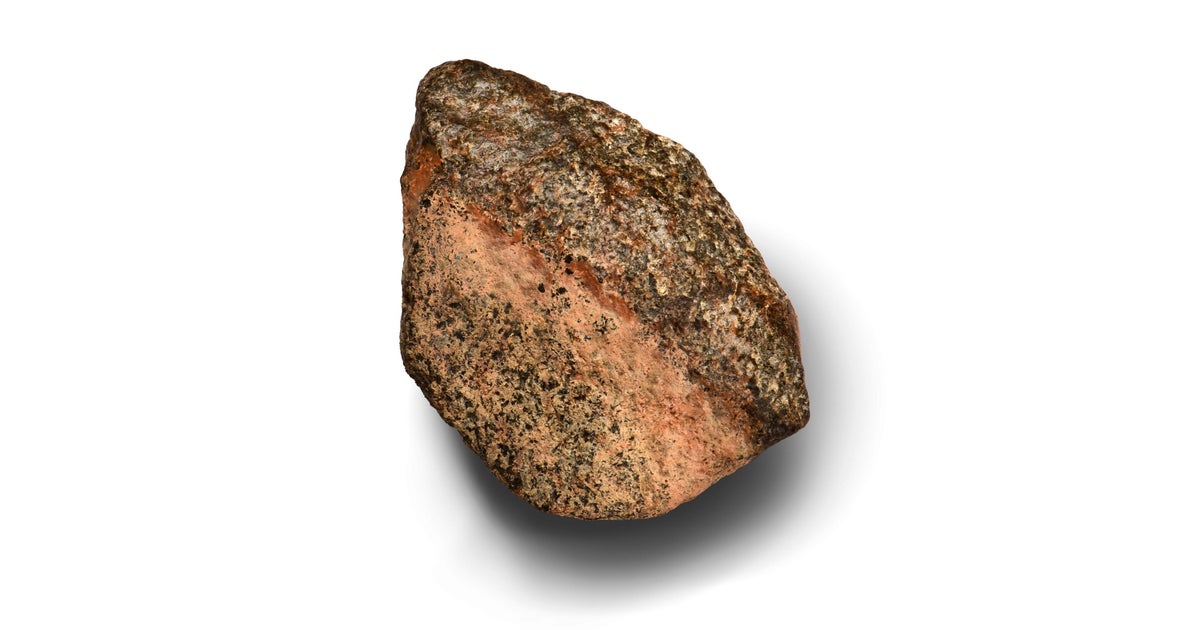
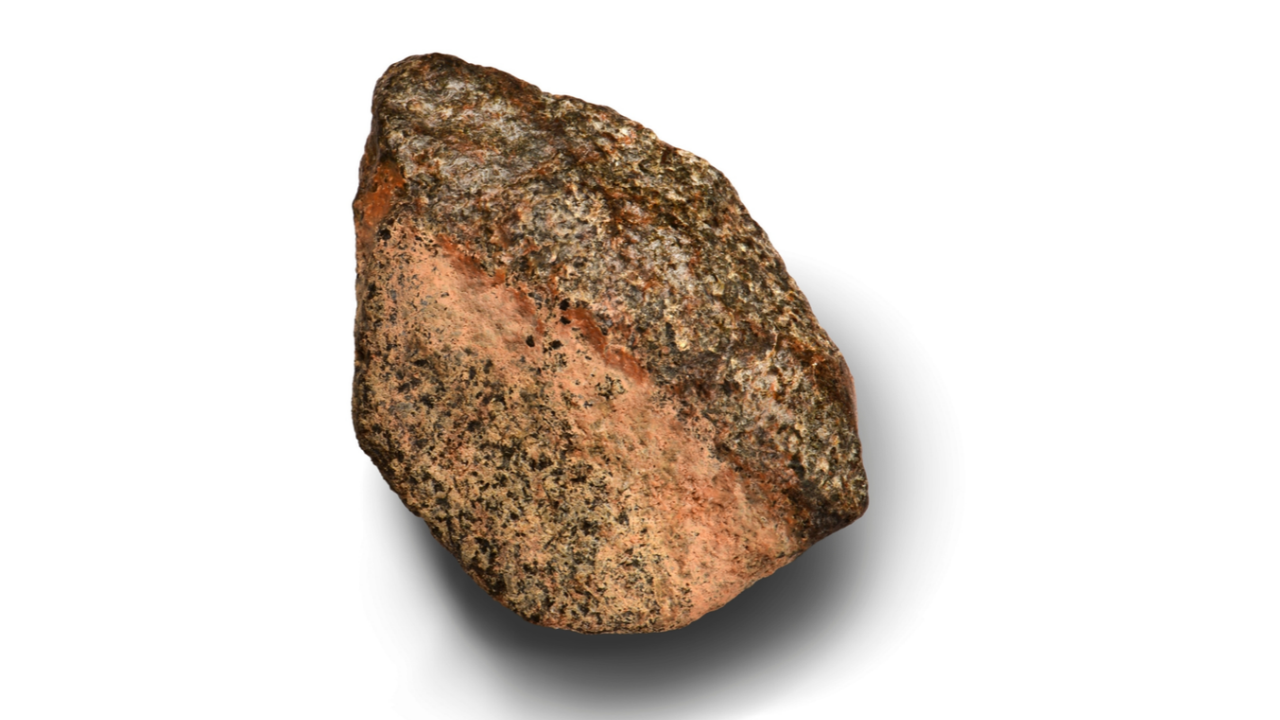
Photo via Times of India

NASA-funded study reveals 4.1-billion-year-old history of pink Martian rock found in Sahara

Read the original at Times of India ↗
Cite

TOI Science Desk. (2026, October 31). NASA-funded study reveals 4.1-billion-year-old history of pink Martian rock found in Sahara. Times of India. https://timesofindia.indiatimes.com/science/space/in-2022-an-800-gram-pink-rock-was-found-in-the-sahara-desert-nasa-funded-researchers-have-now-confirmed-it-came-from-mars-more-than-4-1-billion-years-ago-and-preserves-signs-of-the-planets-ancient-water/articleshow/135396990.cms

Dated from the outlet's own feed. Check the original for its byline.

Times of India · collected 2026-10-31 · by TOI Science Desk

Quick Summary

NASA-funded research published in Science reveals that a 4.1-billion-year-old pink Martian rock discovered in the Sahara Desert in 2022 provides insights into Mars's early geological history. Named Teghaza 001 after its discovery location near a salt plain in Mali, the meteorite is one of approximately 435 known Martian meteorites and among the oldest identified. Researchers at NASA’s Jet Propulsion Laboratory used advanced dating techniques to analyze the rock’s mineral composition, which includes igneous minerals and zircon crystals that indicate ancient volcanic activity and water-rock interactions on Mars.
Written by AI on 2026-10-31, from this article's own text only (the story summary below draws on all the coverage).
See how they differ ↓

AI analysis

Story summary

A pink meteorite found in the Sahara Desert in 2022, named Teghaza 001 after the salt plain in Mali where it was discovered, has been identified by NASA as a 4.1-billion-year-old chunk of Mars. The nearly two-pound rock provides unique insights into the planet's early volcanic activity and the role water played in its formation, making it one of the three oldest Martian meteorites found on Earth. Researchers from NASA’s Jet Propulsion Laboratory in Southern California led the study, which was published in the journal Science. The meteorite's mineral composition, including zircon crystals, matches samples observed by NASA's Mars Reconnaissance Orbiter in the planet's southern highlands, offering a rare snapshot of Mars' crust and its early history before it became the cold, dry planet we know today.

Written for “Martian Rock Found in Sahara” on 2026-11-22, grounded in this article and the 1 other(s) covering the same event.

How they differ

2 outlets covered “Martian Rock Found in Sahara”.

What each outlet says

One AI summary per outlet of its latest article on this story, written from that article alone and checked against it. Open the article for the outlet's own words.

Times of IndiaThis outlet31 Oct

NASA-funded research published in Science reveals that a 4.1-billion-year-old pink Martian rock discovered in the Sahara Desert in 2022 provides insights into Mars's early geological history. Named Teghaza 001 after its discovery location near a salt plain in Mali, the meteorite is one of approximately 435 known Martian meteorites and among the oldest identified. Researchers at NASA’s Jet Propulsion Laboratory used…

NASA-funded study reveals 4.1-billion-year-old history of pink Martian rock found in Sahara (this article)
CBS News30 Oct

In 2022, a rose-colored meteorite weighing nearly two pounds was discovered in Mali’s Sahara Desert and named Teghaza 001. NASA researchers identified it as a 4.1-billion-year-old fragment of Mars, making it one of the oldest Martian meteorites found on Earth. This discovery offers unprecedented insight into Mars' geological history, including its crust formation from cooling magma and subsequent alteration by…

Meteorite found in the Sahara Desert turns out to be piece of Mars →

Compared with similar articles

This article reads unscored and hedges 18% of its claims. Each row says how that neighbour differs.
CBS News
Hedges 3 of 21 claims Outlet record 66/100

Story

Martian Rock Found in Sahara
Science · 2 article(s) covering the same event. See how they differ ↑
How this article was measured signals, leaning charts, publisher record, byline, topics and claims

Signals How these are calculated →

Claims extracted
34
sentences that state something as happening or true
Uncertain
18%
6 of 34 hedged ("reportedly", "may", "according to")
Leaning
not political
takes no side on a contested political question
Publisher signals
58/100
Times of India's corrections and hedging, across everything collected from it. Not a measure of accuracy.
Outlets on this story
2
Science
Same framing elsewhere
1
articles that frame the event the way this one does
Analyzed 2026-10-31 · how these are computed

How this is being covered How these are calculated →

Article leaning vs. publisher reliability
Source leaning vs. consistency

Publisher

Times of India · 5562 article(s) · 7 correction(s) detected
Running correction rate · 7 correction(s)

Who wrote this

TOI Science Desk
335 article(s) here · 1 carrying a prediction
The world today is such that we are able to track everything, from the flight of our loved ones to how long it would take for our food to arrive.
Under the project, the California Department of Fish and Wildlife along with the Yosemite Rivers Alliance will carve out four acres of new side channels and reconnect another sixteen acres of historic floodplain to the river.
They will be coming in raw excavated form with a lot of work still remaining to be done on them.
And while most people might hesitate before bringing home one rescued animal, Cramer once found herself looking after more than 600 baby turtles at once.
The study, conducted by the Beaver Trust and the University of Exeter, confirmed 349 territories and identified 56 more that may be occupied, bringing the total to as many as 405.
Although its external lettered dials could still turn, nobody had managed to find the correct combination since its discovery.
It states that, while they may be small, they are still extremely venomous, and that its experienced reptile team is handling them under the highest safety and care protocols.
Elephants are known for their strong family bonds and complex social relationships, but declining populations may be putting these connections at risk.
Individually, such objects might seem small; together, they provide strong evidence that the outpost was active during the Sui period.
Who knew one animal could change an entire landscape?
Wire or desk byline, not an individual reporter.
Also by TOI Science Desk
Nothing else under this byline is closely related to this article, so these are simply their most recent.
All 335 articles by TOI Science Desk →

Topics

Mali Martian NASA Science the Jet Propulsion Laboratory

Subjects

Martian NORP · 9× NASA ORG · 4× Jet Propulsion Laboratory ORG · 1× Mali GPE · 1× Science ORG · 1× Southern California GPE · 1× Yang Liu PERSON · 1× the California Institute of Technology ORG · 1× the Jet Propulsion Laboratory ORG · 1× the University of New Mexico ORG · 1×

Narrative

Its mineral composition contains evidence of ancient volcanic activity and interactions between water and rock, offering scientists a rare opportunity to study what Mars was like billions of years before it became the cold, dry planet we know today.
framing: assertive · carried by 1 article(s) · first seen 2026-10-31
By studying these crystals and other mineral grains, scientists could establish the meteorite's age and identify later changes caused by water.

Claims (34 extracted, 6 hedged)

A rock that spent more than four billion years preserving clues about Mars' early history was found lying in the Sahara Desert, looking like an ordinary pink stone. asserted
that → spend → stone
Discovered in 2022, the 800-gram rock has since turned out to be one of the oldest Martian meteorites ever identified on Earth. asserted
rock → discover → Earth
Its mineral composition contains evidence of ancient volcanic activity and interactions between water and rock, offering scientists a rare opportunity to study what Mars was like billions of years before it became the cold, dry planet we know today. asserted
we → contain → years
In a NASA report published on October 29, 2026, the agency detailed findings from a NASA-funded study of the meteorite, named Teghaza 001 after the salt plain in Mali where it was discovered. asserted
it → publish → Mali
According to the primary source, NASA-funded researchers, including scientists at the Jet Propulsion Laboratory, determined that the rock formed more than 4.1 billion years ago. uncertain
rock → accord → Laboratory
The findings, published in the journal Science, provide a new look at the formation of the Martian crust and the role water played in shaping the planet's early surface. asserted
water → publish → surface
How a pink rock from the Sahara turned out to be Martian When Teghaza 001 was discovered, researchers did not immediately know its age or exact origin. asserted
researchers → turn → age
Scientists at the University of New Mexico had already identified it as a Martian meteorite by examining its oxygen isotopes. asserted
Scientists → identify → isotopes
These isotopes act like geochemical fingerprints, helping researchers distinguish rocks from different planetary bodies. asserted
researchers → act → bodies
However, the meteorite's unusual texture and mineral composition caught the attention of Yang Liu, a planetary scientist at NASA's Jet Propulsion Laboratory in Southern California. asserted
texture → catch → California
Although Martian meteorites had been studied before, this specimen contained minerals and structures that made it particularly interesting. asserted
it → study → minerals
The rock is now considered one of roughly 435 Martian meteorites identified on Earth and among the three oldest known examples. asserted
rock → consider → examples
Its importance lies in the variety of minerals it contains, which provide a more complete record of the planet's early geological history. asserted
which → lie → history
What its minerals reveal about ancient Mars Researchers found that Teghaza 001 contains a mixture of igneous minerals, which form when molten rock cools and solidifies. asserted
rock → reveal → minerals
These minerals offer clues about how the Martian crust developed from magma. asserted
crust → offer → magma
The rock also contains zircon crystals, which are particularly valuable to geologists because they preserve information about the conditions and timing of a rock's formation. asserted
they → contain → formation
By studying these crystals and other mineral grains, scientists could establish the meteorite's age and identify later changes caused by water. uncertain
scientists → study → water
The team used an in-situ rubidium-strontium dating technique developed with contributions from researchers at the California Institute of Technology. asserted
team → use → Technology
Unlike traditional methods that require dissolving an entire sample, this technique examines individual mineral grains. asserted
technique → require → grains
The researchers needed only a piece smaller than a fingernail, allowing them to preserve most of the rare meteorite for future investigations. asserted
them → need → investigations
The analysis revealed that the rock had been altered by water around 4.1 billion years ago, suggesting that its original formation occurred even earlier. asserted
formation → reveal → water
Evidence of water on the Red Planet One of the most significant aspects of the discovery is what it reveals about water on early Mars. asserted
it → reveal → Mars
The mineral chemistry, oxygen isotopes and textures suggest that water interacted with the planet's crust during its early geological history. asserted
water → suggest → history
A separate study published in Science Advances in June 2026 examined the meteorite's water content, providing further information about how water influenced the Martian surface. asserted
water → publish → surface
Lee Saper, a co-author of the research who conducted the work as a postdoctoral scholar at JPL, said the meteorite offered a rare sample of Martian crust from a region not previously represented in the collection of meteorites studied on Earth. asserted
meteorite → conduct → Earth
He explained that it records interactions between water and rock and may even preserve traces of the Martian atmosphere from a period when the planet was losing water. uncertain
planet → explain → water
These findings point towards a more dynamic water cycle on early Mars than scientists could previously reconstruct from many available meteorite samples. uncertain
scientists → point → samples
Scientists still do not know its exact birthplace Although researchers have confirmed that Teghaza 001 came from Mars, identifying its precise birthplace remains difficult. asserted
identifying → know → birthplace
The team compared its mineral composition and chemistry with observations made by NASA's Mars Reconnaissance Orbiter and identified 13 possible locations on the planet that could match the meteorite. uncertain
that → compare → meteorite
The rock's characteristics are particularly similar to materials observed in Mars' cratered southern highlands. asserted
characteristics → observe → highlands
However, scientists cannot yet establish which specific location produced it. asserted
location → establish → it
Like other Martian meteorites, Teghaza 001 was thrown into space by a powerful impact on the planet's surface before eventually travelling through space and reaching Earth. asserted
Teghaza → throw → Earth
Researchers believe the meteorite could help answer questions about how the Martian crust formed, how water interacted with rocks and how the planet's environment changed over billions of years. uncertain
environment → believe → years
With further studies planned, scientists hope the unusual pink rock will provide more clues about Mars' ancient past. asserted
rock → plan → past
Give feedback · no sign-in needed

No sign-in needed for now. Your note is sent without a name, so it cannot be answered.

History Support