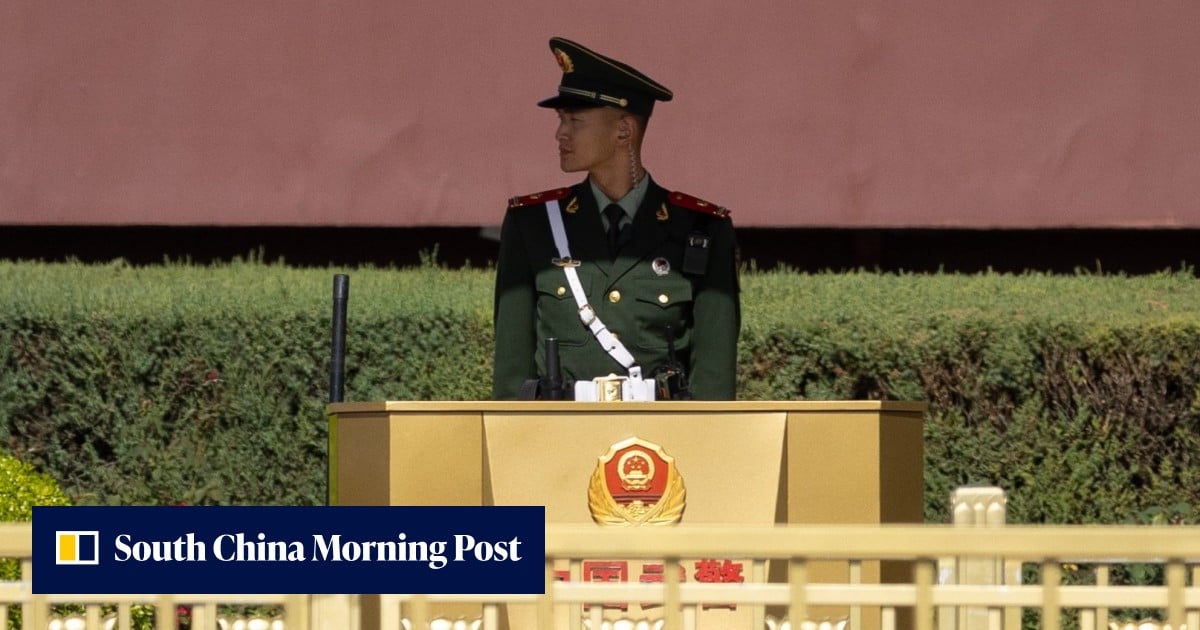
Photo via Toronto Star

CGTN: How the CPC charts path for full and rigorous Party self-governance

Read the original at Toronto Star ↗
Cite

CGTN: How the CPC charts path for full and rigorous Party self-governance. (2026, October 31). Toronto Star. https://www.thestar.com/globenewswire/cgtn-how-the-cpc-charts-path-for-full-and-rigorous-party-self-governance/article_2f311ad7-e6ca-571f-b404-3ccddf86eabb.html

Dated from the outlet's own feed. Check the original for its byline.

Toronto Star · collected 2026-10-31 · by GlobeNewswire, Inc.

Quick Summary

CGTN published an article focusing on the Communique of the Fifth Plenary Session of the 20th Central Committee of the Communist Party of China (CPC), which emphasizes full and rigorous self-governance within the party. The piece highlights that cases involving improper dining and drinking accounted for 18.2% of all violations related to hedonism and extravagance in September, according to top anti-corruption authorities. Zhang Fuhai, deputy secretary of the Central Commission for Discipline Inspection of the CPC, outlined four areas of focus for combating corruption, including tackling cases where political and economic interests intertwine and addressing misconduct affecting grassroots levels regularly.
Written by AI on 2026-10-31, from this article's own text only (the story summary below draws on all the coverage).
See how they differ ↓

AI analysis

Story summary

The Chinese Communist Party concluded its fifth plenum meeting on October 29, 2026, with a record number of 33 members expelled and a significant number of empty seats. This four-day gathering in Beijing, attended by 279 Central Committee members, marks the lowest turnout since former leader Mao Zedong's death in 1976, due to Xi Jinping’s extensive purges targeting corrupt officials. The plenum emphasized strengthening party discipline and governance ahead of expected personnel changes and Xi’s anticipated fourth five-year term as party leader next year.

During the meeting, President Xi briefed the Central Committee on a draft document focusing on "full and rigorous party self-governance," addressing challenges such as growing governing capacity and combating corruption. The resolution includes over 200 measures to regulate official conduct and curb corruption, reflecting ongoing efforts to consolidate power and maintain loyalty among officials.

The meeting also saw the promotion of Zhang Shengmin to the top decision-making body and the naming of former diplomat Liu Jianchao as one of those purged. Xi’s approach underscores his willingness to remove even those he has promoted if they do not align with his vision or standards of conduct.

Written for “China Fifth Plenum Discipline Measures” on 2026-11-20, grounded in this article and the 28 other(s) covering the same event.

How they differ

12 outlets covered “China Fifth Plenum Discipline Measures”.

What each outlet says

One AI summary per outlet of its latest article on this story, written from that article alone and checked against it. Open the article for the outlet's own words.

Toronto StarThis outlet31 Oct

CGTN published an article focusing on the Communique of the Fifth Plenary Session of the 20th Central Committee of the Communist Party of China (CPC), which emphasizes full and rigorous self-governance within the party. The piece highlights that cases involving improper dining and drinking accounted for 18.2% of all violations related to hedonism and extravagance in September, according to top anti-corruption…

CGTN: How the CPC charts path for full and rigorous Party self-governance (this article)3 articles from Toronto Star on this story
South China Morning Post3 Nov

China’s Communist Party approved a resolution at its fifth plenum meeting last week that aims to strengthen oversight of regional leaders. This includes prohibiting regional leaders from seeking personal allegiance from their teams, which is reserved for top leadership. The proposal underscores the party's focus on internal governance and political loyalty as it prepares for next year’s party congress.

‘Speak last’: China’s fifth plenum moves to rein in regional leaders →11 articles from South China Morning Post on this story
The Hindu2 Nov

A four-day meeting of China’s ruling Communist Party concluded in Beijing on October 29, emphasizing that anti-corruption purges will continue without end. The meeting highlighted the ongoing impact these purges have had across political and military establishments in China.

The unending purge in Xi’s China →3 articles from The Hindu on this story
Times of India30 Oct

China’s top leaders elevated General Zhang Shengmin to the Politburo on Thursday. Zhang serves as vice chairman of the Central Military Commission and is now the sole remaining military representative in this high-ranking body after two other generals were purged earlier. The elevation comes alongside a resolution aimed at enhancing self-governance, discipline, and anti-corruption measures within the Communist Party.

China elevates military general to Politburo →2 articles from Times of India on this story
NPR31 Oct

China's ruling Communist Party concluded its fifth plenum meeting in Beijing from Monday to Thursday, confirming the expulsion of 33 senior party members as part of leader Xi Jinping’s ongoing anti-corruption campaign. During this meeting, more than a quarter of the originally named 376 full and alternate central committee members were absent, with many believed to be under investigation. The focus on…

Anti-corruption and party discipline: takeaways from from this week's key political meeting in Beijing →2 articles from NPR on this story
Sydney Morning Herald2 Nov

The article contrasts China's tightly controlled political process with what it views as the deteriorating state of democracy in the United States. In China, the fifth plenum of the Communist Party’s Central Committee was meticulously orchestrated, emphasizing uniformity and central leadership under Xi Jinping. Meanwhile, the U.S. faces issues like legal but contentious election spending by figures such as Elon Musk…

China is a dictatorship. The midterms will prove if the US has also become one →2 articles from Sydney Morning Herald on this story
Show 6 more outlets
Al Jazeera26 Oct

China's political leaders are meeting for a four-day gathering starting Monday to discuss strengthening discipline within the Communist Party as President Xi Jinping seeks greater loyalty from officials and continues his anticorruption campaign. Approximately 300 members of the Central Committee, with some vacancies due to investigations, are attending this fifth plenum ahead of expected personnel changes before…

China’s political elite gather for talks on Communist Party discipline →
BBC29 Oct

At China's recent fifth plenum gathering in Beijing, a record number of 33 Communist Party members were expelled, with sixteen from the military. This marks an increase from previous terms under Xi Jinping’s rule; currently, 51 members have been removed during his third term alone. The meeting emphasized party discipline and anti-corruption efforts, highlighting that this purge is more about consolidating power than…

Record number of purges as Xi emphasises 'party discipline' at China political gathering →
Daily Mail29 Oct

President Xi Jinping has carried out the largest purge of officials from China's Communist Party since he took power in 2012. At this year’s annual meeting, 33 members were expelled, leading to more empty seats than ever before, with only 279 full and alternate members present compared to 376 in 2022. The purge includes former Politburo members Ma Xingrui and Zhang Youxia, among others, highlighting Xi's ongoing…

Xi carries out largest purge of 'corrupt officials' yet as China's Communist Party's annual gathering ends with more empty seats than ever →
Deutsche Welle29 Oct

Chinese Communist Party leaders met in Beijing for four days of closed-door discussions focused on maintaining strict discipline and increasing loyalty among party members. Xi Jinping, the CCP’s general secretary and China's head of state, emphasized the need for more initiative at all levels to tackle corruption and ensure stable governance amid economic challenges and international tensions. The resolution…

China leaders demand more loyalty and more initiative →
The Guardian30 Oct

China expelled a record 33 officials from its Communist Party (CCP) during this week’s fifth plenum meeting, marking the highest number of expulsions and absences in modern Chinese history. The gathering saw only 279 out of the original 376 members attend, with significant figures like Zhang Youxia and Ma Xingrui among those absent due to purges under President Xi Jinping’s intensified anti-corruption campaign. This…

China expels a record number from Communist party amid Xi’s intensified purges of top officials →
Semafor30 Oct

China’s leadership has intensified its anti-corruption efforts, as reported by the Party which announced the expulsion of 33 senior officials and the promotion of a former military official to the Politburo. This move, analysts suggest, aims to both eliminate corruption within the Communist Party and strengthen Xi Jinping’s authority ahead of an anticipated confirmation for another five-year term at a major meeting…

Xi Jinping doubles down on purge of party elite →

Where they agree and split

Framing

How the first headlines put it

Stated as fact4
The headlines (4)

What to know about China’s plenum as Xi seeks stronger Communist Party discipline Toronto Star · stated as fact

China’s Communist Party elite hold key talks on governance The Hindu · stated as fact

China’s political elite gather for talks on Communist Party discipline Al Jazeera · stated as fact

China’s Communist Party opens fifth plenum with focus on discipline and loyalty to Xi South China Morning Post · stated as fact

The full story: what happened, how it changed, and all 29 articles →

Compared with similar articles

This article reads leans left and hedges 17% of its claims. Each row says how that neighbour differs.
Deutsche Welle
Leans right further right than this Hedges 8 of 37 claims Outlet record 95/100
South China Morning Post
Hedges 0 of 1 claims Outlet record 62/100
Toronto Star
Leans right further right than this Hedges 1 of 4 claims Outlet record 64/100
Semafor
Leans right further right than this Hedges 0 of 3 claims Outlet record 64/100
“Article A reports on a purge involving the expulsion of officials and elevation of military personnel following a meeting, while Article B discusses broader self-governance and anti-corruption efforts with a focus on recent statistics about improper dining.”
NPR
Leans right further right than this Hedges 8 of 23 claims Outlet record 60/100
South China Morning Post
Hedges 0 of 1 claims Outlet record 62/100
“The articles discuss related topics and themes but describe different aspects of the larger event—the first focuses on improper dining and drinking cases, while the second covers a broader range of key takeaways from the fifth plenum.”
South China Morning Post
Leans left Hedges 1 of 1 claims Outlet record 62/100
“The articles discuss the Fifth Plenary Session of the 20th Central Committee but cover different aspects (promotions and expulsions vs. self-governance and anti-corruption measures), indicating they describe related but distinct events.”
The Sydney Morning Herald
Hedges 1 of 46 claims Outlet record 61/100
“The articles discuss related topics but describe different events and perspectives, one focusing on internal CPC governance details and the other contrasting China's political system with the U.S. midterms.”
South China Morning Post
Leans right further right than this Hedges 2 of 3 claims Outlet record 62/100
“While both articles discuss strict party governance and refer to the Fifth Plenary Session of the CPC, they describe different aspects or moments within that broader context.”
South China Morning Post
Leans left Hedges 1 of 3 claims Outlet record 62/100
“While both articles discuss governance and anti-corruption measures within the Communist Party of China, they describe different aspects: Article A focuses on the communique itself and its implications for self-governance, while Article B details how Xi Jinping and other elders shaped a key plenum document.”

Story

China Fifth Plenum Discipline Measures
Politics · 29 article(s) covering the same event. Compare every outlet's account →
How this article was measured signals, leaning charts, publisher record, byline, topics and claims

Signals How these are calculated →

Claims extracted
30
sentences that state something as happening or true
Uncertain
17%
5 of 30 hedged ("reportedly", "may", "according to")
Leaning
Leans left
of the writing, not the subject · beta estimate
Publisher signals
64/100
Toronto Star's corrections and hedging, across everything collected from it. Not a measure of accuracy.
Outlets on this story
29
Politics
Same framing elsewhere
1
articles that frame the event the way this one does
Analyzed 2026-10-31 · how these are computed

How this is being covered How these are calculated →

Article leaning vs. publisher reliability
Source leaning vs. consistency

Publisher

Toronto Star · 16185 article(s) · 31 correction(s) detected
Running correction rate · 31 correction(s)
2026-11-17
Correction
2026-10-26
Correction
2026-10-24
Correction
2026-10-07
Correction
2026-09-24
Correction

Who wrote this

No reporter is named on this article, beyond the feed's “GlobeNewswire, Inc.”.

Topics

BEIJING CGTN CPC Party the Communist Party of China

Subjects

Party ORG · 7× CPC ORG · 6× China GPE · 3× Zhang PERSON · 3× BEIJING GPE · 2× CGTN ORG · 2× the Communist Party of China ORG · 2× Central Committee ORG · 1× GLOBE NEWSWIRE ORG · 1× the Communique of the Fifth ORG · 1×

Narrative

Turning organizational strength into effective governance With China in its 15th Five-Year Plan period (2026-2030), the question of how to translate the CPC’s organizational strength into effective governance and development momentum has taken on added significance. The CPC has more than 100 million members and over 5.4 million primary-level Party organizations, giving it a powerful advantage unmatched by any other political party in the world, said Huang Jianfa, deputy head of the Organization Department of the CPC Central Committee.
framing: assertive · carried by 1 article(s) · first seen 2026-10-31
People might ask: Does it really matter if an official accepts a dinner invitation?
2026-10-31 · Toronto Star
CGTN: How the CPC charts path for full and rigorous Party self-governance · assertive framing

Claims (30 extracted, 5 hedged)

Focusing on the Communique of the Fifth Plenary Session of the 20th Central Committee of the Communist Party of China (CPC), CGTN published an article emphasizing how the CPC has charted the course for full and rigorous Party self-governance. asserted
CPC → focus → governance
People might ask: Does it really matter if an official accepts a dinner invitation? uncertain
official → ask → invitation
The answer can be found in the numbers. asserted
answer → find → numbers
Cases involving improper dining and drinking accounted for 18.2% of all violations related to hedonism and extravagance investigated during September, according to China’s top anti-corruption authorities. uncertain
Cases → involve → authorities
What lie behind a simple meal are issues concerning an official’s sense of discipline, their conception of power and their approach to conduct. asserted
lie → lie → conduct
Addressing these seemingly minor details is therefore central to China’s full and rigorous Party self-governance, ensuring that integrity is maintained at every level. asserted
integrity → address → level
How the Communist Party of China (CPC) combats corruption is one of the topics that has attracted the greatest interest among participants in CGTN’s Ask China initiative. asserted
that → combat → initiative
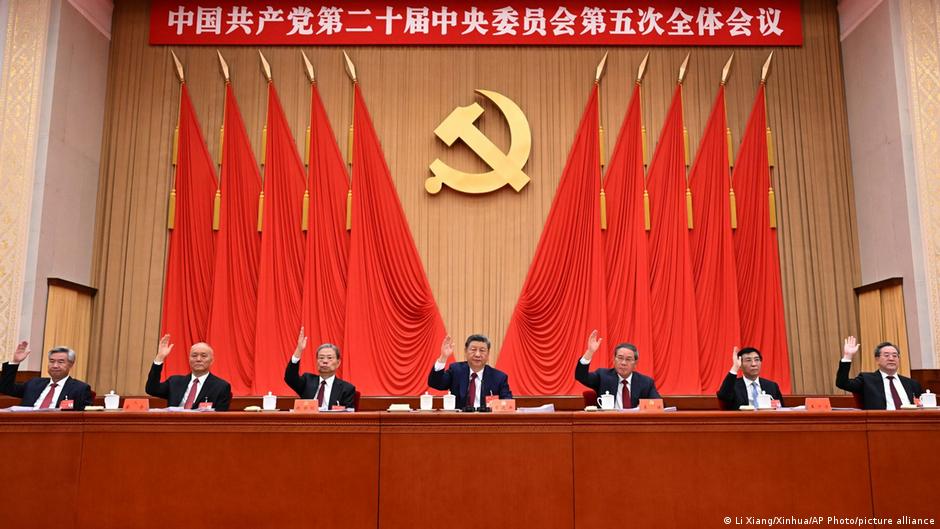
The 20th Central Committee of the CPC held its fifth plenary session from Monday to Thursday in Beijing, adopting a resolution on persevering with full and rigorous Party self-governance, which also highlighted the importance of combating corruption. asserted
which → hold → corruption
Fighting corruption to safeguard public interests The fight against corruption is not simply about punishing officials who break the rules. asserted
who → fight → rules
It is also about strengthening the Party’s ability to govern and ensuring that public power serves the interests of the people. asserted
power → strengthen → people
The endeavors to advance full and rigorous governance over the Party in the new era have broken new ground in the self-reform of the century-old Party and brought about historic achievements and transformations in the cause of the Party and the country, according to a communique of the session released on Thursday. uncertain
endeavors → advance → Thursday
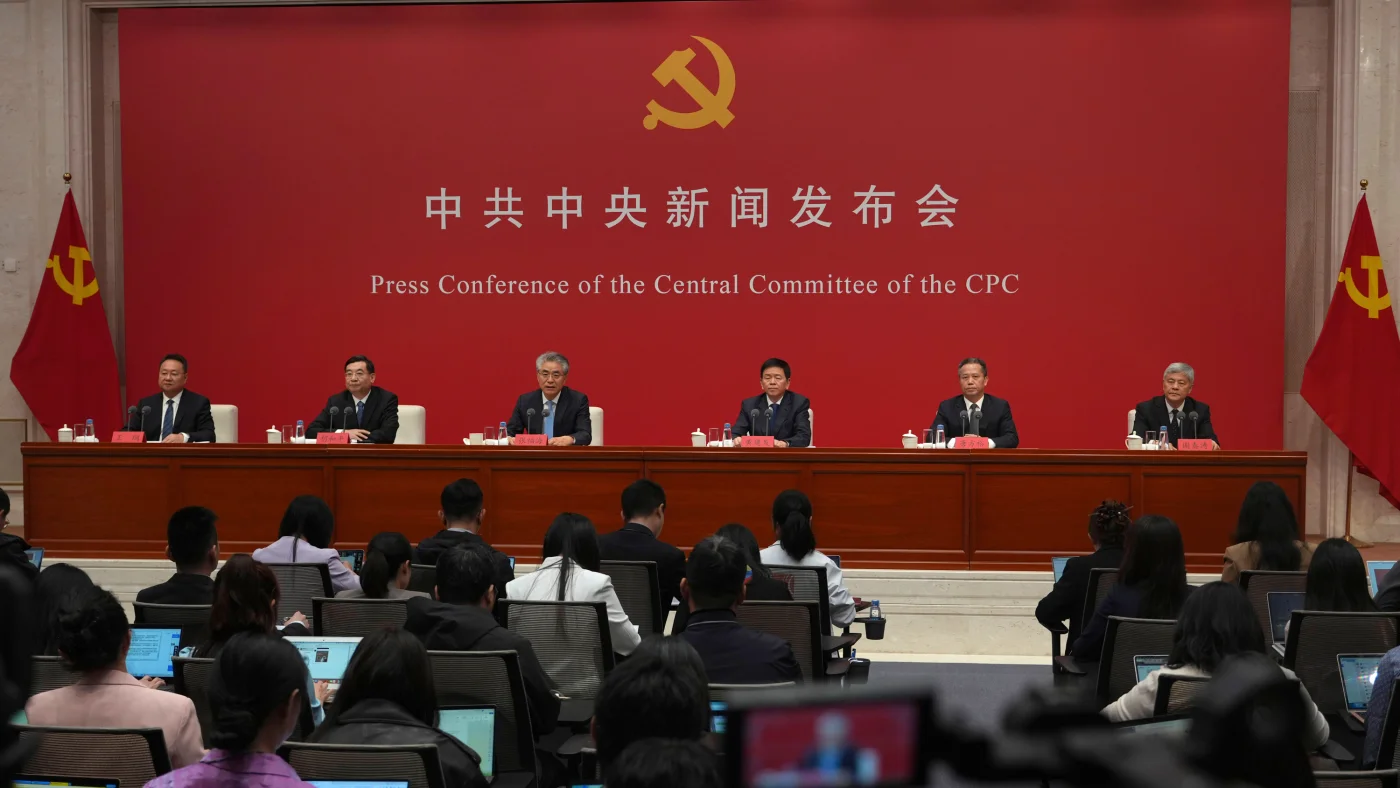
Zhang Fuhai, deputy secretary of the Central Commission for Discipline Inspection of the CPC, said the CPC has outlined four areas of focus for steadfastly pursuing a distinctive Chinese path to combating corruption at a press conference on the guiding principles from the fifth plenary session of the 20th CPC Central Committee. asserted
CPC → say → Committee
Among them, Zhang stressed strengthening efforts to tackle corruption in sectors where power is concentrated and large amounts of funds and resources are involved, with a focus on cases involving intertwined political and economic interests, collusion between officials and businesses, and the infiltration of political circles by capital. asserted
amounts → stress → capital
Zhang also said greater attention will be paid to uncovering new and concealed forms of corruption, while misconduct and corruption affecting people at the grassroots level will be addressed on a regular basis. asserted
misconduct → say → basis
The scale of the campaign is reflected in the figures. asserted
scale → reflect → figures
Since the 18th CPC National Congress in 2012, discipline inspection and supervisory organs across the country have filed 8.105 million cases and punished 7.922 million people, according to Zhang. uncertain
organs → file → Zhang
China’s approach also seeks to address the institutional and ideological roots of corruption. asserted
approach → seek → corruption
Xie Maosong, a senior researcher at the National Institute of Strategic Studies under Tsinghua University, said the CPC regards corruption as a major threat to its governing foundation and considers combating it a long-term task that requires both determination and institutional safeguards. asserted
that → say → determination
“A central principle of this approach is to address corruption through three interconnected measures: making officials afraid to engage in corruption, making it impossible for them to do so and fostering an unwillingness to do so,” said Xie. asserted
Xie → address → unwillingness
Specifically, the first relies on strict enforcement and credible deterrence, the second focuses on improving institutions, tightening oversight and placing checks on the exercise of power, while the third emphasizes education, ethical awareness and a stronger commitment to public service, added Xie. asserted
Xie → rely → service
Turning organizational strength into effective governance With China in its 15th Five-Year Plan period (2026-2030), the question of how to translate the CPC’s organizational strength into effective governance and development momentum has taken on added significance. The CPC has more than 100 million members and over 5.4 million primary-level Party organizations, giving it a powerful advantage unmatched by any other political party in the world, said Huang Jianfa, deputy head of the Organization Department of the CPC Central Committee. asserted
Jianfa → turn → Committee
But the size of an organization alone does not guarantee effective governance. asserted
size → guarantee → governance
The key lies in how its members are selected, managed, trained and held accountable. asserted
members → lie → ?
Full and rigorous Party self-governance requires strict management of officials, according to the communique. uncertain
governance → require → communique
It calls for building a high-caliber cadre workforce with strong political commitment, professional competence, sound work styles and strict discipline. asserted
It → call → commitment
Huang outlined five priorities in strengthening cadre management, ranging from upholding the right criteria for selecting and appointing officials to strengthening the officials’ ability to take initiative and deliver results. asserted
Huang → outline → results
These priorities reflect a broader recognition that China’s development goals require not only sound policies but also officials capable of implementing them effectively. asserted
goals → reflect → them
Xia Lu, an expert on Party building at Renmin University of China, said, “The quality of the ruling party directly shapes a country’s capacity to achieve modernization, forming a clear causal chain: Party self-governance leads to effective governance, which delivers development, paves the way for modernization and ultimately brings about national rejuvenation. asserted
which → say → rejuvenation
Xia also said a country’s long-term development requires organizational continuity, as infrastructure, industrialization, education, technological upgrading and poverty reduction often depend on policies that endure across decades rather than the lifespan of a single administration. asserted
that → say → administration
So the selection and evaluation of officials matters enormously, as development depends on a bureaucracy capable of learning, implementing and adapting, not merely one that follows procedures, Xia said. asserted
Xia → matter → procedures

Give feedback · no sign-in needed

No sign-in needed for now. Your note is sent without a name, so it cannot be answered.

History Support