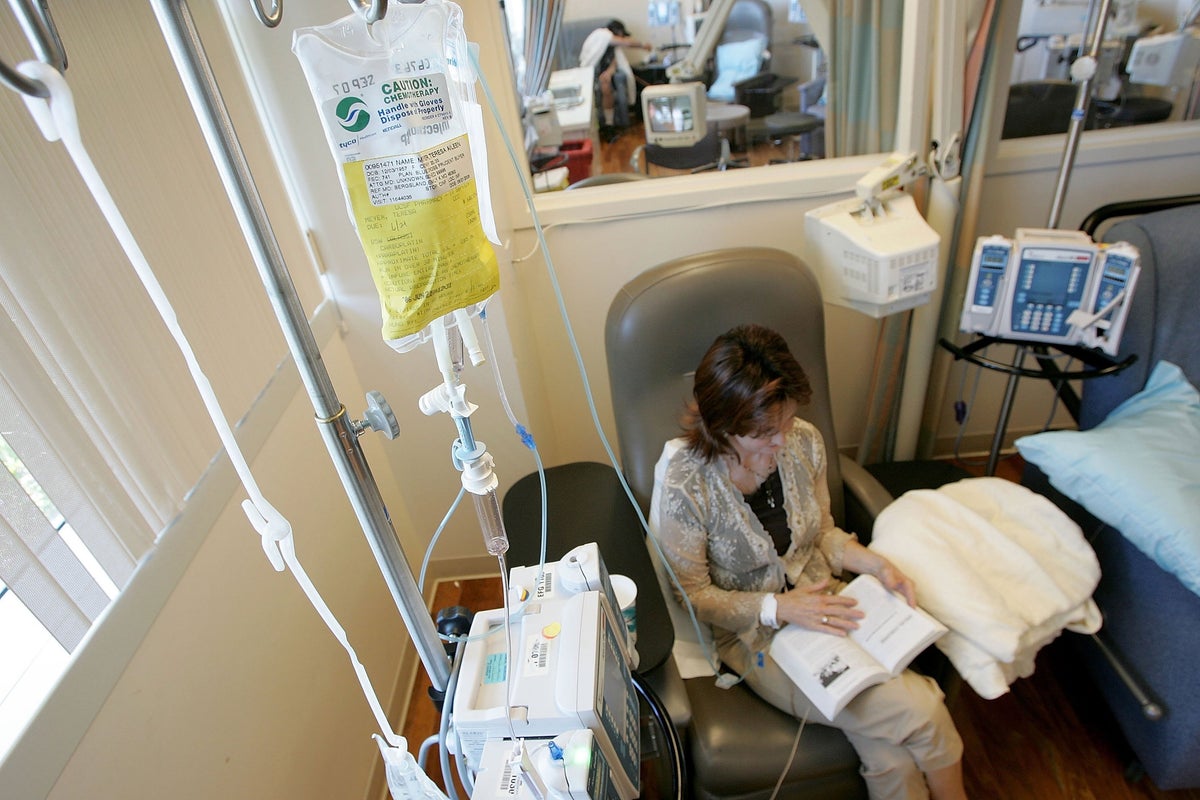
Photo via The Independent

Study finds an alarming amount of underage American teens gambled in the last year

Read the original at The Independent ↗
Cite

Musto, J. (2026, October 30). Study finds an alarming amount of underage American teens gambled in the last year. The Independent. https://www.independent.co.uk/news/world/americas/gambling-addiction-us-teens-survey-health-b3076444.html

Dated from the outlet's own feed. Check the original for its byline.

The Independent · collected 2026-10-30 · by Julia Musto

Quick Summary

A recent survey conducted by Rutgers University found that nearly half of American teenagers between 13 and 17 have gambled in the last year, with 43% engaging in various forms of gambling. Among these teens, about 11% are at high risk for developing a gambling disorder. The study, based on responses from 1,677 participants, highlights the growing issue of underage gambling facilitated by online platforms and mobile devices, emphasizing concerns over mental health impacts and addiction risks among youth.
Written by AI on 2026-11-01, from this article's own text only (the story summary below draws on all the coverage).
See how they differ ↓

AI analysis

Story summary

Nearly 43% of American teens ages 13 to 17 reported gambling in the past year according to a survey published by Rutgers University’s Center for Gambling Studies. The study surveyed nearly 1,700 Americans aged 13 to 27 and found that among those under 18, almost half had gambled, despite gambling being illegal for minors. Researchers defined gambling broadly to include activities like street games, lottery tickets, and cryptocurrency trading—essentially "anything where money is wagered," according to lead author Lia Nower. The report also indicates that nearly 40% of those who gambled showed symptoms of problem gambling, with 10% at high risk for developing a disorder.

Written for “Underage Teen Gambling Rising” on 2026-11-22, grounded in this article and the 1 other(s) covering the same event.

How they differ

2 outlets covered “Underage Teen Gambling Rising”.

What each outlet says

One AI summary per outlet of its latest article on this story, written from that article alone and checked against it. Open the article for the outlet's own words.

The IndependentThis outlet30 Oct

A recent survey conducted by Rutgers University found that nearly half of American teenagers between 13 and 17 have gambled in the last year, with 43% engaging in various forms of gambling. Among these teens, about 11% are at high risk for developing a gambling disorder. The study, based on responses from 1,677 participants, highlights the growing issue of underage gambling facilitated by online platforms and mobile…

Study finds an alarming amount of underage American teens gambled in the last year (this article)
NBC News29 Oct

A survey conducted by Rutgers University’s Center for Gambling Studies found that nearly 43% of U.S. teens aged 13 to 17 have gambled in the past year. Among those surveyed between April and June this year, 52.5% reported gambling activities, which include various forms like scratch-off tickets, bingo, and lottery tickets. The study raises concerns about the accessibility of gambling for minors due to digital…

Nearly half of U.S teens ages 13 to 17 say they’ve gambled in the last year, survey finds →

Compared with similar articles

This article reads unscored and hedges 11% of its claims. Each row says how that neighbour differs.
NBC News
Hedges 3 of 33 claims Outlet record 74/100

Story

Underage Teen Gambling Rising
Other · 2 article(s) covering the same event. See how they differ ↑
How this article was measured signals, leaning charts, publisher record, byline, topics and claims

Signals How these are calculated →

Claims extracted
35
sentences that state something as happening or true
Uncertain
11%
4 of 35 hedged ("reportedly", "may", "according to")
Leaning
withheld
no quote in the article backed the model's score
Publisher signals
59/100
The Independent's corrections and hedging, across everything collected from it. Not a measure of accuracy.
Outlets on this story
2
Other
Same framing elsewhere
1
articles that frame the event the way this one does
Analyzed 2026-11-01 · how these are computed

How this is being covered How these are calculated →

Article leaning vs. publisher reliability
Source leaning vs. consistency

Publisher

The Independent · 4810 article(s) · 10 correction(s) detected
Running correction rate · 10 correction(s)

Who wrote this

Julia Musto
53 article(s) here · 1 carrying a prediction
A late-season Atlantic storm forecasters are watching near the Southeast
Sleeping for nine or more hours a day could be a warning sign for adults with heart disease, according to a new 15-year study.
A late-season Atlantic storm forecasters are watching near the Southeast
The dataset analyzed by Cleveland Clinic researchers, known as TriNetX, is large but may not be representative of the wider population, said Dr. Lucy Hooper, a private general practitioner and co-founder of London-based Coyne Medical.
A Pacific storm is expected to dump more rain on the West as a nor’easter affected by the subtropical jet stream continues to hammer the Northeast.
People who use air purifiers in their homes could also be unknowingly regulating their blood sugar levels, new research from NYU Langone Health suggests.
Prostate cancer is the second most common cause of cancer deaths in U.S. men, and will lead to an estimated 36,000 deaths and 333,000 cases this year.
"It was one of the best things I could’ve ever done for my self-confidence, and it made me feel a lot better in my skin," she said.
The makers of blockbuster weight-loss drugs such as Ozempic and Zepbound will be required to include warnings about a rare eye condition that can cause permanent vision loss.
A nor’easter could form this week, bringing the first snow of the season for tens of millions of Americans.
Also by Julia Musto
Nothing else under this byline is closely related to this article, so these are simply their most recent.
All 53 articles by Julia Musto →

Topics

American Center for Gambling Studies New Jersey’s Rutgers University U.S.

Subjects

Nower PERSON · 4× U.S. GPE · 2× American NORP · 1× Center for Gambling Studies ORG · 1× Common Sense Media ORG · 1× Lia Nower PERSON · 1× New Jersey’s GPE · 1× Rutgers University ORG · 1× Yale Medicine ORG · 1× the American Psychological Association ORG · 1×

Narrative

Despite that, teens and adolescents have become the fastest-growing group of gamblers nationally and a January report from non-profit Common Sense Media discovered 36 percent of boys aged 11 to 17 had gambled in the last year. Young men are 3.4 times more likely to engage in problematic gambling than their female counterparts, 2024 research from Australia’s Central Queensland University found.
framing: assertive · carried by 1 article(s) · first seen 2026-11-01
“We have worried this would increase rates of problem gambling among youth.

Claims (35 extracted, 4 hedged)

Nearly 20 million American adults report experiencing symptoms of a dangerous and addictive gambling disorder each year - but new data shows the risk is no longer limited to those ages 18 and up. asserted
risk → report → ages
With the rise of online gambling, the problem is growing among U.S. youth, and nearly half of underage teens gambled in the last year, according to a survey published this week. uncertain
half → grow → survey
About 43 percent of teens between 13 and 17 have placed bets in the last year, the survey of 1,677 people revealed. asserted
survey → place → people
Many of these teens are developing or already have a disorder, New Jersey’s Rutgers University, which conducted the survey, said. asserted
which → develop → survey
Around 11 percent were classified as high-risk for problems, despite being below age 18: the legal age for regulated gambling activities. asserted
percent → classify → activities
“These findings should be a wake-up call for parents, educators, health professionals and policymakers,” Lia Nower, director of the school’s Center for Gambling Studies, said in a statement. asserted
Nower → wake → statement
Nower led the research into the findings. asserted
Nower → lead → findings
“Gambling is no longer confined to casinos and lottery tickets. asserted
Gambling → confine → casinos
It is increasingly embedded in video games, sports broadcasts and other products young people can access,” she added. asserted
she → embed → games
“We have worried this would increase rates of problem gambling among youth. asserted
this → worry → youth
Now we know. asserted
we → know → ?
It does. asserted
It → do → ?
The researchers examined 21 gambling activities, including sports and esports betting, cryptocurrency trading, games of skill, raffles, bingo and trading on prediction markets. asserted
researchers → examine → markets
The research marked the first national prevalence study of U.S. adolescents and young adults in nearly 20 years. asserted
research → mark → years
The problem A gambling disorder is an addiction that is linked to poor mental health and substance abuse. asserted
that → link → health
It can drain finances and ruin relationships, Yale Medicine says. asserted
Medicine → drain → relationships
Starting young carries an increased risk for psychological distress and developing a gambling problem, the American Psychological Association notes. asserted
Association → start → problem
Despite that, teens and adolescents have become the fastest-growing group of gamblers nationally and a January report from non-profit Common Sense Media discovered 36 percent of boys aged 11 to 17 had gambled in the last year. Young men are 3.4 times more likely to engage in problematic gambling than their female counterparts, 2024 research from Australia’s Central Queensland University found. asserted
research → become → University
Though the new Rutgers research identified that high-risk gambling rates were similar for girls. asserted
rates → identify → girls
The study also determined that Black teens were the most likely to gamble, as were those living in lower income households or with family members who gambled. asserted
who → determine → members
Part of the reason for this shift is a major change in how people gamble, as Nower addressed. asserted
Nower → gamble → shift
Around 90 percent of bets are now placed on phones, Isaac Rose-Berman, fellow at the American Institute for Boys and Men, wrote in STAT last year. asserted
Berman → place → STAT
“We are living in a time where anyone can have a casino or sportsbook in their pocket,” Nower noted. asserted
Nower → live → pocket
“Now teens who should be playing sports are betting on them, often with family members.” asserted
who → play → members
A landmark ruling The gambling industry expanded following a May 2018 Supreme Court ruling that legalized sports betting. uncertain
that → expand → betting
Americans now wager billions every year on sports bets, researchers at the Johns Hopkins Bloomberg School of Public Health said earlier this month. asserted
researchers → wager → Health
The school found that the ruling has led to increases in the use of depression and anxiety medications. asserted
ruling → find → medications
There was also a surge in outpatient diagnoses for the mental health conditions, which are tied to a heightened risk of cardiovascular disease and dementia, in the 22 states. asserted
which → be → states
The fix Nower and the university recommended several steps to help prevent and fight gambling addiction in America’s youth. asserted
Nower → recommend → youth
First, they suggest that starting prevention education in middle school can help address risks at home and limit family gambling. asserted
starting → suggest → gambling
Second, the researchers propose strengthening oversight of emerging gambling-like products and establishing a federal regulatory agency to set up safeguards that could reduce levels of problematic gambling. uncertain
that → propose → gambling
Lastly, they call for a new office for problem gambling within the National Institutes of Health, which could provide prevention and treatment where risk is deemed to be the highest. uncertain
risk → call → prevention
“We cannot wait until young people reach adulthood to begin addressing gambling-related harm,” Nower said. asserted
Nower → wait → harm
“By that point, we will have very high rates of problem gambling.” asserted
we → have → gambling
People struggling with a gambling disorder who need help now can call the National Problem Gambling Helpline at 1-800-MY-RESET. asserted
who → struggle → RESET

Give feedback · no sign-in needed

No sign-in needed for now. Your note is sent without a name, so it cannot be answered.

History Support