Photo via ABC News (AU)

Bad inflation result lays bare the ugly truth: there is no easy way out

Read the original at ABC News (AU) ↗
Cite

Crowley, T. (2026, October 28). Bad inflation result lays bare the ugly truth: there is no easy way out. ABC News (AU). https://www.abc.net.au/news/2026-10-29/bad-inflation-result-political-pressure/107318484

Dated from the outlet's own feed. Check the original for its byline.

ABC News (AU) · collected 2026-10-28 · by Tom Crowley

Quick Summary

The article discusses how recent high inflation numbers in Australia have dashed hopes for a soft economic landing and indicate further economic pain ahead. The Reserve Bank is expected to raise interest rates to 4.85%, the highest level in 18 years, leading to increased financial pressure on borrowers. Treasurer Jim Chalmers faces criticism from opposition politicians while defending government actions, emphasizing global factors like the war and a private sector investment boom as contributors to inflation. The article argues that despite these external influences, there is no easy solution to curb inflation without causing significant economic harm.
Written by AI on 2026-10-31, from this article's own text only (the story summary below draws on all the coverage).
See how they differ ↓

AI analysis

Story summary

Australia’s inflation rate surged to 4.3% in September, with underlying inflation reaching 3.6%, according to data released by the Australian Bureau of Statistics (ABS). This sharp increase has intensified expectations for another interest rate hike from the Reserve Bank of Australia (RBA) at its upcoming meeting on November 3rd. Deputy governor Andrew Hauser warned that a “materially worse” inflation outlook raises concerns about long-term price stability, emphasizing the need to control inflation before it becomes entrenched in the economy. Treasurer Jim Chalmers faced mounting criticism from opposition politicians over the rising cost of living and the economic pain for borrowers as interest rates climb.

Written for “Inflation Surges in Australia” on 2026-11-21, grounded in this article and the 4 other(s) covering the same event.

How they differ

3 outlets covered “Inflation Surges in Australia”.

What each outlet says

One AI summary per outlet of its latest article on this story, written from that article alone and checked against it. Open the article for the outlet's own words.

ABC News (AU)This outlet28 Oct

The article discusses how recent high inflation numbers in Australia have dashed hopes for a soft economic landing and indicate further economic pain ahead. The Reserve Bank is expected to raise interest rates to 4.85%, the highest level in 18 years, leading to increased financial pressure on borrowers. Treasurer Jim Chalmers faces criticism from opposition politicians while defending government actions, emphasizing…

Bad inflation result lays bare the ugly truth: there is no easy way out (this article)2 articles from ABC News (AU) on this story
Daily Mail28 Oct

Australian inflation increased again in the September quarter, with the trimmed mean measure rising 1% from June levels to reach 3.7% annually. This development suggests that the Reserve Bank might raise interest rates further during its upcoming meeting next week. The trimmed mean inflation rate, which excludes volatile price changes and influences monetary policy decisions, has now reached its highest point since…

Aussie homeowners brace for more mortgage pain as inflation accelerates again →
The Guardian28 Oct

Australia’s headline inflation rate has climbed to 4.3%, with a key measure of underlying inflation reaching 3.6% annually through September. This rise is fueling expectations of another interest rate hike by the Reserve Bank of Australia (RBA) on November 3, aiming to curb inflation which now stands above its target range. The RBA’s deputy governor, Andrew Hauser, warned that persistently high inflation could lead…

Australia’s inflation rate rises to 4.3%, fuelling fears of fifth interest rate hike this year →

Compared with similar articles

This article reads leans left and hedges 12% of its claims. Each row says how that neighbour differs.
The Guardian
Hedges 2 of 12 claims Outlet record 64/100
The Hindu
Leans left Hedges 5 of 32 claims Outlet record 78/100
“The articles describe different central bank meetings in different countries with distinct outcomes; one expects no rate hike while the other is expecting an increase.”
The Guardian
Centre further right than this Hedges 1 of 8 claims Outlet record 64/100
ABC News (AU)
Hedges 0 of 30 claims Outlet record 67/100
“While both articles discuss high inflation figures and their implications, Article A focuses on Jim Chalmers' comments about fuel tax discounts and budget pressures, while Article B discusses broader economic impacts and the Reserve Bank's likely rate hike.”
ABC News (AU)
Leans right further right than this Hedges 1 of 49 claims Outlet record 67/100
“While both articles discuss high inflation and potential interest rate hikes, they describe different aspects and times within a broader economic situation.”
The Sydney Morning Herald
Leans right further right than this Hedges 0 of 34 claims Outlet record 61/100
“Both articles discuss high inflation rates and Reserve Bank rate hikes but describe different aspects of the broader economic situation, not a single specific incident.”
Evening Standard
Hedges 0 of 22 claims Outlet record 64/100
“The articles discuss similar economic issues in different countries (UK vs. Australia) with distinct inflation forecasts and political contexts.”
The Sydney Morning Herald
Hedges 1 of 14 claims Outlet record 61/100
“The articles discuss similar circumstances but describe different specific events - one focusing on a press conference and economic pain following high inflation numbers, while the other discusses the expected upcoming rate hike decision by the RBA.”
The Guardian
Hedges 5 of 18 claims Outlet record 64/100
“The articles discuss related economic conditions but describe different events (inflation numbers vs. interest rate hike prediction) and are from different dates.”
The Sydney Morning Herald
Leans left Hedges 4 of 40 claims Outlet record 61/100
“The articles discuss related economic events and policy expectations but do not clearly describe the same specific incident or occurrence at a single time and place.”

Story

Inflation Surges in Australia
Economy/Business · 5 article(s) covering the same event. See how they differ ↑
How this article was measured signals, leaning charts, publisher record, byline, topics and claims

Signals How these are calculated →

Claims extracted
49
sentences that state something as happening or true
Uncertain
12%
6 of 49 hedged ("reportedly", "may", "according to")
Leaning
Leans left
of the writing, not the subject · beta estimate
Publisher signals
67/100
ABC News (AU)'s corrections and hedging, across everything collected from it. Not a measure of accuracy.
Outlets on this story
5
Economy/Business
Same framing elsewhere
1
articles that frame the event the way this one does
Analyzed 2026-10-31 · how these are computed

How this is being covered How these are calculated →

Article leaning vs. publisher reliability
Source leaning vs. consistency

Publisher

ABC News (AU) · 6198 article(s) · 11 correction(s) detected
Running correction rate · 11 correction(s)

Who wrote this

Tom Crowley
13 article(s) here · 1 carrying a prediction
In short: Super funds will be allowed to invest 5 per cent of their portfolio in longer-term assets such as housing projects and venture capital, under a new proposal.
The Greens could pass Labor's two major tax bills by the end of next week if the minor party can extract a promise to reform the charities sector.
In short: Jim Chalmers says the mid-year budget update will include a "substantial" package of cuts.
But for Treasurer Jim Chalmers, it helped build the case that Labor's old policy to wind back negative gearing could be reinvented, and framed as a leg up for home buyers over investors.
Conditions in the housing market were weak before the May budget, when the federal government unveiled plans to curb property investor tax breaks, but have deteriorated markedly since that time and spread beyond Melbourne and Sydney to other capitals.
Ministers do not believe they could have done things any other way and are struggling to see what else they may cut from a federal budget heaving under the weight of long-term pressures in health, defence and social programs.
Mr Chalmers has promised fresh savings in next month's mid-year budget update, but could not say whether the savings would be enough to outweigh new spending, a feat the Albanese government has not managed in any of the five years it has overseen.
In the past week, much commentary has focused on whether government spending cuts could be a "precise instrument", taking pressure off inflation in a targeted way and alleviating the pain of high rates.
Most observers now think the Reserve Bank will hike rates again on Tuesday.
Odds of Cup Day rate hike increase Today's inflation figures confirm the glum prognosis of RBA deputy governor Andrew Hauser, who last week warned that inflation was on track to be "materially worse" than the 3.5 per cent the bank forecast in August.
Also by Tom Crowley
Nothing else under this byline is closely related to this article, so these are simply their most recent.
All 13 articles by Tom Crowley →

Topics

Australia the Reserve Bank

Subjects

Australia GPE · 2× the Reserve Bank ORG · 2× Chalmers PERSON · 1× Chris Richardson PERSON · 1× Jim Chalmers PERSON · 1× Michele Bullock PERSON · 1× Paul Keating PERSON · 1×

Narrative

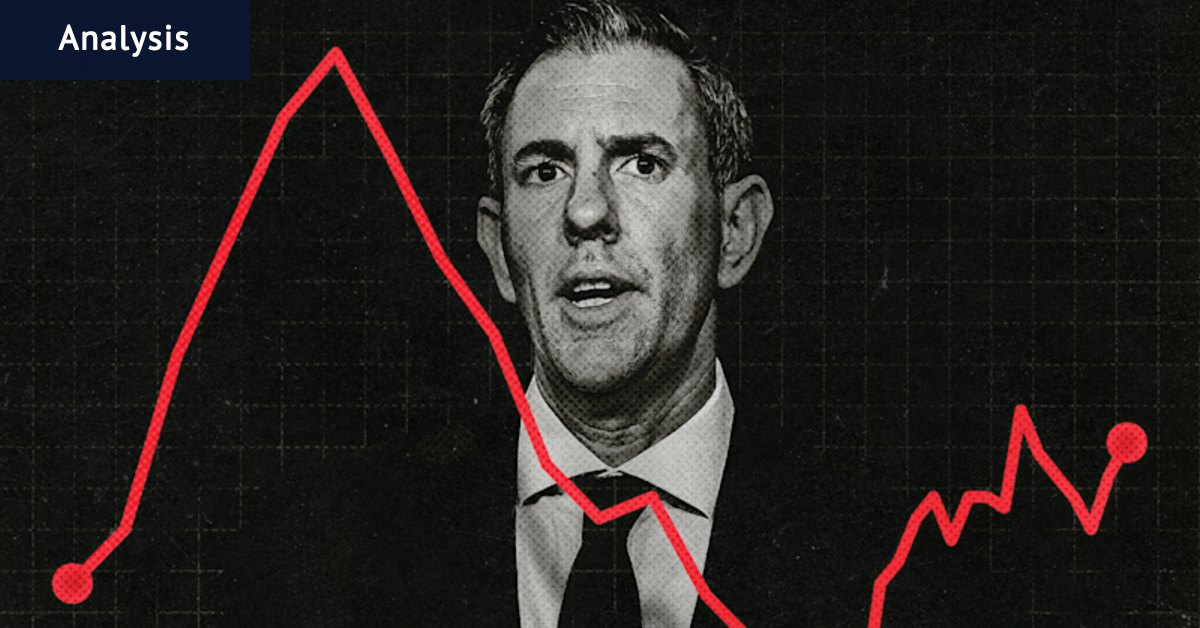
Few will want to spare a thought for the politicians, but the news also piled on the agony for Treasurer Jim Chalmers, who had to front up once again for a stony-faced press conference and a Question Time laden with jeers from the opposition benches.
framing: assertive · carried by 1 article(s) · first seen 2026-10-31
Most observers now think the Reserve Bank will hike rates again on Tuesday.
2026-10-31 · ABC News (AU)
Bad inflation result lays bare the ugly truth: there is no easy way out · assertive framing

Claims (49 extracted, 6 hedged)

It is hard to imagine after nearly five years of economic pain, but the grim truth revealed by yesterday's batch of high inflation numbers is inescapable: the worst is yet to come. asserted
worst → imagine → numbers
Most observers now think the Reserve Bank will hike rates again on Tuesday. asserted
Bank → think → Tuesday
That would take the cash rate to 4.85 per cent, its highest level in 18 years. asserted
That → take → years
By now, we know this means a tighter financial squeeze for all borrowers. asserted
this → know → borrowers
Few will want to spare a thought for the politicians, but the news also piled on the agony for Treasurer Jim Chalmers, who had to front up once again for a stony-faced press conference and a Question Time laden with jeers from the opposition benches. asserted
who → want → benches
As he has done countless times, Chalmers acknowledged those "doing it tough" and solemnly swore the government would continue to be "responsible". asserted
government → do → it
And, as always, he snarled at "commentators" who say public spending is the root cause of the problem. asserted
spending → snarl → problem
He might have a point. uncertain
He → have → point
The role of global events is obvious, and is pushing up inflation all over the world. asserted
role → push → world
And a private sector investment boom, propelled by the rush to build data centres, hasn't helped either. asserted
boom → propel → centres
Still, how many times can you reassure people that you're doing everything you can and that you're sensitive to the difficulty they're enduring before your words lose weight? asserted
words → reassure → weight
The answer: you can keep it up for as long as you can sell hope. asserted
you → keep → hope
And that's getting tough. asserted
that → get → ?
The demise of the narrow path to a soft landing Rewind to 2022, when this inflation episode began, and hope was a carefully calibrated part of the message. asserted
hope → rewind → message
The government and the Reserve Bank were singing from the same song sheet, promising a relatively painless route out of trouble. asserted
government → sing → trouble
They called it "the narrow path to a soft landing". asserted
They → call → landing
Interest rates would go up, but not as harshly as in other countries. asserted
rates → go → countries
They might stay high for a little longer, but without doing excessive damage to the jobs market or the broader economy in the process. uncertain
They → stay → process
There were always those who said this sounded too good to be true. asserted
this → be → ?
Inflation has wrought havoc whenever it has taken hold in history, and it has rarely been possible to banish it without a recession, such as the one Paul Keating said we "had to have" in 1990. asserted
we → work → 1990
But it was an admirable ambition, and it's not entirely anyone's fault that it didn't work out. asserted
it → work → ?
Yes, the "narrow path" strategy probably was the reason why Australia had more heat left in inflation when the war hit. asserted
war → have → inflation
But that's why it was called "narrow". asserted
it → call → ?
And the war, coupled with the AI investment boom, have made for a perfect storm not just in Australia but in other countries, too. asserted
war → couple → countries
The boom pushed up demand, and the war constrained what could be supplied, stretching out the gap where inflation thrives. uncertain
inflation → push → gap
When demand in an economy outstrips what can be supplied, inflation is the result, because the excess demand has nowhere to go other than to bid prices up. asserted
demand → outstrip → prices
To stamp that out, all that can be done is to slash demand or expand our capacity for supply. asserted
that → stamp → supply
The latter option is what economists mean when they talk about productivity. asserted
they → mean → productivity
Sluggish productivity growth is what Michele Bullock calls our "fundamental challenge". asserted
Bullock → call → what
But, in the meantime, the only other option is to slash demand, from anywhere. asserted
option → slash → demand
Rate hikes do this by slugging borrowers. asserted
hikes → do → borrowers
Critics who say they do not address the root cause of inflation misunderstand the aim; it might be unfair, but it can be effective. uncertain
it → say → aim
The government can also reduce demand, either by cutting spending or hiking taxes. asserted
government → reduce → taxes
That is why economists like Chris Richardson tend not to ask governments to slash and burn, and instead judge them by the precautionary principle: at the very least, don't make things worse by spending more or handing out large tax cuts. asserted
things → tend → cuts
Of course, that is exactly what governments are tempted to do when voters are worn down by all those high prices. asserted
voters → tempt → prices
And, as Chalmers put it on Tuesday, helping people with the cost of living can be legitimate and necessary. asserted
helping → put → living
As the opposition has pointed out, the government could have been a little braver if it wanted to. uncertain
it → point → ?
Spending like the EV discount and the home batteries discount might have achieved a climate goal but has put billions into the pockets of high-income earners. uncertain
Spending → achieve → earners
And as the government points out, nobody in politics wants to identify acceptable spending cuts on a grander scale. asserted
nobody → point → scale
It's hard to argue that a subsidy here or there is the main reason we are where we are. asserted
we → argue → ?
…and 9 more, not listed.

Give feedback · no sign-in needed

No sign-in needed for now. Your note is sent without a name, so it cannot be answered.

History Support