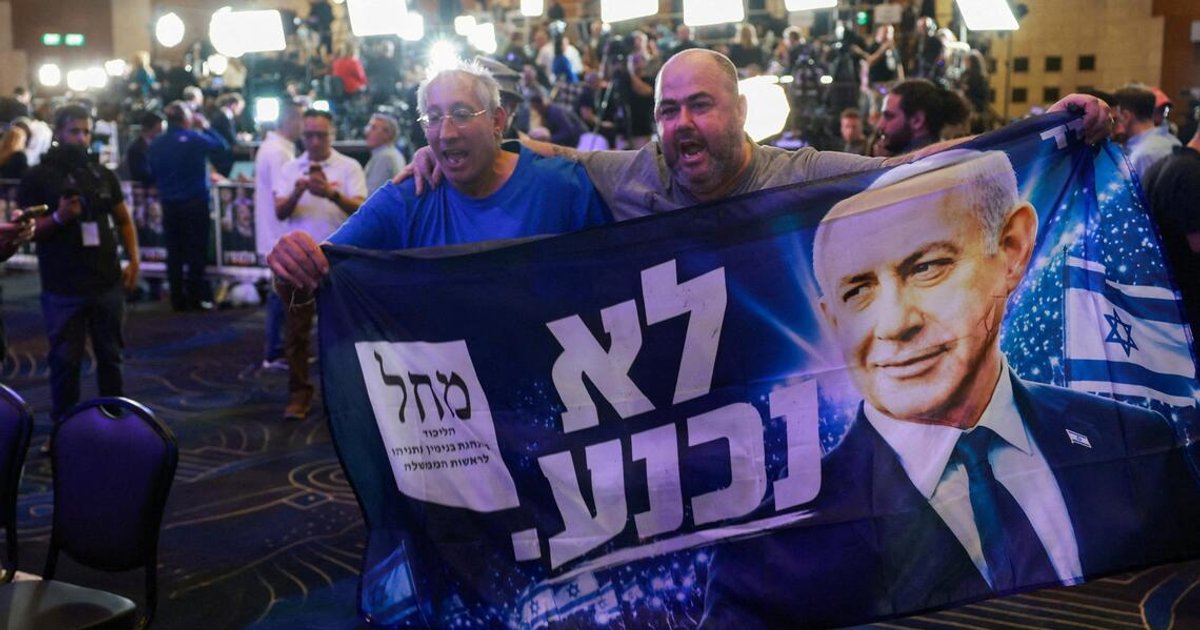
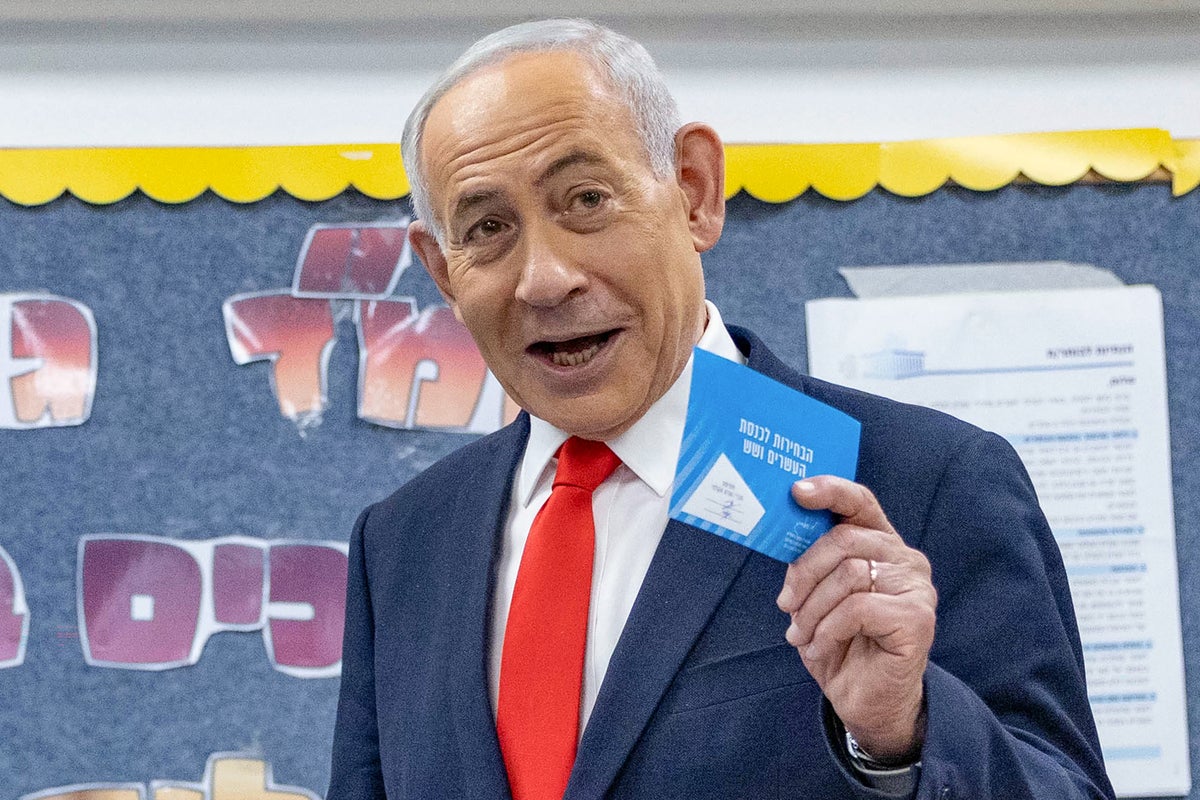
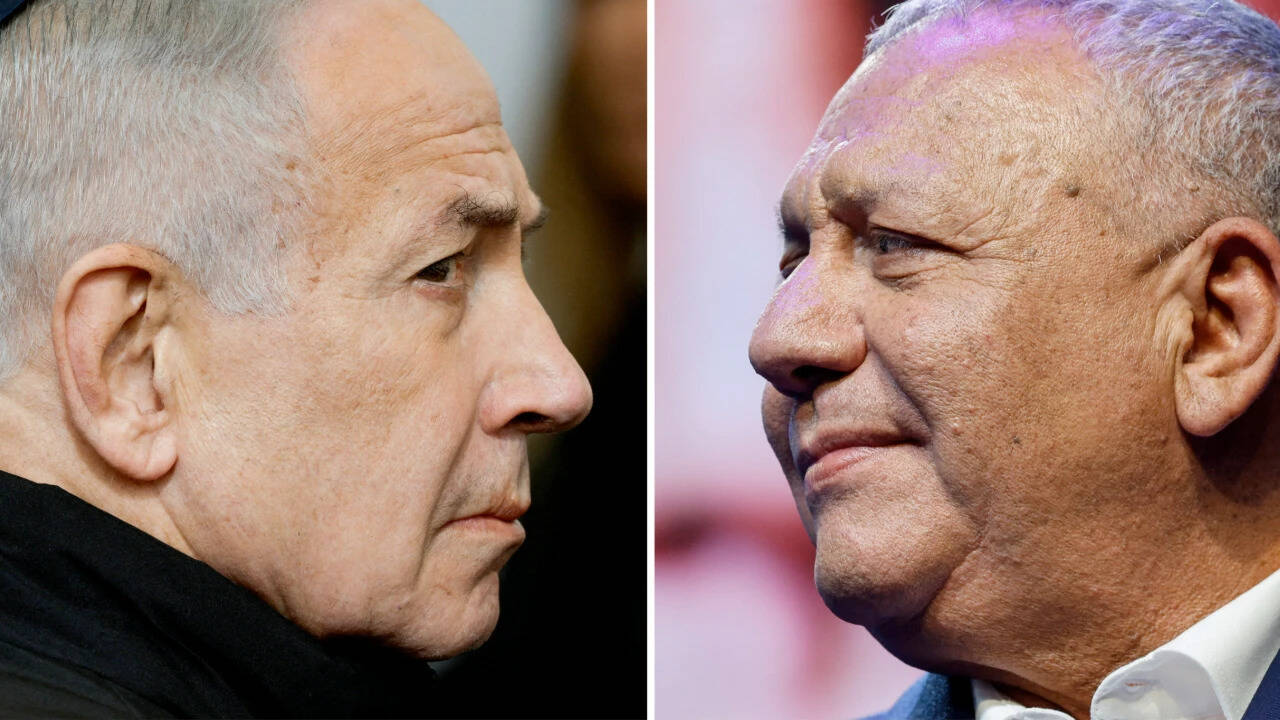
Benjamin Netanyahu's political resilience was on full display in recent Israeli elections despite facing significant challenges. After a devastating terrorist attack on October 7, 2023, which his government failed to prevent and which initially suggested his downfall, Netanyahu surprisingly maintained strong support. Polls had previously indicated that the opposition would defeat him and his Likud party, but the…
The Israeli elections prove Netanyahu’s political prowess →11 articles from Washington Examiner on this story
Prime Minister Benjamin Netanyahu and his Likud party have accused Arab-majority parties of stealing Israel's recent election through foreign funding, which they claim amounted to vote-buying. The final results show that Netanyahu’s bloc lost its majority in parliament, dropping from 68 seats to 53, while the main opposition won 48 seats. This leaves a potential coalition short on votes and reliant on support from…
Netanyahu's party claims Israel's election was stolen. Now what? →10 articles from CBS News on this story
In Israel’s recent national election, Benjamin Netanyahu’s right-wing bloc won with 53 seats out of 120 in the Knesset, falling short by eight seats of the 61 needed for a majority. Likud emerged as the largest party with 27 seats. The opposition bloc led by Gadi Eisenkot secured 48 seats. With neither side able to form a government on its own, Netanyahu and Eisenkot both pledged to work towards forming a coalition…
Netanyahu’s right-wing bloc wins Israeli election but he’s eight seats short of majority →10 articles from New York Post on this story
Benjamin Netanyahu’s coalition in Israel finished with 53 seats, just short of a majority needed to form a government, following the country's recent general election. The opposition bloc secured 48 seats, while Arab party groupings Raam and the Joint List won a combined 19 seats, positioning them as crucial for forming any potential coalition. Controversy over alleged foreign funding by Qatar to influence votes…
Netanyahu's bloc finishes ahead in Israel election, but well short of majority →10 articles from Dawn on this story
In Israel's recent election, Arab parties secured a record 19 seats in the 120-seat Knesset, up from their previous total of 10 seats. This surge was driven by high voter turnout among Arab Israelis and Bedouin communities, who aimed to challenge Benjamin Netanyahu’s government and demand equal citizenship rights. With neither major coalition achieving a majority, these parties now hold significant power in…
Israel's Arab parties emerge from deadlocked election as kingmakers →8 articles from ABC News (AU) on this story
Israeli legislative election results show Prime Minister Benjamin Netanyahu’s bloc with 53 seats and the opposition led by Gadi Eisenkot securing 48 seats in the 120-seat Knesset. Likud remains the largest single party with 27 seats, while Arab parties collectively gained a record 19 seats. Netanyahu has accused Arab parties of election fraud and alleged foreign funding influence from Qatar, calling for an…
Netanyahu bloc emerges ahead in Israeli election but fails to secure majority →8 articles from Euronews on this story
Jesse Kline discusses how Israel's recent high-stakes election has resulted in an unclear winner, with Prime Minister Benjamin Netanyahu’s Likud party leading but falling short of forming a majority government on its own. With neither side close to the required 61 seats and Arab parties holding key votes, this outcome is deemed unfavorable as it may prolong political instability at a critical time for Israel's…
Jesse Kline: Election could not have turned out worse for Israel →8 articles from National Post on this story
Yair Lapid, Israel’s opposition leader, has claimed a moral victory despite his bloc falling short of an outright majority in recent elections. With 67 seats out of 120, Lapid argues that while not decisive, this outcome presents a significant challenge to Prime Minister Benjamin Netanyahu's ability to form a government. Despite the difficulty in coalition-building due to ideological divides within the…
'A win is a win': Israel opposition leader Lapid reacts to Netanyahu's poll setback →7 articles from Times of India on this story
Israel’s final election results show Benjamin Netanyahu's bloc has lost its parliamentary majority, securing only 53 seats in the 120-member Knesset compared to 48 for opposition leader Gadi Eisenkot. The election saw a record 77.9% voter turnout and placed Arab parties with 19 seats in a potentially decisive position. Netanyahu's Likud party holds 27 seats, but neither side has the required 61 seats for a majority…
Netanyahu's bloc falls short as longtime allies reportedly weigh move that could end his rule →6 articles from Fox News on this story
Israel's recent election resulted in a political deadlock, with neither Prime Minister Benjamin Netanyahu nor his main challenger Gadi Eisenkot able to secure enough parliamentary support to form a government. The Knesset lacks a clear majority for either side, as Eisenkot’s bloc cannot achieve one without Arab party support, which he has ruled out due to their stances on issues like Hamas and the Gaza conflict…
Israel is in a political deadlock. What comes next? →6 articles from NPR on this story
Benjamin Netanyahu’s party, Likud, intensified claims that Arab-led parties had "stolen" the election in Israel, alleging foreign interference and warning of “Islamisation.” The election results show Netanyahu's bloc with 53 seats out of 120 in parliament, below the majority needed to form a government. The opposition has accused Netanyahu of attempting to delegitimise the election by demonizing Arab voters after…
Netanyahu's party ramps up claims Arab parties 'stole' the election and warns of 'Israel's Islamisation' after failing to win majority →6 articles from Daily Mail on this story
Benjamin Netanyahu has faced accusations of employing smear tactics to retain power after losing his parliamentary majority in Tuesday’s elections. He alleged that foreign-backed Arab Israeli parties manipulated the vote and demanded investigations into supposed irregularities in Palestinian communities. This claim was criticized by opposition leader Gadi Eisenkot, who called it an attempt to delegitimize election…
Israeli leader Netanyahu accused of using ‘ugly’ smear tactics to cling to power →6 articles from The Guardian on this story
Palestinian citizens of Israel participated in record numbers during recent elections, marking a significant political shift as two Arab-led parties secured the largest number of seats ever—19 out of 120. This surge is seen as a response to years of marginalization and rising anti-Arab sentiment under Netanyahu’s right-wing government. Voter turnout increased by over 60% compared to previous elections, with many…
For Palestinian citizens of Israel, a historic vote born of fear and frustration →5 articles from Toronto Star on this story
Israelis are waiting for final election results that could confirm Benjamin Netanyahu’s bloc holding a slight edge over opposition parties, with about 53 seats compared to 48 for the opposition and 19 for Arab-led groups. The counting of roughly half a million absentee ballots is expected to conclude on Thursday evening, potentially affecting coalition negotiations but unlikely to change the overall outcome…
Israelis await final election results as Netanyahu's bloc holds slight edge →5 articles from CBC on this storySydney Morning Herald30 Oct
After the Israeli election, Arab parties have gained significant strength with 19 seats, up from 10 in the previous election, due to a dramatic increase in voter turnout among Arab-Israelis to about 80%. This surge was driven by concerns over security issues under Itamar Ben-Gvir's leadership. The opposition bloc, led by Gadi Eisenkot and including these Arab parties with 67 seats total, surpasses Netanyahu’s…
They’re potential kingmakers, but may be excluded from Israel’s government. Here’s why →5 articles from Sydney Morning Herald on this story
Israel's final election results show Benjamin Netanyahu’s right-wing bloc securing 53 seats and Gadi Eisenkot’s rival bloc winning 48 seats in Israel’s 120-member parliament, falling short of the 61 seats needed to form a government. President Isaac Herzog will next week decide which candidate has the best chance to lead government formation efforts. Notably, parties representing Arab Israelis won a combined 19…
Israel’s final election results show neither Netanyahu nor rival can immediately form government →5 articles from NBC News on this story
Benjamin Netanyahu's coalition currently leads in Israel's closely contested election but falls short of the majority needed to form a government. Arab parties achieved a record number of seats, potentially positioning them as key players in determining the next prime minister. Critics see this outcome as reflecting voter dissatisfaction with Netanyahu’s leadership, yet both main political blocs are hesitant to…
Netanyahu's coalition draws ahead in Israel's tight election race →5 articles from Semafor on this story
The Israeli Central Elections Committee announced final results showing Benjamin Netanyahu's right-wing bloc securing 53 seats in the Knesset, just short of a majority needed to form a government without coalition negotiations. Despite these political uncertainties, the article asserts that regardless of who leads Israel next, American military aid and funding will continue to support Israel’s defense initiatives…
With or Without Netanyahu, Israel Will Want American Taxpayers To Keep Funding Its Wars →3 articles from Reason on this story
Voters in Israel participated in a nationwide election on Tuesday, with many casting ballots in Tel Aviv’s Hatikva Quarter. A campaign booth nearby played an anthem praising incumbent Prime Minister Benjamin Netanyahu, highlighting his leadership and popularity. The election also featured other prominent figures such as former IDF chief of staff Gadi Eisenkot, as evidenced by electronic billboards displayed around…
Who Will Lead Israel Now? →2 articles from The Dispatch on this story
The article discusses the results of Israel's recent parliamentary election where Benjamin Netanyahu’s coalition secured 53 seats in the 120-seat Knesset, while the opposition led by Gadi Eisenkot received 48 seats and two Arab parties gained a combined total of 19. With no single bloc achieving the required 61 seats to form a majority government, Netanyahu may attempt to form a minority government or negotiate with…
Where Does Benjamin Netanyahu Go from Here? →2 articles from The Free Press on this story
Israel’s recent elections were expected to resolve key political issues but instead have left the country in a state of uncertainty and frustration. Despite a majority of voters seeking change, Prime Minister Benjamin Netanyahu's coalition, currently holding around 68 seats, is set to decline to about 53 seats. The opposition, led by former IDF Chief Gadi Eisenkot, has gained significant support but still falls…
Israel’s Democracy—And Its Relationship with America—Remain in Limbo →2 articles from The Bulwark on this story
Prime Minister Benjamin Netanyahu faces a critical election as Israelis vote on Tuesday, nearly six months after Hamas attacked Israel on October 7, 2023. The attack resulted in over 1,200 Israeli deaths and 251 hostages, leading to significant military retaliation that has killed more than 74,000 Palestinians according to local health authorities. Netanyahu’s legacy hangs in the balance as his opponents see this…
Netanyahu’s legacy on the line as Israelis head to elections this week →
Israel is holding its first general election since the October 7, 2023 Hamas attack, which plunged the country into one of its most severe security crises. Incumbent Prime Minister Benjamin Netanyahu seeks re-election against Gadi Eisenkot, former IDF chief and leader of the Yashar party. US President Donald Trump has endorsed Netanyahu as a "warrior prime minister," cautioning that any other leadership choice could…
Will elections in Israel change its Iran approach? →
On Tuesday, Israeli voters participated in what is likely to be the highest turnout election since 1973, with 66.7% of eligible voters casting ballots by 6 p.m. local time. Prime Minister Benjamin Netanyahu, facing a critical test of his leadership, urged supporters to vote as polls showed a tight race between his pro-Netanyahu coalition and opposition movements led by figures like former IDF chief Gadi Eisenkot…
Record Israeli Election Turnout as Netanyahu Battles to Stay in Power →
Israeli election results show a divided nation, with Benjamin Netanyahu's pro-Bibi camp securing 53 Knesset seats and the Jewish anti-Netanyahu bloc obtaining 48, falling short of a majority in parliament. Notably, Arab parties gained significant ground, capturing 19 seats. Voter turnout was high at 78%, reflecting heightened engagement from Arab-Israeli citizens who voted at an unprecedented rate of 80%. The…
Eizenkot’s Choice →
The final vote count from Israel's parliamentary election shows Benjamin Netanyahu's bloc maintaining its lead with 53 seats, while the opposition bloc has secured 48 seats. No coalition has achieved the required 61-seat majority needed for governance. This situation could potentially require Netanyahu’s or Gadi Eisenkot’s bloc to seek support from Arab Israeli parties, though both leaders have previously rejected…
Israel election results: Netanyahu's bloc maintains lead but does not secure majority → 
 The Aporia