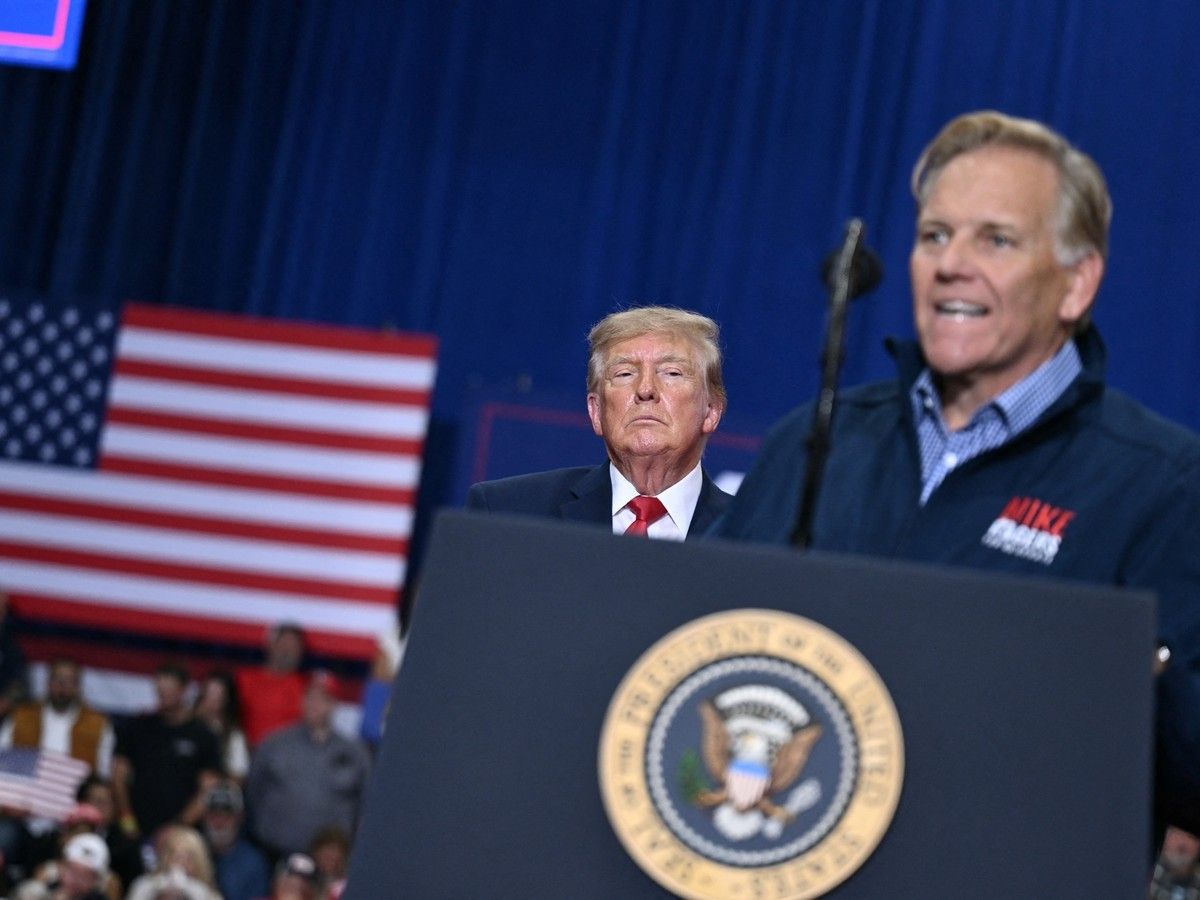
Photo via The Globe and Mail

Shuffling of U.S. tariffs will offer little relief to Canada, experts say

Read the original at The Globe and Mail ↗
Cite

Dingman, S. (2026, October 25). Shuffling of U.S. tariffs will offer little relief to Canada, experts say. The Globe and Mail. https://www.theglobeandmail.com/canada/article-canada-us-tariffs-trade-october-25/

Dated from the outlet's own feed. Check the original for its byline.

The Globe and Mail · collected 2026-10-26 · by Shane Dingman

Quick Summary

U.S.-Canada trade tensions continue as the U.S. adjusts tariffs, removing them from 22 categories worth about $2.5 billion and imposing new ones on 100 additional categories valued at approximately $2.6 billion. Senator Susan Collins highlights how lifting tariffs on certain packaging products benefits Maine’s agricultural sector but also notes that some of these changes spread the economic impact geographically, reducing localized pain in border states like her own. Meanwhile, experts suggest ongoing negotiations could lead to a trade deal and emphasize how integrated supply chains mean any new tariffs can harm both U.S. businesses and consumers as well as Canadians, particularly affecting industries such as hardwood flooring that are already struggling with international competition.
Written by AI on 2026-10-26, from this article's own text only (the story summary below draws on all the coverage).
See how they differ ↓

AI analysis

Story summary

As of October 23, 2026, U.S. President Donald Trump exempted nine categories of Canadian exports from tariffs, including plywood sheets and certain machinery, ahead of the November midterm elections. This move was aimed at helping embattled Republican Senator Susan Collins in her re-election bid in Maine, a state with significant trade ties to Canada. The exemption covers products like corrugated paper, plastic boxes, and refrigeration equipment, which are critical for Maine’s agricultural industries such as blueberry, potato, apple, and seaweed producers. The changes will take effect on October 30. This shift could also impact Michigan and New Hampshire, where Republican candidates have similarly spoken out against tariffs on Canada to bolster their election campaigns.

Written for “US Tariffs on Canada Adjusted” on 2026-11-21, grounded in this article and the 6 other(s) covering the same event.

How they differ

5 outlets covered “US Tariffs on Canada Adjusted”.

What each outlet says

One AI summary per outlet of its latest article on this story, written from that article alone and checked against it. Open the article for the outlet's own words.

The Globe and MailThis outlet26 Oct

U.S.-Canada trade tensions continue as the U.S. adjusts tariffs, removing them from 22 categories worth about $2.5 billion and imposing new ones on 100 additional categories valued at approximately $2.6 billion. Senator Susan Collins highlights how lifting tariffs on certain packaging products benefits Maine’s agricultural sector but also notes that some of these changes spread the economic impact geographically…

Shuffling of U.S. tariffs will offer little relief to Canada, experts say (this article)
Toronto Star24 Oct

President Donald Trump has exempted certain imports from his previously imposed 50% tariffs on $20 billion worth of Canadian goods, in an apparent effort to assist Maine Senator Susan Collins during her reelection campaign. These exemptions cover items like plywood sheets and machinery and will become effective on October 30. The White House justified the changes as a way to alleviate burdens on U.S. commerce while…

Trump, seeking to help Maine Sen. Susan Collins, exempts some Canadian imports from his 50% tariffs →3 articles from Toronto Star on this story
The Hindu24 Oct

On October 23, 2026, President Trump’s administration lifted certain tariffs on Canadian imports including plywood sheets and paper products while imposing new ones on items like carpets and valves. This move came two weeks before midterm elections to potentially aid Republican Senator Susan Collins in Maine, who faces a strong Democratic challenger. The easing of tariffs affects about $20 billion worth of goods…

Trump lifts some Canada tariffs ahead of midterms →
Semafor25 Oct

The US plans to remove certain tariffs on Canadian agricultural products, following lobbying by a Republican senator from Maine who faces an upcoming election. This move is part of efforts by the White House to support Republican candidates in swing states ahead of November 3rd elections. Tariffs imposed due to trade disputes have contributed to inflation and strained diplomatic relations between the US and Canada…

US to remove some Canadian tariffs ahead of elections →
National Post27 Oct

U.S. President Donald Trump has imposed new tariffs on Canadian municipal waste as part of ongoing trade tensions, a move supported by Michigan Senate candidate Mike Rogers who claims Canada sends large amounts of garbage into his state. According to data from the Michigan Department of Environment, Great Lakes, and Energy, Canada accounted for 14% of all waste disposed in Michigan landfills in fiscal year 2025…

Trump slaps tariffs on Canadian ‘trash trucks.’ How much garbage is being sent to the U.S.? →

Compared with similar articles

This article reads unscored and hedges 22% of its claims. Each row says how that neighbour differs.
Washington Examiner
Hedges 0 of 6 claims Outlet record 67/100
“The articles discuss different aspects of tariff impacts on trade and business, but do not describe the same specific incident or occurrence.”
Toronto Star
Hedges 0 of 3 claims Outlet record 65/100
“Article A describes President Trump's decision to exempt certain Canadian imports from tariffs specifically to help Sen. Susan Collins, while Article B discusses broader expert analysis of tariff changes with less emphasis on the specific exemption for Maine.”
The Hindu
Leans left Hedges 1 of 16 claims Outlet record 78/100
Semafor
Leans right Hedges 1 of 4 claims Outlet record 64/100
The Globe and Mail
Hedges 0 of 2 claims Outlet record 51/100
“The articles discuss different aspects of U.S.-Canada trade relations and do not describe the same specific incident or outcome.”
National Post
Hedges 3 of 34 claims Outlet record 60/100
Global News
Hedges 2 of 16 claims Outlet record 63/100
“The articles discuss different aspects of US-Canada trade tensions and potential tariff changes, but do not describe the same specific incident or occurrence.”
ABC News (US)
Hedges 0 of 1 claims Outlet record 66/100
“Article A discusses the economic impact of tariff changes in a broader context, while Article B focuses on interviews with Maine's stakeholders and political figures regarding tariffs and higher diesel costs.”
The Independent
Leans left Hedges 2 of 21 claims Outlet record 59/100
“The articles describe different phases or aspects of the ongoing U.S.-Canada trade conflict rather than a single specific incident.”
Toronto Star
Hedges 1 of 2 claims Outlet record 65/100
“The articles describe different stages of ongoing trade negotiations between Canada and the U.S., not a single specific incident.”

Story

US Tariffs on Canada Adjusted
Politics · 7 article(s) covering the same event. See how they differ ↑
How this article was measured signals, leaning charts, publisher record, byline, topics and claims

Signals How these are calculated →

Claims extracted
27
sentences that state something as happening or true
Uncertain
22%
6 of 27 hedged ("reportedly", "may", "according to")
Leaning
withheld
no quote in the article backed the model's score
Publisher signals
51/100
The Globe and Mail's corrections and hedging, across everything collected from it. Not a measure of accuracy.
Outlets on this story
7
Politics
Same framing elsewhere
1
articles that frame the event the way this one does
Analyzed 2026-10-26 · how these are computed

How this is being covered How these are calculated →

Article leaning vs. publisher reliability
Source leaning vs. consistency

Publisher

The Globe and Mail · 1306 article(s) · 50 correction(s) detected
Running correction rate · 50 correction(s)

Who wrote this

Shane Dingman
1 article(s) here · 1 carrying a prediction
The shifting front line in the U.S-Canada trade war will lessen the economic pain in border states while still targeting Canadian manufacturing capacity, experts say.
The only article under this byline in the corpus.

Topics

Canada Canadian Maine Quebec U.S.

Subjects

U.S. GPE · 7× Canada GPE · 6× Canadian NORP · 6× Maine GPE · 3× Alschner PERSON · 2× China GPE · 2× Peacock ORG · 2× Pellerin PERSON · 2× Quebec GPE · 2× Vietnam GPE · 2×

Narrative

The lifting of 50-per-cent tariffs on 22 categories of goods by the United States and the addition of 100 new categories will have a roughly equivalent impact in terms of dollars – about $2.5-billion in goods were exempted with about $2.6-billion newly targeted – but will also shift some of the focus away from products U.S. businesses need for their own operations.
framing: mixed · carried by 1 article(s) · first seen 2026-10-26
The shifting front line in the U.S-Canada trade war will lessen the economic pain in border states while still targeting Canadian manufacturing capacity, experts say.
2026-10-26 · The Globe and Mail
Shuffling of U.S. tariffs will offer little relief to Canada, experts say · mixed framing

Claims (27 extracted, 6 hedged)

The shifting front line in the U.S-Canada trade war will lessen the economic pain in border states while still targeting Canadian manufacturing capacity, experts say. asserted
experts → shift → capacity
The lifting of 50-per-cent tariffs on 22 categories of goods by the United States and the addition of 100 new categories will have a roughly equivalent impact in terms of dollars – about $2.5-billion in goods were exempted with about $2.6-billion newly targeted – but will also shift some of the focus away from products U.S. businesses need for their own operations. asserted
businesses → have → operations
Senator Susan Collins of Maine has taken credit for lifting the tariffs on some packaging products, which she said had impacted Maine businesses such as apple and blueberry growers. asserted
she → take → growers
Alongside its tariff adjustments, the Trump administration has also said that it’s nearing a trade deal with Canada. asserted
it → say → Canada
Kevin Hassett, the top economic adviser in the White House, told Fox News on Sunday that negotiations are “gathering steam” and that Commerce Secretary Howard Lutnick has been speaking with Canadian officials “all week.” asserted
Lutnick → tell → officials
According to Wolfgang Alschner, a law professor with a specialty in business and trade at the University of Ottawa, there are lots of examples of integrated cross-border supply chains where tariffs hurt U.S. businesses and consumers as much or more than they strike at Canada. uncertain
they → accord → Canada
“With tighter North American integration, it made total sense for states like Maine to trade with Quebec for supplies for local industries. asserted
states → make → industries
Now of course with the border being a harder border you really have to re-evaluate those relationships,” Mr. Alschner said. asserted
Alschner → have → relationships
He said some of the new tariffs are on finished retail products such as shampoo, which won’t have a strong localized impact in any particular geographic market – such as a border state with a tense and close Senate election battle raging. asserted
battle → say → state
“I think that makes perfect sense from a defensive point of view. asserted
that → think → view
You ideally want to spread out the pain,” Mr. Alschner said. asserted
Alschner → want → pain
Some other new tariffs could turn up the pain on specific industries in Canada. uncertain
tariffs → turn → Canada
One example is in the hardwood flooring market, where U.S. tariffs against China and Vietnam have caused those countries to shift exports to more open nations such as Canada. asserted
countries → cause → Canada
According to William Pellerin, partner with law firm McMillan LLP and co-leader of its international trade group, even before the new tariffs on Canadian hardwood, his group of eight flooring manufacturing clients based mainly in Quebec and Ontario were struggling to compete domestically against imports. “[China and Vietnam] totally flooded the market at prices that are ludicrously low. uncertain
that → accord → prices
The Canadian producers have been able to survive by selling products to the U.S.,” Mr. Pellerin said. asserted
Pellerin → survive → U.S.
Many of the companies are benefiting from federal work-share programs to keep the lights on. asserted
Many → benefit → lights
“A lot of the companies had layoffs, a number are on work-share, with workers on maybe three days a week,” he said. asserted
he → have → days
But in the longer term, Mr. Pellerin said restricting imports of overseas hardwood may be the only path forward. uncertain
restricting → say → hardwood
Kyle Peacock, principal at Peacock Tariff Consulting, said he has identified another pattern in the types of industries that are being targeted: U.S. companies with Canadian manufacturing sites that could see production shifted back to America. uncertain
production → say → America
“We had that on lip balm,” Mr. Peacock said. asserted
Peacock → have → balm
Since the first round of tariffs, he said five of seven Canadian sites making the wax or other parts of lip balm have either stopped shipping to the U.S. or are planning to relocate. asserted
sites → say → U.S.
In New Brunswick, social media darling Eclair Lips announced in October it would no longer make its lip balm in Canada, moving production to Vermont. asserted
it → announce → Vermont
But even trade relief doesn’t necessarily change the case for manufacturers “re-shoring” operations back to the U.S. A week ago, Polyethics Industries in Orillia, Ont., announced 118 layoffs, which Mr. Peacock said is part of the company shifting capacity to its factory in Antwerp, Ohio. asserted
company → change → Antwerp
The company makes polyethylene plastic products such as garbage bags that are now subject to tariff relief, but while Mr. Peacock has consulted with them, he still expects the company to move the remaining production to the U.S. in the coming weeks. asserted
company → make → weeks
According to him, the company faced other rising costs, such as soaring diesel prices and transportation costs thanks in part to the U.S. war with Iran. uncertain
company → accord → Iran
Tariff relief won’t be enough to move the needle. asserted
relief → move → needle
“That’s one piece of a very big pie that’s making us move,” Mr. Peacock said he was told. asserted
he → ’ → pie
Give feedback · no sign-in needed

No sign-in needed for now. Your note is sent without a name, so it cannot be answered.

History Support