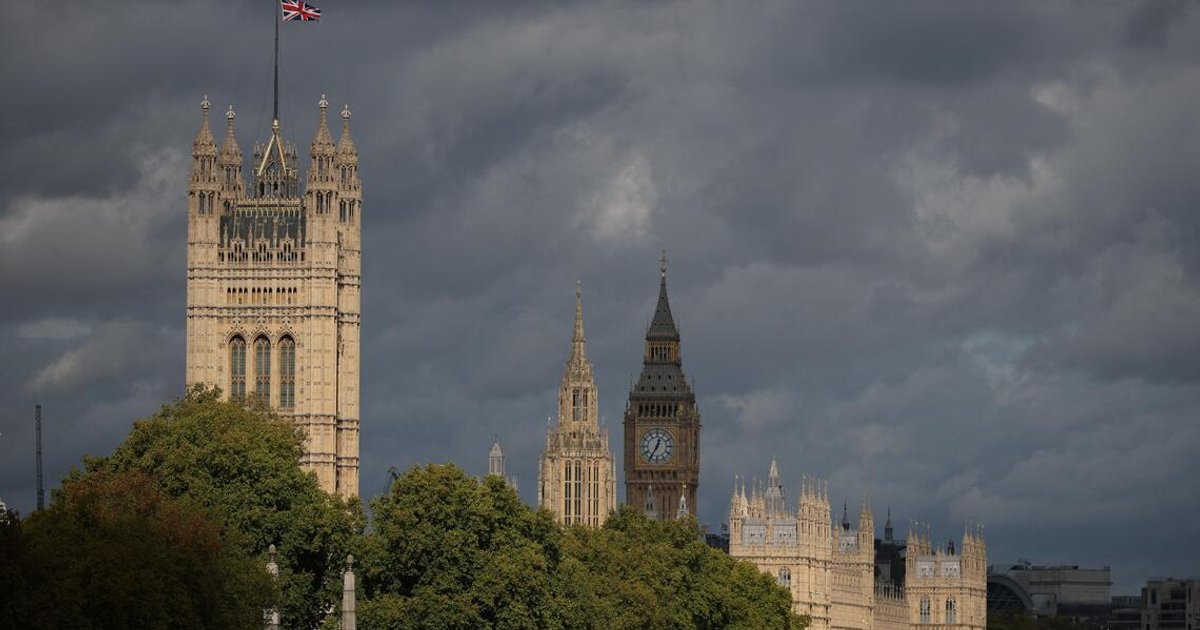
Photo via The Guardian

UK government to make unprecedented intervention in setting of water bills

Read the original at The Guardian ↗
Cite

editor, J. E. D. p. (2026, October 23). UK government to make unprecedented intervention in setting of water bills. The Guardian. https://www.theguardian.com/business/2026/oct/23/ministers-water-companies-bills-investment

Dated from the outlet's own feed. Check the original for its byline.

The Guardian · collected 2026-10-23 · by Jessica Elgot Deputy political editor

Quick Summary

The UK government plans to intervene in the upcoming water price review, directing water companies to reduce costs and improve infrastructure efficiency. Environment Secretary Angela Eagle has written to regulators and company leaders, emphasizing priorities like affordable bills and clean rivers. This marks a significant shift from past practices where Ofwat conducted independent reviews without government interference. The intervention aims to ensure better value for customers and more effective use of funds in the water sector.
Written by AI on 2026-10-23, from this article's own text only (the story summary below draws on all the coverage).

AI analysis

Story summary

As of October 23, 2026, the UK government under Environment Secretary Angela Eagle plans an unprecedented intervention in setting water bills in England and Wales. This follows a contentious price review in 2024 where Ofwat authorized a £104bn modernisation programme, leading to average water bills rising by 36% over the second half of the decade due to progressive annual rate increases. Eagle intends to direct water companies to prioritize reducing costs, stopping leaks, and addressing sewage overflows during the next price review process set to conclude in 2029. The government aims to grant itself stronger powers to lower bills and direct local investment as part of Andy Burnham’s 10-year plan, which will follow the upcoming budget announcement. This intervention marks a significant shift from previous hands-off approaches to Ofwat's regulatory duties.

Written for “Government Intervention In Water Bills” on 2026-11-21, grounded in this article and the 0 other(s) covering the same event.

Compared with similar articles

This article reads leans left and hedges 0% of its claims. Each row says how that neighbour differs.
The Guardian
Hedges 0 of 15 claims Outlet record 64/100
“The articles describe different actions related to Thames Water's financial troubles but do not refer to the same specific incident or time.”
BBC News
Hedges 3 of 41 claims Outlet record 65/100
“The articles discuss different policy decisions by the UK government: one about approving production from the Jackdaw gas field, and another about intervening in water bills and investment priorities.”
The Guardian
Hedges 0 of 33 claims Outlet record 64/100
“The articles discuss different policy interventions by Andy Burnham's government: one regarding climate targets despite approving a gasfield, and another about regulating water bills.”
The Straits Times
Leans right further right than this Hedges 3 of 30 claims Outlet record 64/100
“The articles describe different policy actions by the UK government: one about preparing for supply chain shortages, and another about intervening in water bills.”
Daily Mail
Leans left Hedges 0 of 3 claims Outlet record 69/100
“Article A discusses the UK government's intervention in water bills, while Article B covers Chancellor John Healey's Autumn Budget speech addressing various economic issues. These are different events.”
BBC News
Leans left Hedges 4 of 44 claims Outlet record 65/100
“The articles discuss different aspects of government intervention; Article A focuses on water bills and sewage management, while Article B discusses energy bill relief measures.”
Daily Mail
Leans left Hedges 3 of 19 claims Outlet record 69/100
“Article A discusses Andy Burnham's plea for radical options regarding Thames Water, while Article B reports on an unprecedented government intervention in setting water bills and prioritizing investment, as announced by Angela Eagle.”

Story

Government Intervention In Water Bills
Politics · 1 article(s) covering the same event.
How this article was measured signals, leaning charts, publisher record, byline, topics and claims

Signals How these are calculated →

Claims extracted
34
sentences that state something as happening or true
Uncertain
0%
0 of 34 hedged ("reportedly", "may", "according to")
Leaning
Leans left
of the writing, not the subject · beta estimate
Publisher signals
64/100
The Guardian's corrections and hedging, across everything collected from it. Not a measure of accuracy.
Outlets on this story
1
Politics
Same framing elsewhere
1
articles that frame the event the way this one does
Analyzed 2026-10-23 · how these are computed

How this is being covered How these are calculated →

Article leaning vs. publisher reliability
Source leaning vs. consistency

Publisher

The Guardian · 3767 article(s) · 8 correction(s) detected
Running correction rate · 8 correction(s)

Who wrote this

Jessica Elgot Deputy political editor
24 article(s) here · 1 carrying a prediction
For now, the rebuttal of Stay Out’s claims – including that returning to the EU would cost £750m a week – is mostly being done on social media by interested pro-rejoin freelancers, without any kind of central organisation.
Now as a new incarnation of Dominic Cummings’ Vote Leave looks set to re-enter the political fray, so too does a rival anti-EU campaign from the team behind Leave.EU, who ran their own unofficial campaign backed by Nigel Farage.
A substantial expansion of the social media ban for under-16s could inadvertently lead to a ban on YouTube Kids and other sites that had been thought exempt, sources briefed on the government’s proposals have said.
“But clearly, a lot more needs to be done because I think many of us were really shocked that that could still take place in a courtroom today,” she said.
One of the architects of Keir Stamer’s Brexit red lines has called for Andy Burnham to abandon them at the next election, saying a new relationship with the EU would protect the UK from global threats.
The MPs say the current definition of Englishness on the census means 60% of England’s World Cup squad would not technically be classified as English on the census.
Andy Burnham has denied proposing a return of free movement in talks between the UK and EU, saying any decision about the future relationship will be led by the will of the British people.
Burnham confirmed to reporters that he was meeting Albanese but declined to comment on any potential changes, saying “we’ll see” when asked if it would be on the agenda.
A speech at Harvard on Monday will be her first public intervention on her own record and on Britain’s future, wisely left until after John Healey’s first budget.
The former Green party leader Adrian Ramsay has said the party must fix its internal democracy to avoid a takeover by the hard left, saying that some new members “might be more at home” in Your Party or the Socialist Workers party.
Also by Jessica Elgot Deputy political editor
Nothing else under this byline is closely related to this article, so these are simply their most recent.
All 24 articles by Jessica Elgot Deputy political editor →

Topics

Defra Eagle England Ofwat Wales

Subjects

Eagle PERSON · 5× Defra ORG · 3× Ofwat ORG · 3× Angela PERSON · 2× Burnham PERSON · 2× Thames Water ORG · 2× Angela Eagle PERSON · 1× England GPE · 1× Wales GPE · 1× the Department for Environment, Food and Rural Affairs ORG · 1×

Narrative

The outcome of the last price review process in 2024 led to highly controversial bill rises, after Ofwat authorised a £104bn modernisation programme, funded in large part through progressive annual rate increases that will see average water bills surge by 36% over the second half of the decade.
framing: assertive · carried by 1 article(s) · first seen 2026-10-23
Ministers will make an unprecedented intervention in water bills and how companies prioritise investment, directing bosses to bring down costs and stop leaks and sewage overflows.
2026-10-23 · The Guardian
UK government to make unprecedented intervention in setting of water bills · assertive framing

Claims (34 extracted, 0 hedged)

Ministers will make an unprecedented intervention in water bills and how companies prioritise investment, directing bosses to bring down costs and stop leaks and sewage overflows. asserted
companies → make → leaks
Angela Eagle, the environment secretary, has told suppliers in England and Wales she plans to intervene in the next price review – conducted by the water regulator, Ofwat. asserted
she → tell → regulator
Sources at the Department for Environment, Food and Rural Affairs (Defra) said Andy Burnham’s 10-year plan, which will follow next week’s budget, would hand the government more robust powers to lower bills and direct local investment. asserted
which → say → investment
But sources close to Eagle said there also needed to be immediate action as companies began to make decisions before the next price-setting process, expected to conclude in 2029. asserted
companies → say → 2029
It is run by Ofwat, which analyses companies’ business plans and determines how much can be charged to customers in their bills to fund investment and running costs. asserted
much → run → investment
Eagle has written to regulators and water company chief executives, saying that the process must meet specific government priorities, including offering bill payers much better value for money – though stopping short of demanding bill cuts. asserted
process → write → cuts
The letter to companies and regulators says they must be focused on investment in new technology to save money, and early intervention on leaks and sewage. asserted
they → say → leaks
It also called for far better communication and decision-making power handed to local communities and leaders. asserted
It → call → communities
The first priority must be affordable bills, the letter says, adding: “Affordability means a laser focus on value for money for customers.” asserted
Affordability → say → customers
The letter says the public is clear about what the objectives for the industry should be. asserted
objectives → say → industry
“They want clean rivers. asserted
They → want → rivers
They want reliable water services. asserted
They → want → services
They want to know that their money is being spent wisely, and that bills are kept affordable. asserted
bills → want → ?
And they want confidence that the system is working in their interests.” asserted
system → want → interests
The letter warns company bosses that it will “not be a business-as-usual price review … it is the beginning of a long-term transition to a different model for the water sector”. asserted
it → warn → sector
Defra sources said Eagle intended it to be the first in a series of changes that will be announced in the coming months on the water industry, calling it “one of the clearest symbols of public frustration with Britain’s infrastructure”. asserted
that → say → infrastructure
A Defra source said the intervention by Eagle was a down payment on bigger changes that would come in the 10-year plan. asserted
that → say → plan
The source said: “Angela will take a much more bullish approach to telling water companies and regulators what is expected from them. asserted
what → say → them
This is the start of a journey to a very different water system and one that delivers for the public. asserted
that → deliver → public
“There are also things we want regulators and companies to be doing now and so Angela is using the levers she’s got to influence their investment decisions at an early stage and make sure they’ve got no excuses. asserted
got → be → excuses
As well as looking at ownership structures, there are other ways we can go further than what came before.” asserted
what → look → structures
The new intervention from Eagle comes as the government continues to explore more radical options for the stricken company Thames Water. asserted
government → come → company
The Guardian reported earlier this week that Burnham had told officials to contemplate options that were not previously considered feasible, even if that meant spending taxpayer money and going to court. asserted
that → report → court
Burnham previously said he would nationalise Thames Water – which is running out of cash and recently asked its creditors for an additional £2.4bn – but is struggling to find a way to do so without spending billions of pounds, getting tied up in a lengthy court battle, or both. asserted
which → say → battle
The outcome of the last price review process in 2024 led to highly controversial bill rises, after Ofwat authorised a £104bn modernisation programme, funded in large part through progressive annual rate increases that will see average water bills surge by 36% over the second half of the decade. asserted
bills → lead → decade
The biggest increase was allowed for Southern Water, whose customers will pay 53% more by 2030, at an average of £642 per year. asserted
customers → allow → year
Over the summer, several major suppliers requested permission to charge billions more to cover mounting capital costs and debt obligations, sparking fury from campaigners and from politicians, including Burnham. asserted
suppliers → request → Burnham
The prime minister criticised the decision, warning that bill payers must no longer be treated as a “blank cheque” or a “bottomless source of funding for other people’s failures”, saying ordinary households were being forced to plug massive corporate balance-sheet deficits. asserted
households → criticise → deficits
However, campaigners for public ownership have warned the move will do little in practice to reduce bills or the environmental impact of sewage or leaks. asserted
move → warn → sewage
Sophie Conquest, the lead campaigner at We Own It, said: “These proposals are yet more reshuffling of the deckchairs on the Titanic, and fall far short of Burnham’s promise to end 40 years of neoliberalism. asserted
proposals → own → neoliberalism
“This government should be intervening on behalf of households to stop bill hikes. asserted
government → intervene → hikes
If water companies can’t function without siphoning more and more money out of our pockets, then this government should let them go bust. asserted
them → function → pockets
“From there, we can bring water affordably into public hands. asserted
we → bring → hands
Under public ownership, we can put people and the environment ahead of the interests of faraway shareholders and hedge funds.” asserted
we → put → shareholders

Give feedback · no sign-in needed

No sign-in needed for now. Your note is sent without a name, so it cannot be answered.

History Support